
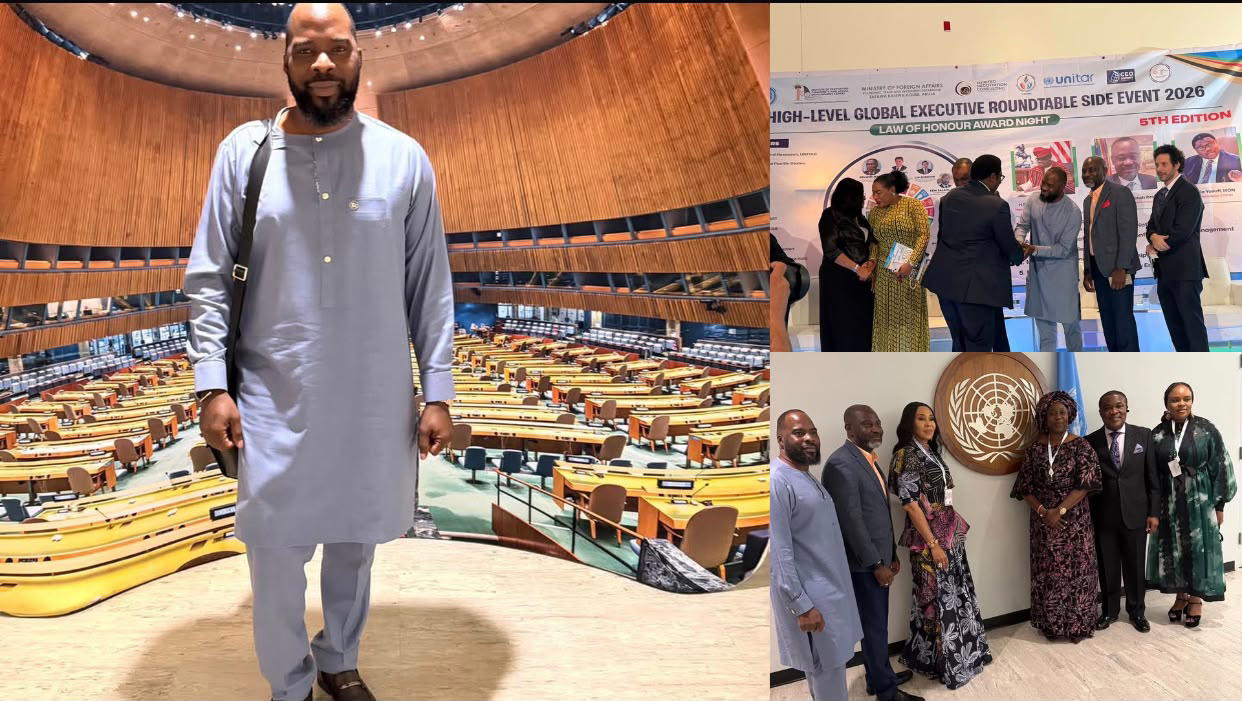
Nigerian businessman and property developer, Keji Giwa, has called for a shift in the country’s engagement with its diaspora from dependence on remittances to structured investment in productive assets.
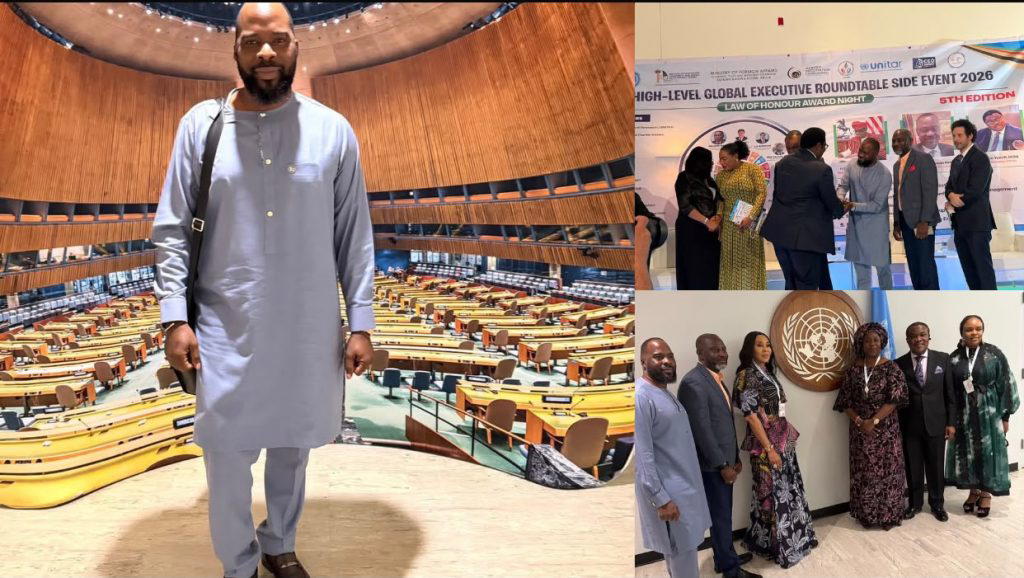
Giwa made the call while speaking as a panelist at a Global Executive Roundtable Side Event of the United Nations General Assembly, UNGA, hosted at the Permanent Mission of Nigeria to the United Nations.
He said Nigeria needed to create credible investment opportunities that would enable Nigerians living abroad to participate in businesses, infrastructure and other income-generating assets in the country.
According to him, the Nigerian diaspora represents a significant source of capital, expertise and economic influence that remains largely underutilised.
Giwa said the objective should not be to discourage remittances, which remain important to millions of Nigerian households, but to create opportunities for those with investable funds to participate in productive ventures.
He said, “Japa was not a betrayal. For many Nigerians, leaving was a rational response to an environment that could no longer guarantee the opportunities, security and stability they needed to build their futures.
“But leaving Nigeria does not mean abandoning Nigeria. The question is no longer whether Nigerians abroad love their country. The question is whether we can build credible structures that allow them to invest in it with confidence.”
He identified trust, transparency, credible execution and investor protection as critical to attracting diaspora capital into Nigeria.
“Nigeria cannot develop without diaspora capital, and diaspora capital cannot return without credible people, structures and physical proof,” he said.
Giwa cited figures showing that Nigeria received about $20.93 billion in remittances in 2024, compared with foreign direct investment inflows of about $1.08 billion.
While acknowledging that remittances and foreign direct investment represent different types of financial flows, he said the figures highlighted the potential to channel more diaspora wealth into long-term productive investments.

“Nigerians abroad are already financing Nigeria. They pay school fees, support families, build houses, fund businesses and contribute to their communities. But we must create opportunities for them to move from supporting consumption to participating in the ownership of productive assets,” he said.
Giwa said investment opportunities should be structured around verifiable information rather than personal relationships or promises of exceptional returns.
He also stressed the importance of ethical leadership, transparent financial reporting and accountability in rebuilding investor confidence.
“In a low-trust economy, the credible executor becomes part of the asset,” he said.
Sanwo-Olu seeks diaspora partnerships
Also speaking virtually from Texas, Lagos State Governor Babajide Sanwo-Olu said state and subnational governments were ready to partner with Nigerians in the diaspora to attract investment.
“Our message from Lagos is simple: states, regions and subnational governments are ready to deliver. We have ambition. We have the responsibility. And increasingly, we have the solutions.
“Now we need to build the partnerships and mobilise the investment that will allow us to deliver them at scale,” Sanwo-Olu said.
Giwa said collaboration between government and private investors was particularly important in sectors such as tourism, real estate and hospitality, where infrastructure can significantly affect the viability of projects.
He identified roads, electricity, water, drainage, security and connectivity as among the infrastructure required to support major private developments.
“Private developers can build world-class destinations, but we cannot independently solve every infrastructure challenge surrounding those destinations,” he said.
Giwa proposes diaspora investment council
Giwa also proposed the establishment of a Nigerian Diaspora Capital and Policy Action Council, ND-CPAC, as a platform for coordinating diaspora investment interests and engaging government on policies affecting private capital.
He said the proposed council would bring together Nigerian professionals, entrepreneurs, business owners and high-net-worth individuals abroad to identify credible investment opportunities and support professionally managed investment structures.
According to him, the council could facilitate engagement among investors, developers, financial institutions, regulators and policymakers, with emphasis on investor protection, transparency, infrastructure and sustainable investment structures.
He said the initiative would not replace existing government agencies or investment institutions but would seek to connect diaspora investors with credible Nigerian projects and facilitate public-private cooperation.
“Politicians do not fear angry diaspora tweets. They fear organised capital,” Giwa said.
He identified three proposed priorities for ND-CPAC: mobilising diaspora capital into credible Nigerian assets, promoting investment standards that encourage transparency and accountability, and supporting policy engagement aimed at improving the investment environment.
Giwa said his investment activities in real estate, tourism and recreational infrastructure had reinforced his view that diaspora participation should increasingly focus on ownership of productive assets.
He cited developments associated with Digital Landlords, including Giwa Gardens Water Park in Lekki and The Carnelian in Victoria Island, as examples of private-sector investment in tourism and real estate.
“Our vision is to build a portfolio of productive assets that contribute to Nigeria’s tourism, hospitality and real estate economy,” he said.
“We are not waiting for the tourism economy to happen. We are investing in the assets that can help make it happen.”
He said greater collaboration between government, private developers and investors would be necessary to unlock Nigeria’s tourism, hospitality and real estate potential.
“We are building the bridge between organised diaspora capital, credible Nigerian assets and government policy,” Giwa said.
Disclaimer
Comments expressed here do not reflect the opinions of Vanguard newspapers or any employee thereof.