
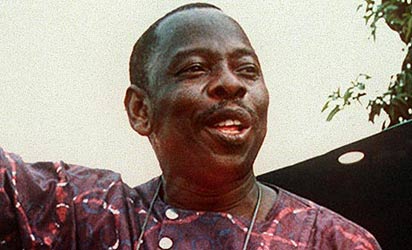
Late Ken Saro-Wiwa
By Jimitota Onoyume, Assistant News Editor
After more than three decades of conflict that halted oil production in Ogoni, Rivers state, the possibility of crude oil flowing again in the oil-rich area appears to be gaining momentum, with the Movement for the Survival of the Ogoni People, MOSOP, backing the ongoing dialogue between the Federal Government and representatives of the Ogoni people.
MOSOP President, Fegalo Nsuke, said the organisation was encouraged by the progress of the discussions, stressing that the current process was different because it was not focused solely on bringing oil production back to Ogoni, but also on addressing the grievances that triggered the crisis in the first place.
Nsuke spoke last Friday while addressing a large gathering of MOSOP faithful at Giokoo in Gokana local government area.
For over 30 years, Ogoni has remained at the centre of one of Nigeria’s most enduring conflicts involving an oil-producing community and the petroleum industry. The trouble began with growing protests by the Ogoni people over environmental degradation, underdevelopment and the impact of oil exploration on their land, rivers, farms and livelihoods.
The agitation became more organised in the 1990s under MOSOP and the late Ken Saro-Wiwa, who led a non-violent campaign demanding environmental justice and greater rights for the Ogoni people. The protests eventually resulted in Shell suspending oil production in Ogoni in 1993. The crisis was further aggravated by the execution of Saro-Wiwa and eight other Ogoni activists in 1995, an event that drew widespread international condemnation and hardened opposition to oil activities in the area.
Since then, oil production has remained suspended, leaving the question of how and under what conditions oil could return to Ogoni unresolved.
But the ongoing dialogue with the Federal Government is now raising hopes of a possible breakthrough.
“For the first time, we have a situation where discussions are focused on the demands of the Ogoni people and not just on resuming oil production in the area,” Nsuke said.
He said the government’s willingness to discuss the issues at the heart of the Ogoni crisis represented a significant opportunity for peace and development.
“We have fought for over 30 years and we were able to bring Shell to shame and expose their bad deeds in Ogoni. The government today has also admitted the wrongs and errors of the past “, he said.
According to Nsuke, MOSOP is not opposed to dialogue or development, but wants any agreement on the future of oil in Ogoni to guarantee a better future for the people.
“The Ogoni struggle was essentially a protest against underdevelopment. Today, the government has offered to enter into discussions on how we can best address that problem. What can be better than that?” he observed.
He said that the objective was to ensure the emergence of an Ogoni economy capable of protecting the future of the people, adding that there would be no compromise in protecting the gains of the decades-long struggle.
“In a non-violent struggle like ours, there can be no better alternative to dialogue. Whatever discourages you from dialogue is an enemy and you must avoid them,” Nsuke said.
He urged the Ogoni people to remain peaceful and focused, warning against actions that could derail the dialogue.
“You have fought a good fight. You are the symbol of the Ogoni resistance and you must remain focused at this time to protect the benefits of the struggle,” he said.
As the Federal Government and Ogoni representatives continue their discussions, attention is increasingly turning to whether the long-awaited return of oil production can become a reality.
Disclaimer
Comments expressed here do not reflect the opinions of Vanguard newspapers or any employee thereof.