
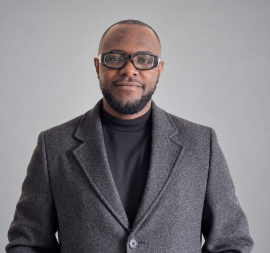
Nigeria’s artificial intelligence future will depend not only on access to increasingly powerful AI models but also on the development of reliable systems and institutions capable of turning AI-generated information into accountable decisions, technology engineer Onyekachukwu Victor Chukwuka has said.
Chukwuka, a UK-based Lead Engineer at TSB and founder of Dexspace Ltd., said Nigeria should broaden its AI conversation beyond models, computing infrastructure and chatbots to focus on how the technology would be deployed in decisions affecting people and institutions.
He said AI was increasingly being used to analyse documents, support customer service, generate software, detect patterns, improve business operations and assist decision-making.
According to him, Nigeria’s large population, growing technology ecosystem and pool of engineers working on global technology projects provide an opportunity for the country to contribute significantly to the next phase of AI development.
“The harder question is this: how do we make AI useful when the decision matters and someone must be able to explain, challenge, and defend the outcome?” he asked.
AI governance challenge
Chukwuka said the global debate over the development of frontier AI systems had underscored the need for stronger evaluation, security and governance mechanisms.
He said Nigeria should learn from the debate by developing responsible AI systems rather than waiting for a global consensus on how the technology should be governed.
“We can pursue useful AI while insisting that sensitive systems have defined data boundaries, meaningful human review, traceable reasoning, and deployment controls appropriate to the decisions they support,” he said.
He identified banking, payments, digital identity and healthcare as sectors where AI failures could have significant consequences.
According to him, systems deployed in such areas must protect data, manage failures, maintain audit trails, control access and enable organisations to establish what happened when something goes wrong.
From AI models to decision systems
Chukwuka distinguished between an AI model and what he described as a decision system.
He said while an AI model primarily generates an answer, a decision system creates a structured process around the answer by defining the problem, examining relevant perspectives, testing assumptions, recording uncertainty and keeping a human decision-maker accountable for the final action.
He said organisations should determine the level of authority given to AI systems, the data they can access, where the data is processed and how humans review their outputs.
Chukwuka added that the approach was particularly important when AI-supported decisions could affect people’s livelihoods, finances, safety, access to services or reputations.
Banking experience shapes approach
Chukwuka said his experience as a Lead Engineer at TSB, a UK retail bank, had shaped his approach to developing reliable technology systems.
He identified access controls, service boundaries, monitoring, resilience, testing, security and recovery mechanisms as essential components of dependable technology infrastructure.
“Access controls, service boundaries, observability, resilience, testing, security remediation, and recovery behaviour are not decorative additions. They are part of the product,” he said.
He said the experience contributed to the development of The Council, a structured AI decision-intelligence platform being developed by his company, Dexspace Ltd.
According to him, the platform is designed to help teams structure complex decisions by introducing different specialist perspectives into a defined workflow.
He said the system can subject the resulting reasoning to simulated peer review before producing a synthesis covering areas such as agreement, disagreement, blind spots, trade-offs and possible next steps.
Chukwuka stressed that the platform was not intended to replace executives, boards, qualified professionals or public institutions.
“The important point is not that several AI perspectives are automatically correct. They are not,” he said.
He explained that the objective was to make reasoning more inspectable and encourage deliberate challenge during decision preparation.
Trust key to AI adoption
Chukwuka said Nigeria’s AI development would ultimately depend on public and institutional trust.
He said financial services, digital identity systems and public institutions would have to balance technological innovation with privacy, security and accountability.
“Can a financial service protect its customers while expanding access? Can an identity system be secure without becoming opaque? Can a public institution use automation without making it impossible for citizens to understand or challenge a decision?” he asked.
He recommended data governance, privacy controls, human oversight, realistic testing, post-deployment monitoring and clearly assigned responsibility as safeguards for responsible AI deployment.
Chukwuka also cautioned organisations against treating successful demonstrations of AI technology as evidence that the systems were ready for production.
AI enters boardroom preparation
He cited reports of Lloyds Banking Group’s reported use of a specialist AI board adviser developed by Board Intelligence as an example of how large institutions were exploring AI beyond customer-service applications.
According to him, the system was designed to review board papers, identify inconsistencies and possible bias, and help executives challenge their thinking ahead of meetings.
Chukwuka stressed that the initiative was separate from The Council and did not constitute an endorsement of his product.
He said the development nevertheless demonstrated growing interest among regulated institutions in using AI to support decision preparation while retaining human accountability.
“The significance is not that a machine has joined the board. It has not replaced directors, and it does not carry the board’s accountability,” he said.
Nigeria needs AI expertise and institutions
Chukwuka urged Nigeria to combine AI innovation with investment in the engineering and institutional capabilities required for responsible deployment.
“We should build models, but also build the engineering and institutional capabilities that make those models useful,” he said.
He also called for a clear distinction between prototypes and dependable production systems.
“We should encourage experimentation, but distinguish a prototype from a dependable service. We should welcome automation, but preserve human agency where decisions affect livelihoods, access, safety, money, or reputation,” he said.
According to Chukwuka, Nigerian technology professionals already possess expertise in payments, enterprise software, biometric identity, cloud architecture and applied artificial intelligence.
He said the next opportunity was to translate more of that expertise into companies, standards, products and institutions capable of serving African and international markets.
“The measure of Nigeria’s AI progress will not be how often we use the word ‘intelligent’. It will be whether our systems help people make better decisions, whether those decisions can be reviewed, and whether the public can trust the institutions using them,” he said.
Chukwuka said Nigeria could use the international debate over frontier AI development as an opportunity to strengthen governance while continuing to pursue technological innovation.
“Nigeria can respond by developing the people, infrastructure, and decision systems that allow innovation to move forward without asking citizens and institutions to surrender privacy or accountability in exchange for speed,” he said.
Chukwuka is a UK-based Lead Engineer at TSB, an AWS-certified solutions architect and founder of Dexspace Ltd. He has more than nine years’ experience across banking, payments, biometric identity, healthcare, enterprise software, cloud platforms and applied artificial intelligence.
He holds an MSc in Data Science and Artificial Intelligence from Bournemouth University.
Disclaimer
Comments expressed here do not reflect the opinions of Vanguard newspapers or any employee thereof.