
Nigeria needs context-driven sustainability standards – SPIN By Juliet Umeh The Sustainability Professionals Institute of Nigeria, SPIN, has called for the contextualisation of global sustainability standards to reflect Nigeria’s economic, social and institutional realities, urging organisations to embed sustainability in strategy, governance, risk management and finance. The call was made at SPIN’s inaugural Sustainability Conference held at Eko Hotel, Lagos, under the theme: “The Adaptive Enterprise: Sustainability Strategies for Challenging Times.” The conference, chaired by Ismail Omamegbe, brought together sustainability professionals, business leaders, policymakers, investors and financial institutions to examine how organisations could remain resilient and create long-term value amid growing uncertainty. In his opening remarks, President of SPIN, Prof. Kenneth Amaeshi, cautioned against simply replicating foreign sustainability frameworks in Nigeria. “Let us not make sustainability another form of imperialism travelling around the world. We must contextualise it to meet our needs,” Amaeshi said. He said while global standards had an important role, their application must produce outcomes relevant to Nigeria’s economic, institutional and social environment. In his keynote on behalf of the Managing Director and Chief Executive Officer of the Nigeria Sovereign Investment Authority, NSIA, Aminu Umar-Sadiq, Executive Director and Chief Investment Officer, Kolawole Owodunni, said sustainability could no longer remain a peripheral corporate function. “Sustainability can no longer sit at the margins. It must be central to how organisations make decisions,” he said. Owodunni said economic volatility, climate change, geopolitical shifts, technological disruption, energy transition and regulatory changes were increasingly influencing how organisations operated and allocated capital. He said sustainable finance extended beyond green bonds to include credible governance, transparent disclosure and effective environmental and social risk management, urging African businesses to see challenges in energy, healthcare, infrastructure and climate resilience as investment opportunities. Partner, ESG and Climate Change, PwC Nigeria, Marilyn Obasa-Osula, called for stronger board engagement and CFO buy-in, while Senior Special Assistant to the President on Climate Finance and Stakeholder Engagement, Ibrahim Shelleng, highlighted policy implementation gaps and efforts towards developing a Nigeria-based taxonomy for green investments. Executive Director, Risk, FirstBank Group, Biyi Olagbami, said, “Compliance is a baseline, not a competitive advantage,” warning against applying international standards without local adaptation. Chief Executive of CSR-in-Action, Dr. Bekeme Masade-Olowola, said ESG integration should be judged by “where the money actually goes, how decisions are made, and what people are held accountable for.” Meanwhile, Vice President of SPIN, Dr. Ini Abimbola, announced the Institute’s move towards chartered status and a formal licensing framework for practitioners, supported by continuing professional development. “Sustainability is not an addendum. Sustainability is governance. Sustainability is business,” Abimbola said. SPIN said the conference marked the beginning of efforts to strengthen sustainability practice in Nigeria and translate sustainability principles into boardroom decisions, investments, policies and professional development.
By Juliet Umeh
The Sustainability Professionals Institute of Nigeria, SPIN, has called for the contextualisation of global sustainability standards to reflect Nigeria’s economic, social and institutional realities, urging organisations to embed sustainability in strategy, governance, risk management and finance.
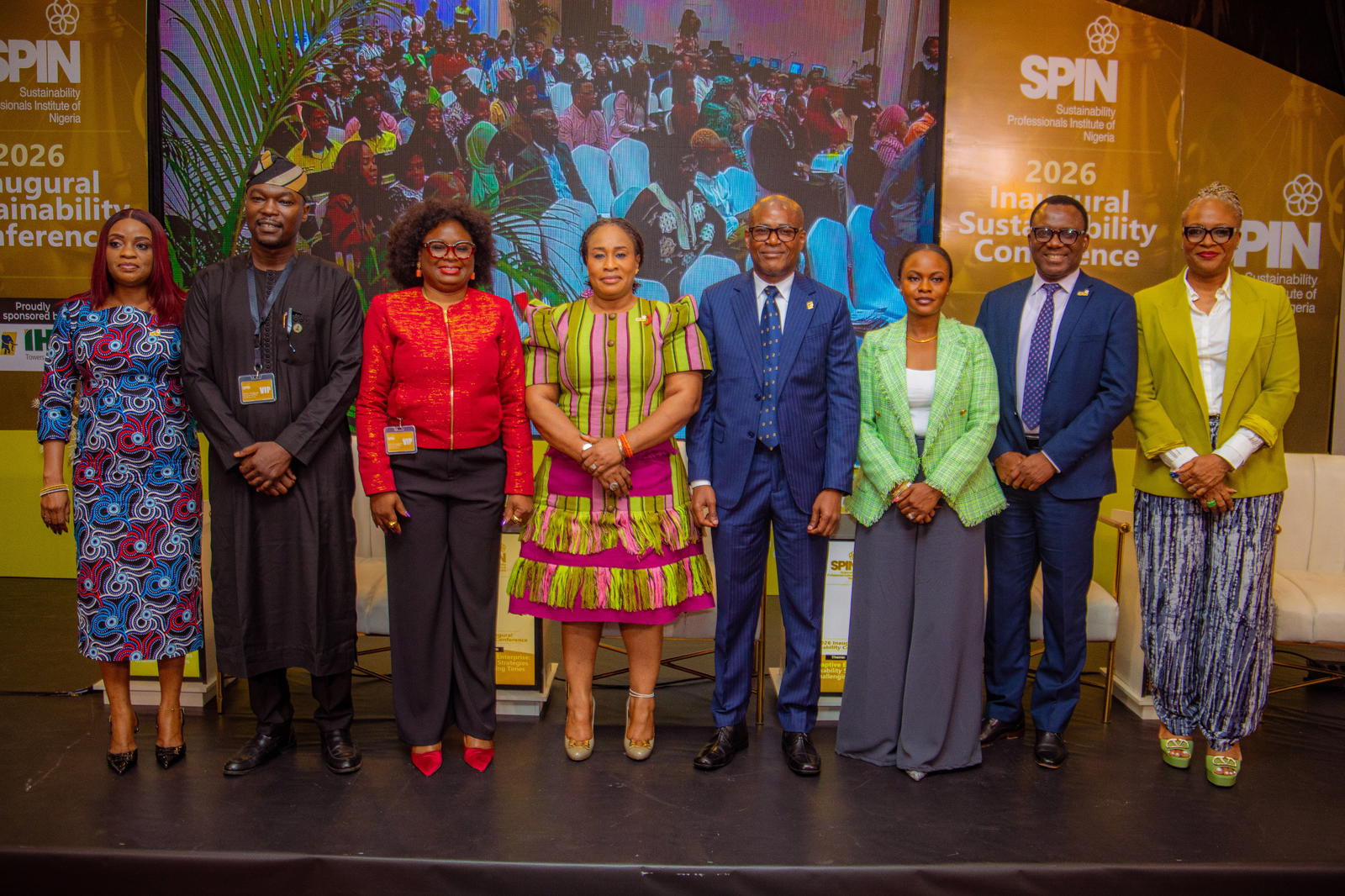
The call was made at SPIN’s inaugural Sustainability Conference held at Eko Hotel, Lagos, under the theme: “The Adaptive Enterprise: Sustainability Strategies for Challenging Times.”
The conference, chaired by Ismail Omamegbe, brought together sustainability professionals, business leaders, policymakers, investors and financial institutions to examine how organisations could remain resilient and create long-term value amid growing uncertainty.
In his opening remarks, President of SPIN, Prof. Kenneth Amaeshi, cautioned against simply replicating foreign sustainability frameworks in Nigeria.
“Let us not make sustainability another form of imperialism travelling around the world. We must contextualise it to meet our needs,” Amaeshi said.
He said while global standards had an important role, their application must produce outcomes relevant to Nigeria’s economic, institutional and social environment.
In his keynote on behalf of the Managing Director and Chief Executive Officer of the Nigeria Sovereign Investment Authority, NSIA, Aminu Umar-Sadiq, Executive Director and Chief Investment Officer, Kolawole Owodunni, said sustainability could no longer remain a peripheral corporate function.
“Sustainability can no longer sit at the margins. It must be central to how organisations make decisions,” he said.
Owodunni said economic volatility, climate change, geopolitical shifts, technological disruption, energy transition and regulatory changes were increasingly influencing how organisations operated and allocated capital.
He said sustainable finance extended beyond green bonds to include credible governance, transparent disclosure and effective environmental and social risk management, urging African businesses to see challenges in energy, healthcare, infrastructure and climate resilience as investment opportunities.
Partner, ESG and Climate Change, PwC Nigeria, Marilyn Obasa-Osula, called for stronger board engagement and CFO buy-in, while Senior Special Assistant to the President on Climate Finance and Stakeholder Engagement, Ibrahim Shelleng, highlighted policy implementation gaps and efforts towards developing a Nigeria-based taxonomy for green investments.
Executive Director, Risk, FirstBank Group, Biyi Olagbami, said, “Compliance is a baseline, not a competitive advantage,” warning against applying international standards without local adaptation.
Chief Executive of CSR-in-Action, Dr. Bekeme Masade-Olowola, said ESG integration should be judged by “where the money actually goes, how decisions are made, and what people are held accountable for.”
Meanwhile, Vice President of SPIN, Dr. Ini Abimbola, announced the Institute’s move towards chartered status and a formal licensing framework for practitioners, supported by continuing professional development.
“Sustainability is not an addendum. Sustainability is governance. Sustainability is business,” Abimbola said.
SPIN said the conference marked the beginning of efforts to strengthen sustainability practice in Nigeria and translate sustainability principles into boardroom decisions, investments, policies and professional development.
Disclaimer
Comments expressed here do not reflect the opinions of Vanguard newspapers or any employee thereof.