
By Kingsley Adegboye
The Architects’ Registration Council of Nigeria (ARCON), is set to integrate energy efficiency and sustainable building principles into architectural education and professional training in Nigeria.
This is just as the Council and GIZ target new competency standards and certification.
The move is part of a new partnership between ARCON and the German development agency, Deutsche Gesellschaft für Internationale Zusammenarbeit (GIZ), aimed at strengthening the capacity of architects and other built-environment professionals to deliver energy-efficient and climate-responsive buildings.
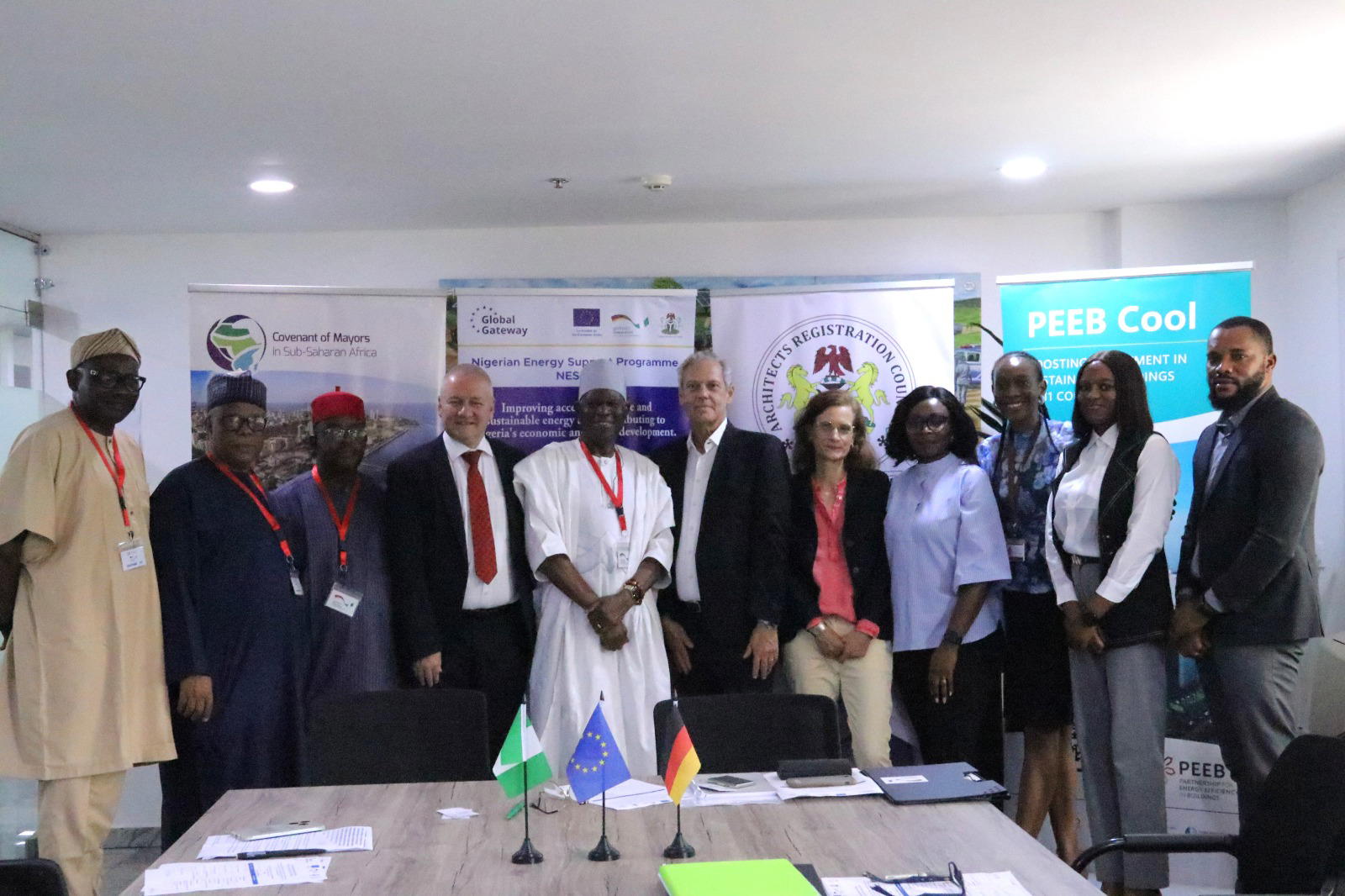
Under a Memorandum of Understanding (MoU) signed in Abuja last week, the partners will review and update competency standards for Energy Efficient Building Design (EEBD), develop training materials, establish a national training network and introduce a certification framework for professionals.
The initiative could subsequently influence architectural curricula, professional examinations and continuing professional development, given ARCON’s statutory responsibility for regulating architectural education, registration, training and practice in Nigeria.
Speaking at the signing ceremony, ARCON President, Arc. (Sir) Oladipupo Ajayi, FNIA, said the building sector had a major impact on energy consumption, environmental sustainability, urban resilience and quality of life.
He said architects must therefore be equipped to lead the transition towards more energy-efficient and sustainable buildings.
“Architects must therefore promote energy-efficient buildings, climate-responsive design, sustainable construction and inclusive development,” Ajayi said.
According to him, the agreement would provide a platform for knowledge sharing, capacity development, innovation and practical action, while ensuring that the benefits of sustainability were extended across society.
Ajayi said ARCON was committed to working with its partners to embed energy efficiency and sustainability in professional development, architectural education and building delivery.
The Registrar of ARCON, Arc. Mohammed Itopa Sule, FNIA, said the agreement marked an important step towards advancing energy efficiency, sustainable buildings, climate-responsive design, inclusion and a just transition in Nigeria’s built environment.
Sule, who gave the vote of thanks, pledged that ARCON would translate the agreement into practical programmes, improved building practices and measurable impact.
He commended GIZ Nigeria and ECOWAS, the Nigerian Energy Support Programme (NESP), Covenant of Mayors in Sub-Saharan Africa (CoM SSA) and Partnership for Energy Efficiency in Buildings (PEEB) for their support.
The GIZ Nigeria and ECOWAS Country Director, Dr. Markus Wagner, opened the ceremony, while the Head of Development Cooperation at the German Embassy in Abuja, Dr. Karin Jansen, delivered the opening remarks.
Sharon Kaburuk, Head of Component, Capacity Development at NESP, presented an overview of the agreement, while Jochen Rudolph, Cluster Coordinator, Just Transition and Inclusion Cluster, also participated.
The partnership brings together three GIZ-supported programmes — NESP, PEEB and CoM SSA — under the Just Transition and Inclusion Cluster.
The focus on architectural education is considered strategic because decisions taken at the design and specification stages largely determine the energy performance of buildings throughout their lifespan.
ARCON regulates architectural education and professional practice in Nigeria and accredits architectural programmes in universities and polytechnics. It also oversees the registration, training and professional conduct of architects.
The revised competency standards being developed under the partnership are therefore expected to provide a framework for strengthening the knowledge and skills required of future architects in energy-efficient building design.
NESP supports Nigeria’s sustainable energy transition through skills, institutional and systems development in renewable energy and energy efficiency.
PEEB Cool focuses on energy efficiency and climate resilience in the building sector, while CoM SSA supports cities and municipalities in sustainable energy and climate planning and in developing projects capable of attracting financing.
The partners said the signing marked the beginning of the initiative, with the immediate phase focusing on the technical revision of competency standards, development of training materials and design of the certification framework.
This will be followed by training and capacity development through the proposed national network.
Disclaimer
Comments expressed here do not reflect the opinions of Vanguard newspapers or any employee thereof.