
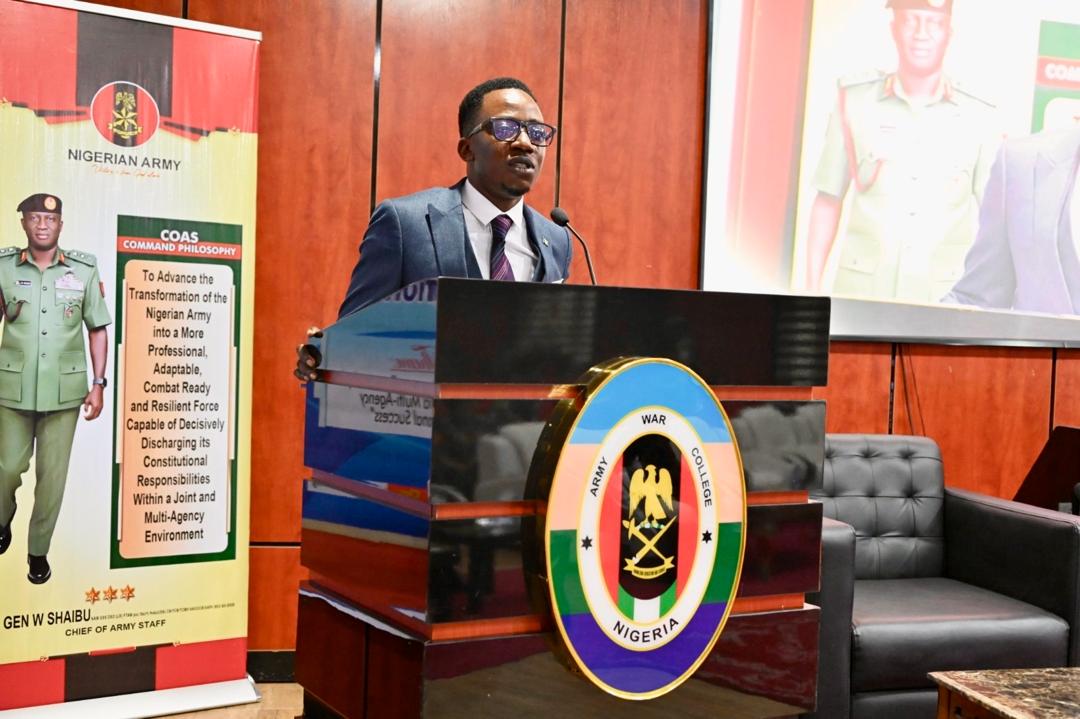
Jos – The growing use of artificial intelligence (AI) to create disinformation, deepfakes and coordinated propaganda could undermine security operations and public trust in Nigeria, technology and media expert Job Dachungyang has warned.
Dachungyang, Managing Director/CEO of Tomruk iHub Multiverse Nigeria and Founder of SaaSfloat.com, gave the warning while delivering a keynote address at a media workshop organised by the Directorate of Army Public Relations (DAPR) for Army public relations officers, media practitioners and public relations officers of other security agencies.
The workshop was themed, “Media Integration as a Force Multiplier for Joint and Multi-Agency Operational Success.”
Speaking on “Building Trust in the Digital Age: Navigating Multi-Media Relations and Artificial Intelligence (AI) Challenges in Joint and Multi-Agency Operations,” Dachungyang said security institutions now operate on two interconnected battlefields, the physical environment and the digital information space.
He said smartphones and social media allow information about security incidents to reach millions of people before authorities have verified what happened, creating major challenges for agencies during joint operations.
Dachungyang said AI had created both opportunities and new vulnerabilities for security agencies. While it could be used for real-time analysis of public sentiment, threat monitoring and early identification of emerging crises, he warned that it could also be exploited to produce fake videos, audio recordings and official-looking messages.
He particularly highlighted deepfakes, saying fabricated audio or video could imitate senior military commanders, government officials or leaders of joint security operations, potentially creating confusion among security personnel or triggering public panic.
Dachungyang also identified delays in official communication as a major vulnerability during security incidents, saying when agencies fail to provide verified information quickly, rumours and speculation can fill the information gap.
He called for faster systems for verifying and releasing information during emergencies, stressing that security agencies must be able to match the speed at which misinformation spreads online.
The expert also identified communication silos among the military, police, intelligence agencies and other security institutions as a potential weakness during joint operations.
He said conflicting statements from different agencies could undermine successful operations and create confusion among the public, arguing that media and public relations should be integrated into operational planning from the outset.
According to him, “Operational unity must be supported by communication unity” if joint security operations are to achieve broader strategic objectives.
Dachungyang described public trust as an important component of national security, saying communities are more likely to cooperate with security agencies when they believe the institutions are credible, consistent and transparent.
He identified five key elements required to maintain institutional trust: credibility, consistency, clarity, speed and transparency.
To address emerging digital threats, he recommended dedicated AI verification and fact-checking units to detect deepfakes, investigate coordinated online manipulation and verify digital content.
He also proposed multi-agency media intelligence frameworks for real-time information coordination and stronger collaboration between security institutions, media organisations and judicial authorities in tackling malicious disinformation.
Dachungyang said security leaders and public relations officers must develop new skills, proposing that security personnel be “battle-ready, media-ready and AI-aware.”
The Directorate of Army Public Relations organised the workshop for DAPR officers and soldiers within the North Central zone, media organisations, online publishers, public relations officers of sister security services, professional media bodies and other security agencies.
Dachungyang said the emerging information environment makes the protection of truth and institutional credibility increasingly important to national security.
“In the digital age, trust is national power,” he said.
Disclaimer
Comments expressed here do not reflect the opinions of Vanguard newspapers or any employee thereof.