
By Musa Ubandawaki, Sokoto
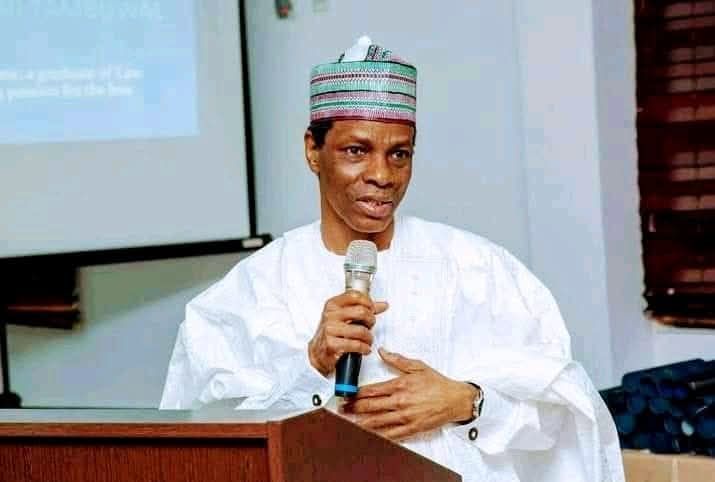
SOKOTO: Former Deputy Governor of Sokoto State, His Excellency Mukhtar Shehu Shagari, has on Wednesday commended Governor Ahmed Aliyu Sokoto, PhD, FCNA, for what he described as a far-reaching transformation of the state through sustained interventions in education, agriculture, healthcare, infrastructure, social welfare, religious affairs and environmental sanitation.
Shagari, in a statement made available to journalists in Sokoto by his Media aide Musa Ubandawaki, said the administration had demonstrated what he described as a clear determination to reverse developmental challenges confronting the state and lay a stronger foundation for sustainable economic and social progress.
He said the impact of government interventions was becoming increasingly visible across the state, particularly in critical sectors directly affecting the welfare and livelihood of ordinary citizens
According to him, the administration’s interventions in the education sector, including the rehabilitation and upgrading of schools and provision of learning facilities, represent a strategic investment in the future of Sokoto and its younger generation.
Shagari stressed that no society could achieve meaningful development without a strong education system, noting that improving access to quality learning would ultimately produce a better equipped workforce and expand opportunities for young people.
The former deputy governor also commended the government’s agricultural interventions, particularly the distribution of fertiliser and pesticides free of charge to farmers, describing agriculture as a critical pillar of food security, poverty reduction and rural economic empowerment in Sokoto State.
He said sustained support for farmers through agricultural inputs and other initiatives would boost production, strengthen rural livelihoods and enable Sokoto to make a greater contribution to Nigeria’s national food security objectives.
On healthcare, Shagari acknowledged the administration’s efforts to improve healthcare infrastructure and access to essential medical services, stressing that a healthy population remained indispensable to economic productivity and sustainable development.
He similarly applauded government programmes in religious affairs and social welfare, particularly interventions targeted at orphans, vulnerable citizens, disadvantaged families and other needy members of society, saying such measures demonstrate concern for the dignity and wellbeing of the people.
Shagari said the administration’s investments in roads, water supply, housing, markets, power and other critical infrastructure were gradually reshaping the physical and economic landscape of the state.
He noted that effective infrastructure would not only improve the movement of people and goods but also stimulate commercial activities, attract investment, open up communities and create new economic opportunities, particularly for the younger generation.
The former deputy governor also singled out the administration’s renewed attention to environmental hygiene, observing that the Sokoto metropolis had witnessed a noticeable improvement in cleanliness and general environmental appearance.
He urged residents to complement the government’s sanitation efforts by taking responsibility for proper waste disposal, maintaining clean surroundings and protecting public infrastructure, stressing that a clean environment was essential to public health and the attractiveness of the state capital.
Shagari called on the people of Sokoto State, irrespective of political, ethnic or other differences, to rally behind initiatives capable of improving the lives of citizens and accelerating the state’s development.
He maintained that government alone could not achieve sustainable development without the active participation and cooperation of the people, urging citizens to support genuine development programmes while holding public facilities and infrastructure in trust for future generations.
“The development of Sokoto State is a collective responsibility. Government can initiate projects and programmes, but their sustainability depends largely on the cooperation and support of the people,” Shagari said.
He added: “Sokoto belongs to all of us. Its progress must therefore be a shared mission. Let us put aside unnecessary divisions and work together to build a state that future generations will be proud to inherit.”
Shagari expressed optimism that with sustained commitment by the government and greater cooperation from citizens, Sokoto could attain higher levels of economic, educational, social and infrastructural development and strengthen its position as a major centre of progress in Nigeria.
Disclaimer
Comments expressed here do not reflect the opinions of Vanguard newspapers or any employee thereof.