
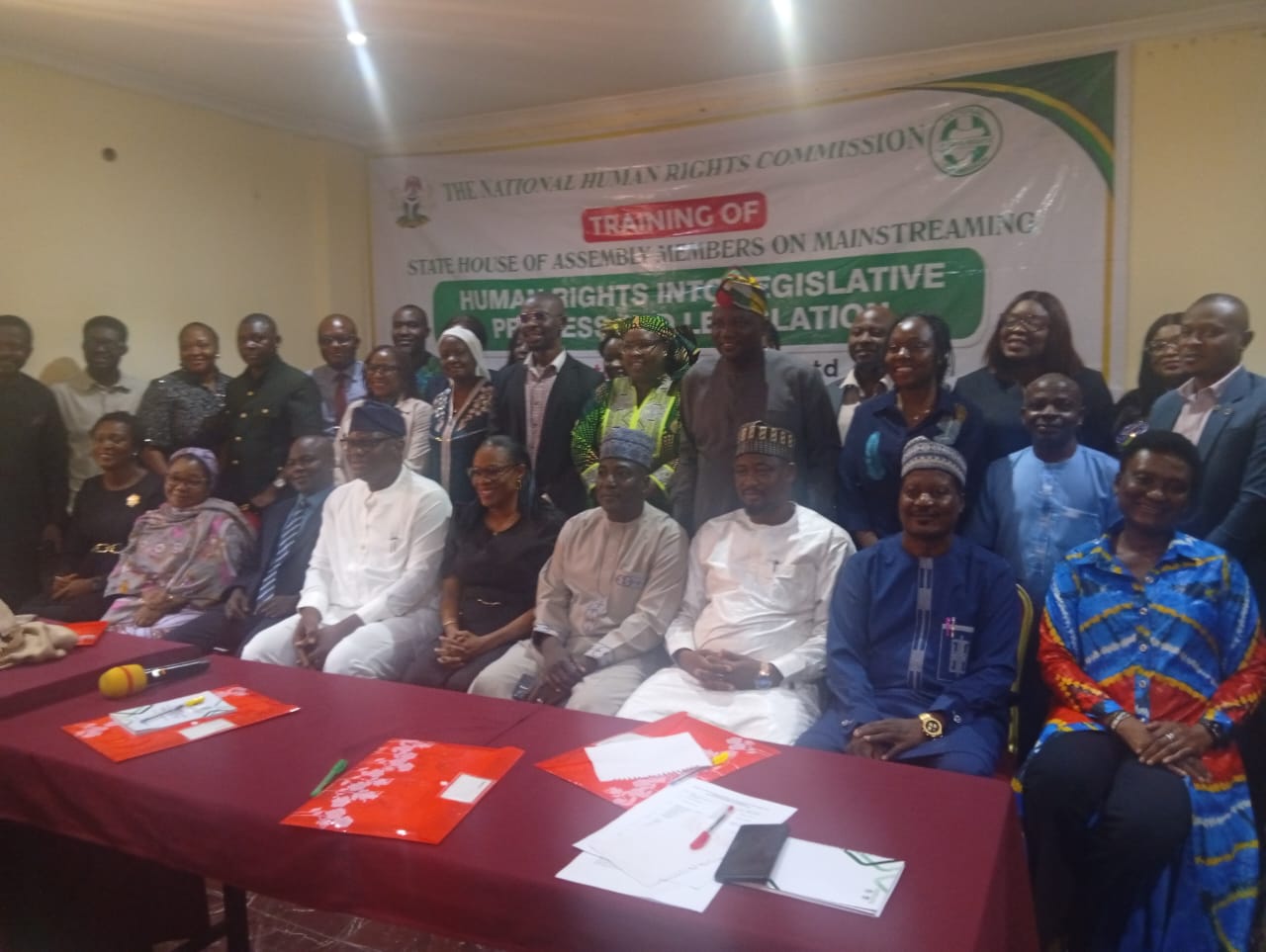
Jos – The National Human Rights Commission (NHRC) has urged lawmakers in Plateau State to incorporate human rights considerations into the legislative process and subject proposed laws to Human Rights Impact Assessment (HRIA).
The Executive Secretary of the Commission, Tony Ojukwu, made the call in Jos on Tuesday, at a one-day training for legislators on mainstreaming human rights and HRIA into legislation.
The training was facilitated by Comozi Global Ltd, while Ojukwu was represented by the Plateau State Coordinator of NHRC, Kyenpiya Mafuyai.
He said HRIA would help lawmakers identify potential risks and unintended consequences of proposed laws, especially their effects on vulnerable groups.
“Human Rights Impact Assessment should not be viewed as an additional bureaucratic hurdle or an impediment to legislative efficiency. On the contrary, it is a practical decision-making tool that enhances the quality, legitimacy and sustainability of legislation,” he said.
Ojukwu also called for thorough committee scrutiny, evidence-based deliberations and meaningful public consultations to ensure that legislation reflects societal realities and protects fundamental rights.
“The true measure of a legislature is not the number of bills it passes, but the positive impact those laws have on the lives of the people,” he said.
He urged lawmakers to go beyond making laws to enacting legislation that is “just, inclusive, evidence-based and rights-compliant.”
The NHRC Executive Secretary reaffirmed the Commission’s commitment to working with the National Assembly, State Houses of Assembly and other institutions to strengthen rights-based governance in Nigeria.
Also speaking, the Speaker of the State Assembly, Na’anlong Daniel, represented by the Member representing Langtang North Central Constituency, Daniel Listick, commended the Commission for organising the training, saying “the time is apt.”
He said the State Assembly was “a pacesetter and has been mainstreaming human rights in some of its legislations.”
The Speaker cited gender sensitivity in the use of words as one example, saying more would be done to ensure inclusion for citizens.
The lead facilitator, Okwa Morphy, took participants through principles of legal frameworks, including non-discrimination, participation, transparency, accountability and inclusion.
She also addressed international, regional and national legal and policy frameworks supporting HRIA, its practical application, and the role of legislators in promoting human rights through legislation, oversight, representation and budget approval.
Disclaimer
Comments expressed here do not reflect the opinions of Vanguard newspapers or any employee thereof.