
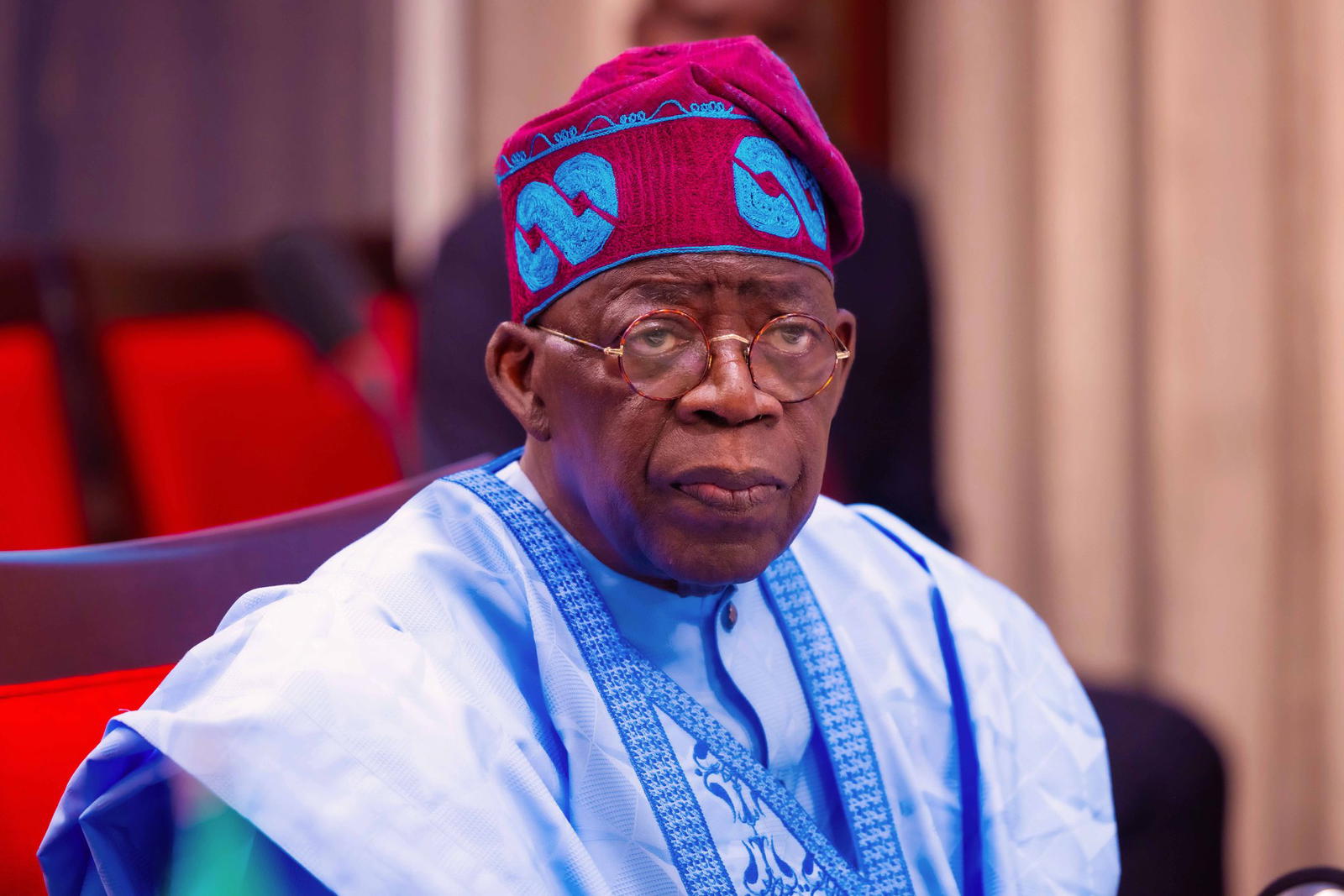
President Bola Tinubu
…says citizens prevented economic collapse, kept reforms alive through hardship
By Joseph Erunke, Abuja
A policy think tank, the Independent Media and Policy Initiative,IMPI, has declared that President Bola Ahmed Tinubu’s sweeping economic reforms would have collapsed without the resilience, sacrifice and patriotism of ordinary Nigerians who endured the painful consequences of the administration’s bold policy decisions.
The group said Nigerians,not government alone,have been the real executors of the reforms by absorbing unprecedented economic shocks, demanding accountability and driving the transition from a consumption-driven economy to a productive one.
In a policy statement titled, “Nigerians as Actual Executors of Tinubu’s Reforms as Economy Transits from Consumption to Productivity,” released on Friday in Abuja, IMPI Chairman, Dr. Omoniyi Akinsiju, argued that the long-term success of the administration’s economic agenda rests largely on the determination of citizens to endure short-term pain for future prosperity.
According to him, Nigerians have functioned simultaneously as “the primary shock absorbers, the ultimate arbiters of accountability and the engine of behavioural realignment required for a market-driven economy.”
He said the removal of fuel subsidy and the floating of the naira triggered severe inflation and a sharp rise in the cost of living, but maintained that the willingness of Nigerians to bear the hardship prevented the economy from sliding into a deeper crisis.
“By enduring the spiralling costs of transportation, food and energy following the removal of fuel subsidy and the floating of the naira, Nigerians effectively created the fiscal breathing space needed to prevent sovereign default, rebuild external reserves and stabilise the economy,” Akinsiju said.
He noted that despite the harsh economic environment experienced in 2024 and 2025, households and Micro, Small and Medium Enterprises,MSMEs,demonstrated remarkable resilience that kept economic activities alive and prevented widespread structural collapse.
The think tank also argued that Nigerians have emerged as critical enforcers of accountability by insisting that savings realised from subsidy removal should be transparently invested in infrastructure, healthcare, education and other sectors that directly impact citizens.
According to IMPI, civil society organisations, the media and social media users have sustained pressure on government institutions to ensure that trillions of naira saved from subsidy removal are not diverted through corruption or bureaucratic waste.
“The success of intervention programmes such as the Nigerian Education Loan Fund,NELFUND, Compressed Natural Gas ,CNG, transport initiatives and direct cash transfer schemes depends largely on citizens actively monitoring these programmes and holding implementing agencies accountable,” Akinsiju stated.
He further argued that the administration’s economic reforms would only achieve lasting success if Nigerians embrace local production and reduce dependence on imported goods.
“As the floating of the naira makes imports significantly more expensive, consumers and businesses must increasingly support locally manufactured products, agriculture and technology-driven enterprises. This shift is essential to reducing Nigeria’s exposure to foreign exchange volatility,” he said.
Akinsiju added that citizens and businesses moving into the formal economy would also strengthen government revenue through taxation, thereby reducing the country’s long-standing dependence on crude oil earnings.
Reviewing Nigeria’s economic history, the think tank criticised previous administrations for relying on what it described as unsustainable command-and-control policies, artificial exchange-rate controls and fuel subsidies that encouraged corruption and discouraged domestic production.
According to the group, successive governments repeatedly abandoned difficult reforms whenever political pressure mounted, creating opportunities for rent-seeking while weakening manufacturing, infrastructure development and long-term economic growth.
It argued that the Tinubu administration had broken from that tradition by embracing market-based reforms, removing petrol subsidy, unifying the foreign exchange market and allowing transparent pricing mechanisms to operate.
“By taking the bitter medicine that previous governments avoided, this administration has fundamentally changed global perceptions of Nigeria. Investors now increasingly see the country as a transparent frontier market willing to undertake difficult reforms in pursuit of long-term economic stability,” Akinsiju said.
The think tank maintained that the philosophy underpinning the administration’s reforms is to reposition Nigeria as a production-driven economy capable of producing what it consumes and adding value to what it exports.
It noted that the transition is being powered through fiscal reforms, institutional digitisation and long-term industrial policies designed to expand local production, boost non-oil exports and build a more resilient economy.
Disclaimer
Comments expressed here do not reflect the opinions of Vanguard newspapers or any employee thereof.