
…to boost Nigeria’s energy security
By Joseph Erunke, Abuja
The Chairman and Chief Executive Officer of Ebenco Global Link, Dr. Ebenezer Oluwagbemiga, has called for the full adoption of local content in Nigeria’s oil and gas industry, declaring that indigenous engineering expertise holds the key to achieving sustainable energy security, reducing capital flight and accelerating the country’s industrialisation.
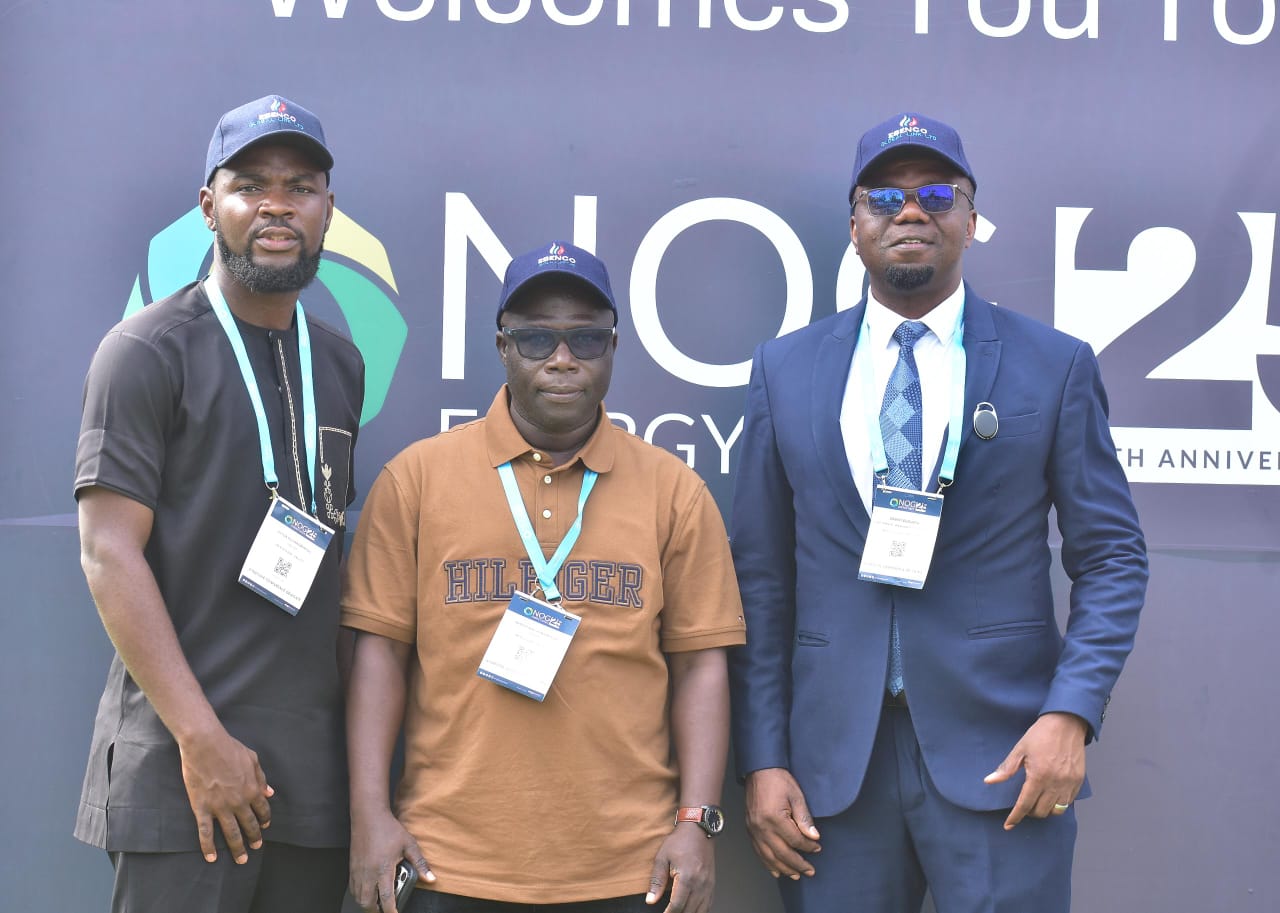
Speaking at the 25th NOG Energy Week Conference and Exhibition held in Abuja, Oluwagbemiga said the company’s 30,000 barrels-per-day modular refinery under construction in Koko, Delta State, was deliberately designed to be executed entirely by Nigerian engineers without reliance on foreign Engineering, Procurement and Construction (EPC) contractors.
He said the project reflects Ebenco Global Link’s unwavering commitment to a 100 per cent local content strategy aimed at strengthening Nigeria’s technical capacity and ensuring long-term operational independence.
“Our strategic objective is to build local capacity that outlives the immediate facility setup. Our implementation of indigenous technology guarantees that facility modifications and routine upgrades are managed entirely within our borders, ensuring operational continuity without external disruption,” he said.
Oluwagbemiga explained that the company, which has built its reputation in marine logistics and environmental services since 2006, is now making a major expansion into petroleum refining, with commercial operations at the refinery expected to commence before the end of 2026.
His remarks drew strong commendation from regulators, energy experts and independent downstream investors at the conference, who described the refinery as a practical demonstration of Nigeria’s growing indigenous capacity to execute complex energy infrastructure.
An independent petroleum infrastructure consultant, Engr. Chidi Amadi, said the project had effectively challenged the long-held belief that major refining infrastructure must depend on foreign technical contractors.
“What Ebenco Global Link has proven is that the capital flight traditionally associated with importing foreign EPC contractors can be significantly reduced. By relying on local engineering expertise, the project lowers commissioning costs while establishing an efficient in-country framework for maintenance and future expansion,” Amadi said.
He added that the refinery’s dependence on domestic engineering would also insulate it from global supply chain disruptions and the impact of foreign exchange volatility.
Beyond refining, stakeholders applauded the company’s environmental sustainability initiatives, particularly its 500-tonne Thermal Desorption Unit (TDU), designed to treat hazardous oil sludge and recover commercially valuable hydrocarbons.
Regional Energy Policy Analyst, Dr. Amina Bello, described the environmental technology as a major innovation capable of addressing decades of ecological degradation in the Niger Delta while creating new economic opportunities.
“The deployment of Thermal Desorption Unit technology directly addresses the Niger Delta’s long-standing environmental challenges. Converting hazardous oilfield waste into reusable commercial products supports environmental remediation while creating additional revenue opportunities,” she said.
Bello further noted that the refinery’s integrated assets, including its marine logistics fleet, heavy-duty transport barges and industrial oxygen and gas manufacturing plant, would enable the company to play a significant role across Nigeria’s downstream petroleum industry as well as the healthcare sector.
She observed that with the Federal Government intensifying efforts to expand domestic refining and reduce dependence on imported petroleum products, indigenous operators with integrated business models such as Ebenco Global Link are strategically positioned to drive the country’s evolving energy transition.
Industry observers at the conference agreed that the company’s indigenous execution model offers a practical roadmap for deepening local participation, enhancing technical self-reliance and strengthening Nigeria’s energy security while advancing broader industrial development.
Disclaimer
Comments expressed here do not reflect the opinions of Vanguard newspapers or any employee thereof.