
By Adeola Badru
The Nigerian Army has intensified efforts to modernise its financial management system by prioritising digital transformation and strict compliance with International Public Sector Accounting Standards (IPSAS), as part of broader reforms aimed at strengthening accountability, transparency and operational efficiency across its formations.
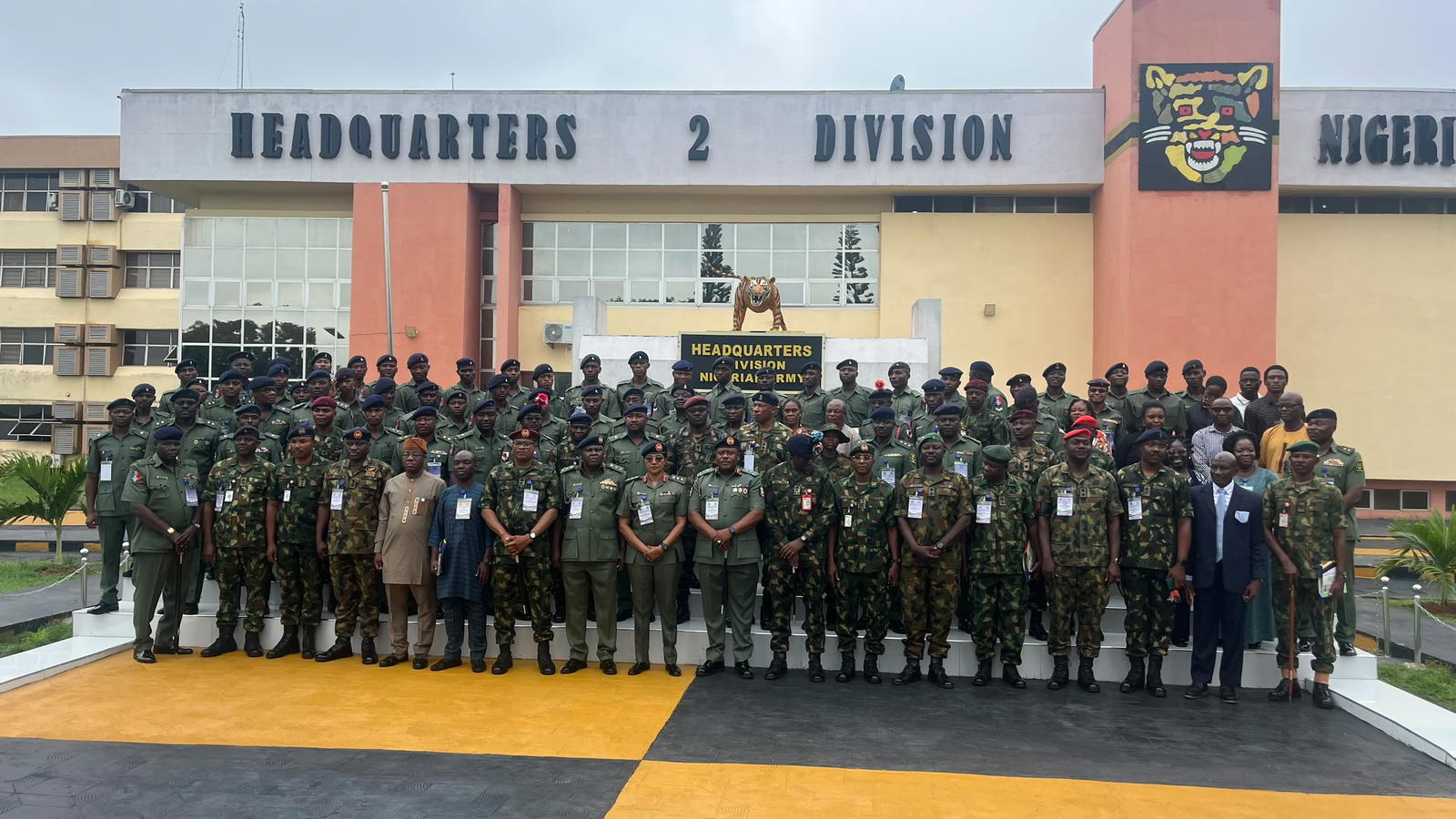
The renewed commitment was disclosed on Thursday with the commencement of the 2026 2 Division Finance and Accounts Training Week at the Headquarters 2 Division Nigerian Army Auditorium in Ibadan.
The three-day capacity-building programme, themed, “Enhancing Professional Finance Management through Digitalisation and International Public Sector Accounting Standards (IPSAS) Compliance in 2 Division Finance and Accounts,” brought together finance officers, clerks and other personnel to enhance their expertise in contemporary financial management and promote standardised financial administration within the division.
Speaking at the opening ceremony, the Chief of Accounts and Budget (Army), Major-General Taofiq Sidick, represented by the Commander, Army Personnel Pay Office (APPO), Brigadier-General Ismail Bashiru, said the evolving financial landscape required personnel to continually improve their knowledge and embrace emerging technologies.
He noted that the Nigerian Army has placed professional excellence and digital transformation at the centre of reforms within the Finance Corps, resulting in the institutionalisation of Finance and Accounts Training Weeks across Army formations.
According to him, the initiative is designed to promote continuous learning, improve professional competence and standardise financial practices throughout the service.
Bashiru explained that this year’s training will focus on key areas, including IPSAS implementation, public sector tax reforms, document security, electronic vouching and account rendition.
He described finance personnel as strategic contributors to military effectiveness, stressing that their responsibilities extend far beyond routine accounting functions.
“The quality of your work directly impacts financial discipline, timely delivery of personnel entitlements, troops’ morale and, ultimately, the operational readiness of the Nigerian Army,” he said.
He urged participants to take full advantage of the lectures, practical sessions and group exercises, adding that the knowledge gained should translate into improved performance and more efficient financial service delivery.
Bashiru also commended the General Officer Commanding (GOC), 2 Division Nigerian Army, Major-General Chinedu Nnebeife, for providing an enabling environment for the programme, describing the initiative as evidence of the division’s commitment to sound financial administration.
He equally praised the Acting Commander, 2 Division Finance and Accounts, members of the organising committee and other stakeholders for ensuring the successful commencement of the training.
Representing the GOC, the Commander, 52 Signals Brigade, Brigadier-General D.M. Ali, described the programme as an important platform for officers, soldiers and civilian personnel to exchange ideas on contemporary financial administration.
He said the training theme reflected the growing importance of digitalisation and IPSAS compliance in achieving greater transparency, accountability, efficiency and innovation in military financial management.
Ali stated that the Nigerian Army Finance Corps remained central to effective administration through prudent financial management, prompt processing of personnel entitlements, proper account rendition and strict observance of financial regulations.
“Finance personnel make significant contributions to troop welfare, command efficiency and operational effectiveness,” he said.
He encouraged participants to maximise the opportunity to strengthen their professional competence, noting that the programme supports the Chief of Army Staff’s philosophy, particularly its emphasis on robust administration.
Ali also acknowledged the Chief of Army Staff, Lieutenant-General Waidi Shaibu, for his continued support for personnel development and the provision of resources for capacity-building initiatives.
Earlier, the Acting Commander, 2 Division Finance and Accounts, Colonel Susan Okolo, said the training was organised to improve professional competence and enhance service delivery in response to evolving financial management requirements.
She said accountability, transparency and efficiency remain fundamental to military administration, making continuous professional development essential for finance personnel.
Ololo said digitalisation has become indispensable to effective service delivery, while compliance with IPSAS is critical to promoting transparency, accountability and standardisation in public sector financial reporting.
She expressed confidence that the programme would broaden participants’ understanding of modern financial management systems, expose them to emerging innovations and strengthen their capacity to perform their responsibilities effectively.
Okolo encouraged participants to actively engage in lectures, interactive sessions, quizzes, syndicate presentations and practical exercises to maximise the benefits of the training.
She added that the programme aligned with the vision of the Chief of Accounts and Budget (Army) to advance professionalism and digital transformation within the Nigerian Army Finance Corps, with the ultimate goal of strengthening financial support for military operations.
Disclaimer
Comments expressed here do not reflect the opinions of Vanguard newspapers or any employee thereof.