
By Gabriel Ewepu
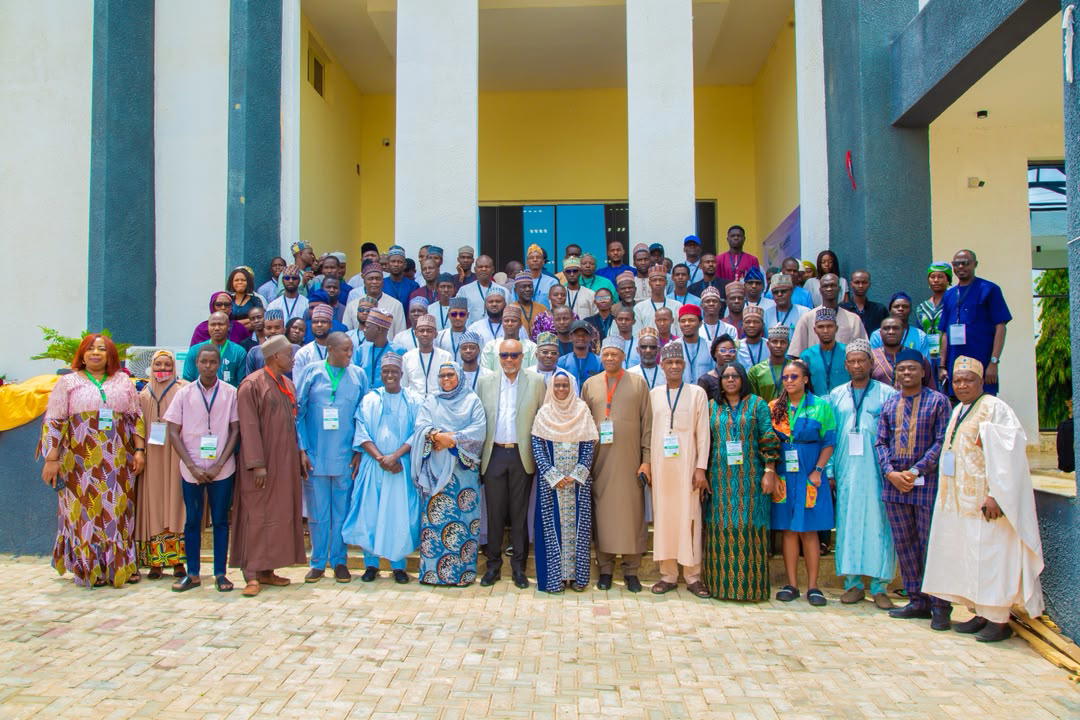
ABUJA – The Federal Ministry of Education, through the Research, Innovation and Commercialisation Committee (RICC), in collaboration with the Tertiary Education Trust Fund (TETFund), commenced the North-East Zonal National Commercialisation Intelligence and Ecosystem Engagement Workshop in Gombe, the capital of Gombe State.
The two-day workshop running from 24–25 July 2026 is the fourth in a series of six zonal engagements across Nigeria aimed at strengthening the National Research and Commercialisation Intelligence Ecosystem and accelerating the transformation of research outputs, innovations, and inventions into commercially viable products, services, enterprises, and industries.
Meanwhile, the workshop had in attendance policymakers, researchers, academics, industry leaders, investors, development partners, innovation hubs, financial institutions, and other stakeholders from across the North-East geopolitical zone comprising Adamawa, Bauchi, Borno, Gombe, Taraba, and Yobe, to identify opportunities for deeper collaboration and develop practical strategies for advancing research commercialisation in Nigeria.
The event was declared open by the Gombe State Commissioner for Science, Technology and Innovation, Dr. Habu Dahiru, supported by the Gombe State Commissioner for Education, Prof. Aishatu Umar Maigari who welcomed the team, they described the event as laudable and very timely and enjoined very active participation from the participants.
They highlighted the enormous potentials of Gombe State and indeed the zone.
Speaking during the workshop, Ag.Chairman of the Research, Innovation and Commercialisation Committee (RICC), Tamunoibuomi Okujagu, described the North-East as a region of immense resilience, untapped innovation potential, and strategic importance to Nigeria’s economic transformation.
Okujagu noted that while the region has made remarkable progress in rebuilding institutions and strengthening its knowledge base, greater collaboration is required to translate research outcomes into practical solutions that address local challenges, stimulate enterprise development, and drive inclusive economic growth.
He emphasised that the zonal engagements are designed to capture region-specific insights that will shape a nationally coordinated Research-to-Commercialisation Framework capable of unlocking innovation across every part of the country.
He also observed that Nigeria possesses an abundance of researchers, innovators, entrepreneurs, and problem-solvers, but continues to face challenges arising from weak linkages between academia, industry, investors, and government.
He explained that the proposed National Commercialisation Intelligence System (NCIS) will serve as a unified digital platform connecting research institutions, innovation hubs, industry, financial institutions, and policymakers through real-time commercialisation intelligence.
According to him, the platform will make research more visible, match industry needs with available solutions, facilitate investment, strengthen technology transfer, and provide evidence-based data to accelerate innovation-led industrial development.
He (Okujagu) further explained that Nigeria’s greatest challenge is not the absence of ideas but the lack of a coordinated ecosystem that connects researchers, innovators, industry, investors, government, and the market.
He said “the proposed National Research and Commercialisation Intelligence Ecosystem will provide a unified digital platform that aggregates research outputs, innovations, patents, industry needs, funding opportunities, and investment intelligence into a single national repository.”
The platform, he explained, will be a STRATEGIC NATIONAL ASSET that will enable stronger collaboration, facilitate technology transfer, support evidence-based policymaking, and accelerate the commercialisation of research into products, enterprises, jobs, and national prosperity.
This is the Agenda of Government, driven by the Honourable Minister of Education and TETFund to promote research commercialisation, drive economic development and diversification and make Nigeria not only relevant but competitive in the global knowledge-driven economy.
Delivering the keynote presentation on “Bridging Research, Innovation and National Prosperity,” Professor Seth Akutson challenged participants to rethink the purpose of research beyond academic publication, stressing that knowledge only creates value when it is translated into products, technologies, enterprises, and services that solve real societal problems.
Prof Akutson observed that Nigeria’s research ecosystem remains largely disconnected from industry, resulting in valuable innovations remaining within laboratories while industries continue to depend on imported solutions.
He called for stronger partnerships among universities, research institutes, government, industry, and development partners to establish an innovation ecosystem where research is driven by national priorities and market demand.
He further emphasised that successful commercialisation requires practical, problem-driven research, stronger intellectual property protection, targeted innovation financing, and sustained collaboration through the Triple Helix model involving government, academia, and industry, with innovation hubs, investors, and development partners serving as critical enablers.
He urged researchers to focus on developing scalable solutions capable of creating jobs, improving productivity, and enhancing Nigeria’s global competitiveness, noting that every innovation commercialised represents an opportunity to strengthen national prosperity.
Presenting the National Research-to-Commercialisation (R2C) Initiative, Engr. Umar Bindir, a member of the Research, Innovation and Commercialisation Committee (RICC), explained that the initiative seeks to establish a comprehensive National Commercialisation Intelligence System that provides a single national repository for research outputs, innovations, patents, technology readiness levels, funding opportunities, market intelligence, and industry demand.
He explained that the digital platform will automatically connect innovators with investors, industries, technology transfer offices, innovation hubs, and policymakers, thereby reducing fragmentation within Nigeria’s research ecosystem and accelerating the journey from discovery to commercialisation.
Engr. Bindir described the initiative as a national strategic asset designed to strengthen collaboration across government, academia, industry, investors, and development partners through an expanded Triple Helix Plus framework.
Disclaimer
Comments expressed here do not reflect the opinions of Vanguard newspapers or any employee thereof.