
By Chioma Obinna
Nigeria’s foremost scientists have raised fresh concerns over the worsening impacts of climate change, warning that unless the Federal Government urgently empowers states and local communities to lead climate action, the country will face more devastating floods, disease outbreaks, food insecurity and climate-related conflicts.
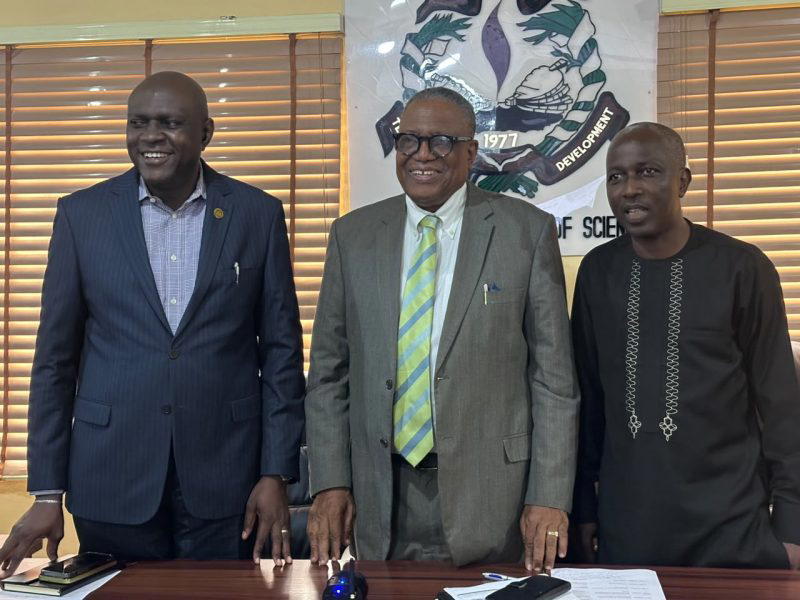
The warning came from the Nigerian Academy of Science, NAS, during a media roundtable on “Climate Change, Health and the Nigerian Reality,” where experts said climate change has evolved from an environmental issue into a major public health, economic and national security challenge.
Speaking, the Public Affairs Secretary and a Fellow of the Academy of Science, Professor Chinedum Babalola, said Nigeria was already experiencing the harsh realities of climate change through recurrent flooding, cholera outbreaks, extreme heat, worsening cardiovascular diseases, changing rainfall patterns, food insecurity and air pollution.
According to her, the World Health Organisation has described climate change as the single biggest health threat of the 21st century, stressing that Nigeria’s large population, infrastructure gaps and double burden of disease make the country particularly vulnerable.
“Science must not remain in journals and laboratories. It must speak to policy, to business, and to the Nigerian people,” Babalola said. “We are already living the reality of climate change.”
She urged journalists to bridge the gap between scientific evidence and public understanding by translating research into information that drives policy and behavioural change.
Delivering the keynote presentation, environmental scientist and Fellow of the Academy, Professor Babajide Alo, FAS, described climate change as one of the greatest existential threats facing humanity, warning that Nigeria is already paying the price through rising temperatures, severe flooding, desertification, coastal erosion, food shortages and increasing disease outbreaks.
“Climate change is no longer a future problem; it is already affecting our health, livelihoods and economy,” Alo said.
He noted that while northern Nigeria continues to battle desertification, flooding is no longer restricted to the southern states, with many northern communities also experiencing destructive floods.
The professor warned that the poorest Nigerians, including women, youths, farmers and fisherfolk, remain the most vulnerable to climate impacts, while rising temperatures and changing weather patterns are contributing to the spread of vector-borne diseases, malnutrition and other health emergencies.
He also linked climate change to insecurity in parts of the country, particularly around the Lake Chad Basin.
According to him, shrinking water bodies, declining agricultural productivity and loss of livelihoods have increased poverty and unemployment, creating conditions that make recruitment into extremist groups easier.
“Climate change did not create the ideology behind terrorism, but it created conditions—poverty, displacement and unemployment—that made recruitment and conflict easier,” he said.
Alo expressed concern that although Nigeria has developed climate policies and international commitments, implementation remains heavily concentrated at the federal level.
He argued that states and local governments, which experience the greatest impacts of climate change, lack adequate funding, technical capacity and institutional support to respond effectively.
“Climate funds are available, but many do not reach the grassroots because climate action is still largely concentrated at the federal level,” he said.
“The ecological fund was created to support environmental interventions, but governance challenges have prevented much of the money from reaching communities.”
He called for greater investment in sub-national climate action, improved public awareness, stronger local institutions and direct access to climate finance for communities.
The climate expert also blamed poor environmental practices for worsening flooding across the country.
“Many of the flooding problems we experience today are caused by our own actions. Plastic waste blocks drainage channels, preventing floodwater from flowing properly,” he said, urging Nigerians to embrace proper waste management and recycling while governments improve drainage infrastructure.
On the transition to clean energy, Alo described renewable energy, particularly solar power, as one of the most effective ways to reduce greenhouse gas emissions and strengthen Nigeria’s climate resilience.
He further advocated increased investment in climate-smart agriculture, ecosystem restoration, early warning systems and community-led adaptation programmes to reduce the country’s vulnerability to climate shocks.
Earlier, the Executive Secretary of the Nigerian Academy of Science, Dr. Doyin Odubanjo, described climate change as one of the most pressing challenges confronting Nigeria, saying stronger collaboration among scientists, policymakers, health professionals and the media was essential to protecting public health.
Also speaking, science communicator, Mr. Wale Fatade urged journalists to move beyond reporting climate disasters to explaining the science, highlighting practical solutions and sustaining public engagement on climate issues.
According to him, climate reporting should help Nigerians understand how changing weather patterns affect their health, livelihoods and future while holding leaders accountable for delivering effective climate action.
Disclaimer
Comments expressed here do not reflect the opinions of Vanguard newspapers or any employee thereof.