
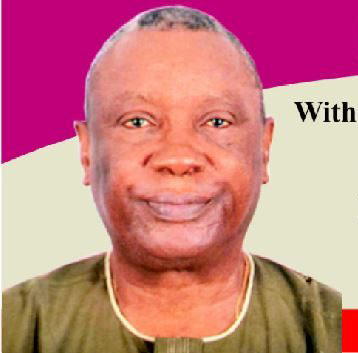
This week continues the series on insecurity in Nigeria
However, this diversity is not and should not be a disservice but one that can be judiciously explored and exploited to promote national harmony, progress and prosperity. Our religious diversity, in particular, is not a curse; rather, it is a blessing if we are determined to make it one. Neither Christianity nor Islam preaches anything other than belief in one God and love of fellow human beings.
The mutual co-existence of these two principal faiths in Nigeria is, therefore, not only a theoretical but also a practical reality. Government will be counting at all times on your wisdom and rich experience to provide positive leadership to the adherents of your respective religious faiths, a leadership which will enhance societal harmony and promote high standards of behaviour and civic responsibility among the people.
Nigeria must not only be a haven of peace and progress but also a society of hardworking, honest, fair-minded and patriotic citizens. Let this country be a land of love, discipline, mutual respect, hope and fulfilment for all its citizens.”
In spite of the establishments of the three bodies, there is nothing stopping the President from calling for a meeting with all presidential candidates and their running mates before or after the coming election. Afterwards, all of them are friends. The proposed meeting will reduce tension. No price is too high to be paid for peace in the country.
In 1979, President Usman Aliyu Shehu Shagari faced a similar problem. He was elected in controversial circumstances, but he wanted peace to reign supreme. He knew there was no need for an accord in a presidential system of government; in fact, the dispute over his election ended in the Supreme Court and the court gave a ruling in his favour just five days before his inauguration on October 1, 1979, at the Tafawa Balewa Square, Lagos. But he reached out to all other parties to form an all-embracing government. Only the NPP answered his call. As a result, Chief Edwin Ume-Ezeoke (8 September 1935 – 1 August 2011) from Nnewi in the present Anambra State, an NPP member, was made Speaker of the House of Representatives, and Mr. John Wash-Pam, an NPP member, was made Deputy Senate President.
After his inauguration, he issued a proclamation to the then Clerk of the National Assembly, Alhaji Gidado Idris, for the first sitting of the National Assembly which was held on October 9, 1979. It was during the sitting that Chief Ume-Ezeoke defeated Mr. Hamza M. Ngadiwa of the GNPP, from Biu Local Government Area of Borno State, by 245 votes to 201 votes. As for the Deputy Senate President, Mr. John Wash-Pam of the NPP from Plateau State defeated Alhaji Barkin Zuwo (PRP) from Kano North Central, Kano State by 51 votes to 43 votes.
Senator Jaja Nwachukwu (NPP) from Aba nominated Senator John Wash-Pam while Alhaji Uba Ahmed from Bauchi East seconded the nomination. Alhaji Usman Alto Dambatta (PRP) from Kano North Central nominated Senator Barkin-Zuwo while Senator David Oke (UPN) Ondo West seconded the nomination.
Senator John Wash-Pam was born in 1940. He attended the Vom Primary School and Boys Secondary School, Gindiri, from 1956–1960. Later, he attended King’s College, Lagos, where he did his Higher School Certificate. He became a clerical officer in the Office of the late Prime Minister, Sir Abubakar Tafawa Balewa, of blessed and historic memory, from 1962–1963.
He later attended Ahmadu Bello University, Zaria, from 1963–1966 where he graduated B.A. (Hons.) Second Class in International Relations, after which he gathered a number of experiences. He was an administrative officer in the Political Division, Secretary to the Military Governor’s Office, Kaduna from 1966 to 1967.
Then he joined the Foreign Service and was the Press Secretary in the Office of the High Commission of Nigeria in Freetown from 1968 to 1969. On returning home, he became an administrative officer in the Statutory Corporations Service Commission, Lagos. Later he worked in the Ministry of Transport and the Ministry of Mines and Power.
Again, he changed from bureaucratic services to a different line and joined the Nigeria Industrial Development Bank, Lagos, from 1972–1975 where he was the Personnel Manager. In 1983, Alhaji Sabo Barkin-Zuwo was elected governor of Kano State. The following NPP ministers were appointed by President Shehu Shagari: Mr. Paul Unongo, Professor Ishaya Audu, Mr. Demola Thomas, Mrs. Janet Akinrinade and others. On December 27, 1979, President Shehu Shagari sent letters to political party leaders for a meeting to hold on January 8, 1980.
On January 5, 1980, Chief Obafemi Awolowo, GCFR, said he doubted the genuineness of the motives behind President Shehu Shagari’s convening of a meeting of leaders of the five registered political parties on January 8.
Disclaimer
Comments expressed here do not reflect the opinions of Vanguard newspapers or any employee thereof.