
By Efe Onodjae
For many Nigerians aspiring to study abroad, receiving a rejection letter from a university can be discouraging enough to abandon the dream. But for Dorcas Sunday, the setback became the beginning of a journey that is now contributing to one of the United States’ growing public health challenges and improving how people understand and prevent tick-borne diseases through evidence-based communication research.
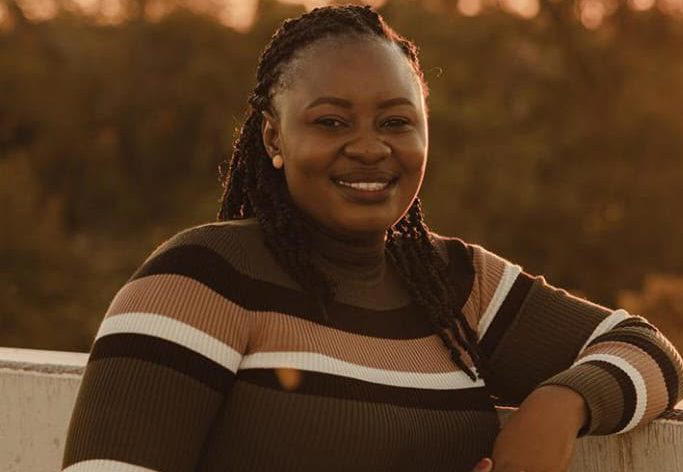
Sunday, who is currently a graduate assistant and doctoral student in Agricultural Education and Communication, with a specialisation in Agricultural Communication at the University of Florida, said while her path to a fully funded PhD was marked by resilience and preparation, the greater reward has been the opportunity to conduct research with real-world implications for public health.
Speaking in an interview with Vanguard, she urged young Nigerians seeking international graduate opportunities not to be discouraged by rejection, stressing that every unsuccessful application is an opportunity to learn, improve and eventually contribute meaningful solutions to global challenges.
“My first application was to Purdue University around the year 2020, and I was rejected. It was disappointing, but it did not deter me. Instead, it reinforced my determination because I knew I had built a solid academic foundation and I was passionate about my research,” she said.
According to her, the rejection pushed her to critically review her application materials and seek guidance from experienced academics and mentors on social media platforms such as LinkedIn and X, formerly Twitter, where scholars voluntarily assist prospective graduate students in strengthening their applications.
“I realised that applying to graduate schools abroad is very different from what we are used to in Nigeria. Beyond your grades, you have to tell your story through your statement of purpose and personal statement. My first application focused mainly on answering the questions instead of clearly communicating who I was, my experiences, my motivations and my research interests.”
Sunday graduated as the best student in her department from the Federal University, Kashere, Gombe State, where she earned a Bachelor of Science degree in Agricultural Economics and Extension in 2017 with a cumulative grade point average of 4.43.
Rather than proceeding immediately to postgraduate studies, she spent several years gaining practical experience by teaching Basic Science and Agricultural Science in secondary schools for six years and later participating in a one-year Nigeria Jubilee Fellows Programme under the United Nations Development Programme, UNDP.
She explained that those experiences strengthened both her professional skills and her graduate school applications.
“I always knew I wanted to pursue higher education, but I also wanted practical experience first. Teaching and working within agriculture exposed me to the realities farmers face and helped shape the research questions I wanted to answer.”
She said her interest in agricultural communication began during her undergraduate research after discovering a major communication gap between agricultural extension workers and farmers in Nigeria.
“Farmers told me they had access to extension workers, but there were simply not enough of them. The ratio of extension workers to farmers was very low, making it difficult for many farmers to receive timely agricultural information. That sparked my interest in agricultural communication and how communication can improve agricultural development.”
Agricultural Communication is still a relatively uncommon field in Nigeria. A quick Google search shows that only one university in Nigeria offers it as a major in undergraduate studies and none at the postgraduate level. Sunday said she spent months researching universities abroad that offered the programme and identifying professors whose research aligned with her interests.
“I cold-emailed different professors from several institutions, introduced myself and discussed my research interests. I interviewed with several of those professors before I eventually connected with my current advisor, Prof. Lauri Baker, whose work in new media marketing, extension communication and crisis communication matched exactly what I wanted to study.”
After improving her application package, she applied to several universities, including the University of Florida, North Carolina State University and New Mexico State University.
She received multiple admission offers before accepting a fully funded doctoral position at the University of Florida in 2023.
While pursuing her PhD, she also earned a master’s degree in Agricultural Communication from the same institution in 2025. Today, her research is focused on one of the fastest-growing vector-borne public health concerns in the United States—tick-borne diseases. Rather than studying the diseases from a medical perspective, she investigates how communication can influence public understanding, risk perception and preventive behaviours, helping people make better decisions that reduce exposure to ticks and the diseases they transmit.
“My dissertation is focused on communicating tick-borne disease prevention by understanding public knowledge and experience of tick-borne diseases, identifying the drivers of preventive behaviours, and testing different prevention messages. Tick-borne diseases are a significant concern in the United States and are increasingly gaining attention globally. Findings from this research will help develop evidence-based communication strategies that improve public awareness, encourage preventive behaviours and reduce tick exposure. The research adopts a transdisciplinary approach, bringing together communication, agriculture and public health to address zoonotic diseases that threaten both human health and the agricultural industry.”
Her work is expected to provide insights that can help public health agencies, extension professionals and agricultural communicators design more effective campaigns that encourage preventive action and strengthen community resilience against tick-borne diseases.
Reflecting on the journey, Sunday credited her husband for providing unwavering support throughout the demanding application process.
“We worked on every application together. He reviewed my essays, gave me feedback and even conducted mock interviews with me. It was truly a joint effort. He supported me throughout the process.”
Sunday currently runs a programme, Agripath Mentorship, where she mentors recent graduates from agriculture and related fields on how to apply for graduate opportunities abroad. Her first cohort started the programme last October. Some participants have already secured fully funded graduate opportunities, while others are still progressing through the application process.
She advised prospective graduate students to invest time in understanding what universities expect, seek constructive feedback on their application materials and remain persistent despite setbacks.
“One rejection does not mean you are not qualified. Sometimes it simply means your application needs improvement or you have not yet found the right programme. Keep improving yourself, keep applying and don’t lose sight of your goals.”
According to her, determination, continuous learning and careful preparation remain the most important ingredients for Nigerians seeking fully funded graduate opportunities abroad. However, she believes the ultimate goal of graduate education should go beyond earning scholarships—it should be using research to solve real problems that improve lives.
Disclaimer
Comments expressed here do not reflect the opinions of Vanguard newspapers or any employee thereof.