
By James Ogunnaike, Abeokuta
Ogun State government has reaffirmed its commitment to institutionalizing key employment, enterprise development and technical education programmes to ensure they remain sustainable beyond the tenure of the current administration.
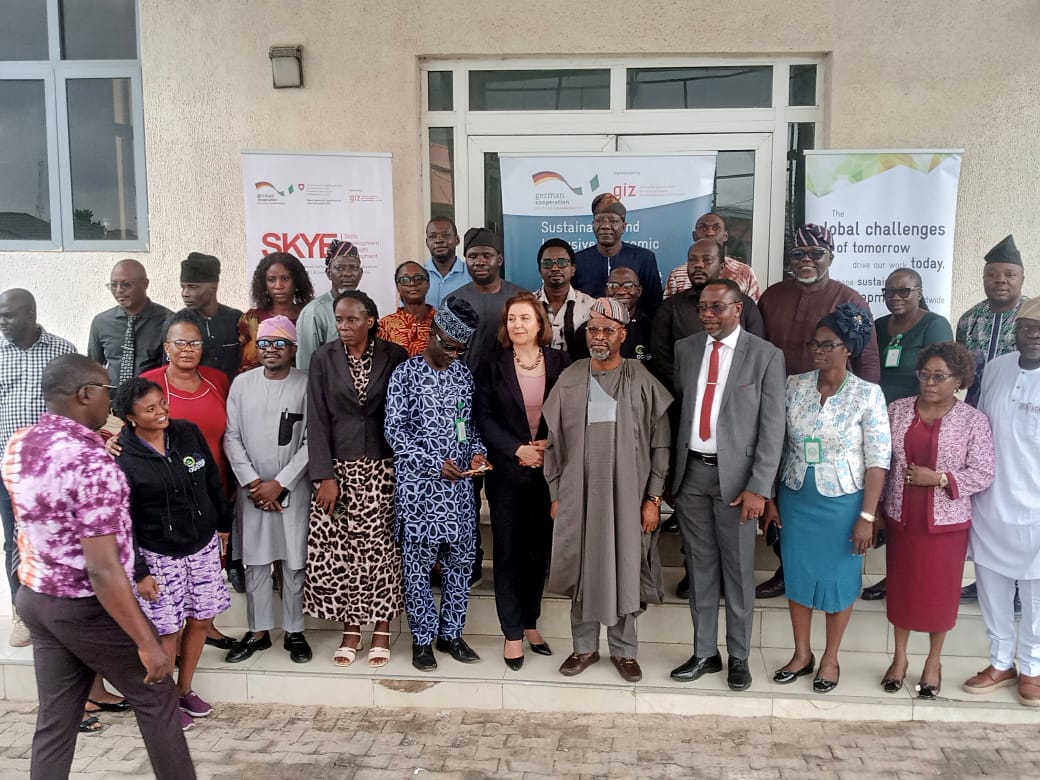
The commitment was reiterated on Wednesday during the 3rd Ogun State Partners Workshop organized by the Ogun State government in collaboration with the Deutsche Gesellschaft für Internationale Zusammenarbeit (GIZ) under its Sustainable Economic Development Cluster (SEDEC), with support from the German Federal Ministry for Economic Cooperation and Development (BMZ) and the Swiss Agency for Development and Cooperation (SDC).
The workshop brought together government officials, development partners, representatives of ministries, departments and agencies (MDAs), members of the organised private sector, civil society organisations and policymakers to review progress made under various economic development initiatives and chart a roadmap for sustaining their gains.
Speaking at the workshop in Abeokuta on Wednesday, Dr Didier Tchoffo, SEDEC Cluster Coordinator, said sustainability of development interventions depended on effective institutions, local ownership and enduring partnerships.
Tchoffo, “The sustainability of development interventions depends on strong institutions, committed partnerships and local ownership. This workshop provides an opportunity for stakeholders to reflect on progress, share lessons and jointly develop practical pathways that will ensure the gains achieved continue to benefit Ogun State long after programme implementation”.
Tchoffo, represented by Head of Component, Business Enabling Environment and Sustainable Infrastructure, GIZ SEDIN, Mr Akinropo Omoware, explained that the workshop was designed to review achievements recorded under the partnership, document lessons learnt, identify best practices and develop practical strategies for integrating successful interventions into existing government structures, policies and budgets.
According to him, discussions also focused on strengthening employment promotion, job centres, TVET reforms, business environment reforms and institutional support mechanisms capable of sustaining economic development beyond the lifespan of current donor-funded programmes.
He said participants would assess progress since the 2025 workshop and identify ways to institutionalise successful interventions within government policies, systems and budgetary processes.
Tchoffo listed key achievements to include establishment of the Ogun State Job Centre, Enterprise Development Agency, additional job centres and stronger support for Micro, Small and Medium Enterprises (MSMEs).
He added that reforms in technical and vocational education, employment promotion and business environment had improved competitiveness, export readiness and inclusive economic development across the state.
Discussions at the workshop focused on institutional ownership, stronger partnerships and practical measures to sustain programme gains beyond the current implementation phase.
“Through collaboration between the Ogun state government, GIZ and other strategic partners, significant milestones have been recorded in strengthening the state’s economic development ecosystem.
” The sustainability of development interventions depends on strong institutions, committed partnerships and local ownerships,” he said.
On his part, the State Commissioner for Industry, Trade and Investment, Mr. Adebola Sofela, said the administration was deliberately putting legal and institutional frameworks in place to ensure development programmes continue to deliver value irrespective of changes in government.
According to him, the state is currently working on legislation to give statutory backing to institutions established through its partnership with GIZ, particularly the Ogun State Enterprise Development Agency.
Sofela said, “Our focus is not only on initiating programmes, but also on establishing institutional frameworks that will ensure these initiatives continue beyond the tenure of the present administration.”
“We are institutionalizing key initiatives through enabling legislation while providing sustainable frameworks for funding, accountability and efficient implementation. We want these institutions to continue creating jobs, supporting businesses and driving economic growth for years to come.”
The Commissioner noted that the collaboration between Ogun State and GIZ had yielded significant achievements, including the establishment of the Ogun State Job Centre, deployment of technical advisers, creation of the Ogun State Enterprise Development Agency, reforms in technical and vocational education and training (TVET), and improved support for micro, small and medium-sized enterprises (MSMEs).
He commended GIZ for its continued support to the state’s industrialisation agenda.
“GIZ has been an exceptional development partner. Their contributions to job creation, entrepreneurship, industrial development and capacity building have been remarkable. We deeply appreciate their commitment to supporting Ogun State’s development aspirations,” he said.
Sofela further emphasized that government alone could not drive sustainable economic growth, stressing that stronger collaboration with the organized private sector remained essential.
“We strongly believe in a private sector-led approach to development because the private sector brings innovation, efficiency, technical expertise and resources that complement government’s efforts.”
Speaking in an interview with journalists after the workshop, Sofela explained that GIZ remained one of Ogun State’s most strategic development partners, particularly in entrepreneurship development, capacity building and support for small businesses.
He noted that the establishment of the Enterprise Development Agency represented one of the most significant outcomes of the collaboration.
“Government and the organized private sector must continue to leverage their respective competencies and resources. The impact of this collaboration is already evident, and we are determined to institutionalized these programmes so they remain sustainable beyond any administration,” he said.
Explaining the rationale for proposed legislation establishing some of the institutions, Sofela said statutory backing would guarantee continuity and stable funding.
“Once these institutions are backed by law, they become statutory bodies with provisions for funding through the government’s appropriation process. That ensures they continue to function effectively regardless of changes in government or political leadership.”
Also speaking, the Commissioner for Education, Science and Technology, Prof. Abayomi Arigbabu, represented by the Director of Education, Department of Science and Technology, Mrs. Edun Abosede Olutola, described the partnership with GIZ as transformative for the state’s education sector.
He said the collaboration had significantly strengthened technical and vocational education, skills development and youth employability by aligning education more closely with industry needs.
“We are not merely implementing GIZ-supported programmes; we are adopting them as benchmarks for excellence in technical, vocational, science and technology education,” she said.
He stressed that sustainability required the integration of innovative teaching methodologies, upgraded workshop facilities and revised curricula into the state’s education system beyond the duration of externally funded projects.
“Ownership means these initiatives must become part of our education policies and institutional practices. Our teachers, schools and technical institutions must continue to build on these achievements long after the programme has ended.”
Arigbabu also challenged stakeholders to domesticate global best practices across classrooms, laboratories and technical institutions while strengthening the internal capacity of ministry officials to manage and expand the interventions across the state.
Participants at the workshop reviewed implementation milestones, assessed ongoing interventions and developed recommendations aimed at strengthening institutional ownership, expanding employment opportunities, improving enterprise development and deepening collaboration among government, development partners and the private sector.
The deliberations culminated in a practical roadmap outlining priority actions, stakeholder responsibilities and follow-up mechanisms for sustaining and scaling the programme’s achievements beyond GIZ’s current implementation cycle.
Disclaimer
Comments expressed here do not reflect the opinions of Vanguard newspapers or any employee thereof.