
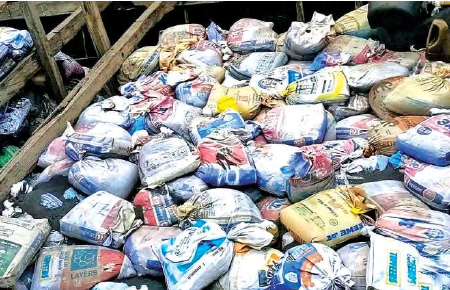
•Intercepted consignment of Black Sand by the Navy.
By Samuel Oyadongha
A new resource frontier is emerging along the Atlantic coastline of Bayelsa State but with it come troubling echoes of the region’s oil-fuelled conflicts.
The prize is “Black Sand,” a heavy mineral deposit rich in titanium and zirconium that experts say could transform the state’s economy. But with military gunboats now reportedly escorting barges laden with the mineral, environmentalists are warning that history may be repeating itself.
“These are the same patterns we saw with oil,” said Comrade Alagoa Morris, a prominent environmentalist and Chief Operating Officer of ECARD. “If what is shown in pictures is about Black Sand, and military gunboats are actually escorting the loaded barges, then we have more questions than answers.”
Treasure beneath the waves
Unlike ordinary beach sediment, Black Sand is made up of dense, dark minerals including magnetite, zircon, and garnet among others. As waves and currents wash away lighter quartz grains, these valuable deposits naturally concentrate along the shoreline.
The economic stakes are huge. These minerals are essential raw materials for steel production, ceramics, paints, and advanced electronics, major global sources of titanium for aerospace and zirconium for high-tech manufacturing. A single 50kg bag currently sells for about N1,500, industry sources told NDV.
Bayelsa holds a clear advantage. It occupies the longest stretch of Nigeria’s Atlantic coastline, cutting across Brass, Southern Ijaw, and Ekeremor Local Government Areas. Recent court judgments affirming Bayelsa and Lagos states’ rights over mineral resources in their territorial waters have further strengthened the state’s position.
A troubling pattern
But the way extraction is unfolding has raised red flags. Sources report military gunboats escorting barges loaded with Black Sand, a security arrangement that mirrors how crude oil was protected in the Niger-Delta.
“Is the military escorting officially? And who is directly behind the mining and evacuation of Black Sand?” Morris asked, calling for transparency and accountability.
The situation draws comparisons to lithium mining, dubbed “White Gold”, currently booming in Kogi, Kaduna, and Nasarawa states. With the largest lithium processing factory now in Lafia, Nasarawa, many are urging Bayelsa to process locally instead of exporting raw resources.
The call for local processing
Economic analysts and civil society groups are urging the Bayelsa State Government to prioritise value addition before export.
“What is wrong with siting a Black Sand processing factory in Bayelsa, especially now that the Senator Douye Diri-led Prosperity Administration is working to open up the state to the coastline through the three senatorial roads?” Morris asked.
“Black Sand mined in Bayelsa should be processed in Bayelsa, not like crude oil that Nigeria exports only to import refined products,” he added, urging investors to engage relevant state agencies.
Environmental concerns
While Black Sand mining doesn’t require digging into the ground, the material is deposited naturally by ocean waves; commercial-scale extraction will still impact the coastline.
“The surface of the coastline will be affected by large-scale mining,” Morris warned. He noted that the state government is already taking steps to address the issue, but stressed the need for clear regulations.
For Raymus Henry Ebiegberi, an Akassa-based conservationist, the worry goes deeper noting that though the black sand cannot replace ‘kpofire’ because the quantity is limited, “In some places here, it’s not even happening again. So they are moving to other parts.”
He explained that from available in information, a 50kg bag goes for about N1,000 to N1,500, with additional costs for transport and community “operational funds.”
“My concern is the amount of extraction done daily and the number of people involved,” he lamented. “The youths are packing in every day to mine. But nobody is talking about the environmental impact, the erosion that will happen if this continues.”
Complicity?
Ebiegberi also questioned the recent arrest of 13 people by the Navy, suggesting authorities may be ignoring bigger operators.
“The government allowed these things to happen,” he said. “When the late Deputy Governor Lawrence Ewhrudjakpo was alive, they went on social media to say black sand operators should not work on Bayelsa shores without going through government process. Now it’s happening right on their shores, and they are arresting the transporters.
“They should find out which companies are involved. If there are no buyers, there won’t be any operation. Instead, they arrest the people moving the sand, snap pictures, and embarrass them on social media. How much are those people even making a day?”
Avoiding The Resource Curse
As the battle for resources in the Niger Delta takes a new turn, stakeholders are calling on the government to act fast to prevent unregulated mining and militarization from sparking conflict with host communities.
“It is hoped this won’t lead to another round of resource-related conflict in the Niger Delta,” Morris concluded. “All stakeholders, including communities, must ensure social and environmental justice.”
Disclaimer
Comments expressed here do not reflect the opinions of Vanguard newspapers or any employee thereof.