
By Esther Onyegbula
Nigerian entrepreneur, philanthropist and Labour Party candidate for Bende Federal Constituency in the 2027 House of Representatives election, Chimaobi Desmond Anyaso, has called for a new generation of trust-driven leadership and stronger institutions as the foundation for Africa’s sustainable development.
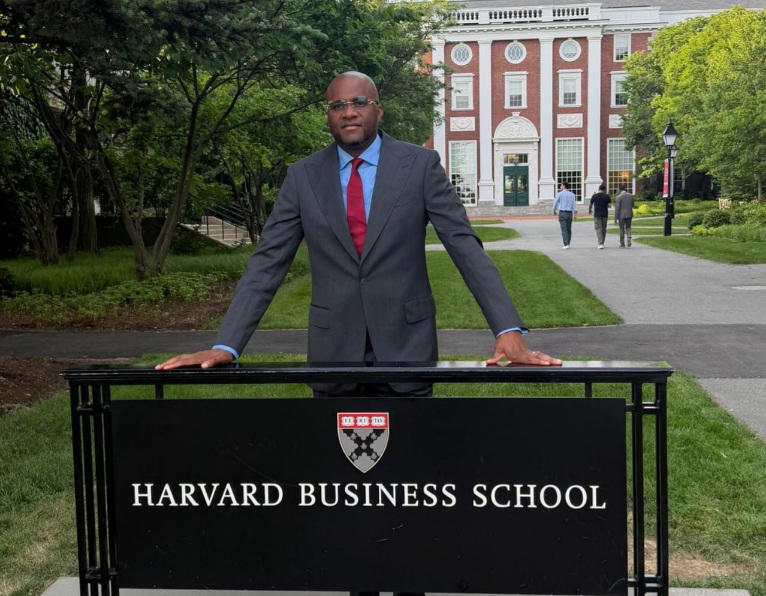
Anyaso made the call while speaking as a panelist at the 10th Anniversary Conference of the IFE Institute of Advanced Studies (IIAS) hosted at Harvard University, where global scholars, policymakers, business leaders and members of the African diaspora gathered to deliberate on governance and development under the theme “Building Lasting Institutions: Faith, Scholarship, and the African Project.”
Speaking during a panel session on “Leadership, Governance and Institutional Trust,” Anyaso said Africa’s future would not be determined by the brilliance of individual leaders, but by the strength, credibility and endurance of its institutions.
According to him, the continent’s governance challenges stem largely from a deepening crisis of trust between citizens and state institutions.
“The most valuable currency in leadership is not money, influence or position, it is trust. Once trust is established, institutions can thrive. Once trust is broken, even the strongest institutions begin to weaken,” he said.
He added that citizens only comply with laws when they trust institutions, while investment, innovation and national stability also depend on institutional credibility.
“Citizens obey laws when they trust institutions. Investors commit capital when they trust institutions. Young people remain hopeful when they trust institutions. Democracy survives when citizens trust institutions.”
Anyaso stressed that leadership must be rooted in integrity, honesty and empathy, warning that societies suffer when principled individuals disengage from public service.
“When good people shy away from politics, bad people take over governance, and society becomes the victim. Leadership is not a position; it is a responsibility. It is the highest form of service.”
He also reflected on his personal journey from business and philanthropy into politics, describing leadership as a duty to serve rather than a privilege to enjoy.
Introducing himself to participants, he referenced his roots in Abia State and commended ongoing governance reforms under the administration of Alex Otti.
Anyaso further expressed appreciation to the founder of the IFE Institute of Advanced Studies, Jacob Olupona, for providing a platform that advances discourse on leadership, faith and institutional development.
The Labour Party candidate argued that Africa’s central challenge is not a lack of capable individuals but the failure to build enduring institutions that outlive leaders.
“Africa has produced exceptional leaders, entrepreneurs, scholars and innovators. The challenge before us is converting individual excellence into institutional excellence,” he said.
He noted that sustainable development cannot be achieved through charismatic leadership alone but through systems that promote accountability, continuity and meritocracy.
“Across Africa, we often celebrate exceptional individuals, but our greatest challenge remains building institutions that can outlive individuals,” he said.
Drawing lessons from the private sector, Anyaso said successful organisations endure because they prioritise systems over personalities.
“Businesses that depend solely on the founder rarely survive beyond one generation. A business survives when systems replace personalities. The same principle applies to nations.”
He urged governments across Africa to strengthen transparency, enforce merit-based appointments and reinforce respect for the rule of law in order to restore public confidence.
According to him, institutional legitimacy is ultimately determined by public trust rather than legal frameworks alone.
“The legitimacy of institutions is not determined by law alone but by the confidence people place in them,” he said.
Anyaso also highlighted the role of faith-based institutions and universities in shaping ethical leadership and national development, noting that governance without character risks losing purpose.
“Leadership without character creates power without purpose. Faith reminds leaders that public office and private enterprise are ultimately acts of stewardship,” he said.
Diaspora, youth and knowledge economy
He called for greater investment in youth development, entrepreneurship, technology and education, describing Africa’s young population as its greatest asset.
He also identified the African diaspora as a strategic bridge for development, innovation and global partnerships.
“Our diaspora represents a bridge between African potential and global opportunity,” he said.
Anyaso further stressed that countries that invest in knowledge production and research will dominate the future global economy.
“Countries that dominate the future are those that produce knowledge, not merely consume it.”
‘Strong institutions build civilizations’
In his closing remarks, Anyaso urged collaboration among governments, private sector actors, scholars and faith leaders to build institutions capable of enduring beyond individual lifespans.
He called for reforms that strengthen governance systems, protect institutional independence and promote accountability.
“The future of Africa will not be determined by the greatness of a few individuals. It will be determined by our ability to build institutions that inspire trust, deliver results and endure across generations,” he said.
He concluded with a statement that drew strong reaction from participants:
“Strong men build moments. Strong institutions build civilizations.”
The conference attracted leading academics, policymakers, entrepreneurs, researchers and members of the African diaspora, focusing on pathways to strengthen governance, institutional trust and sustainable development across Africa.
Disclaimer
Comments expressed here do not reflect the opinions of Vanguard newspapers or any employee thereof.