
…as VC launches capacity-building programme, unveils bold plan to strengthen supervision, digitalisation, others
By Joseph Erunke, Abuja
Bingham University has commenced a major overhaul of its Students Industrial Work Experience Scheme, SIWES, unveiling a comprehensive capacity-building initiative aimed at transforming the programme into a model of excellence capable of producing highly skilled, industry-ready graduates.
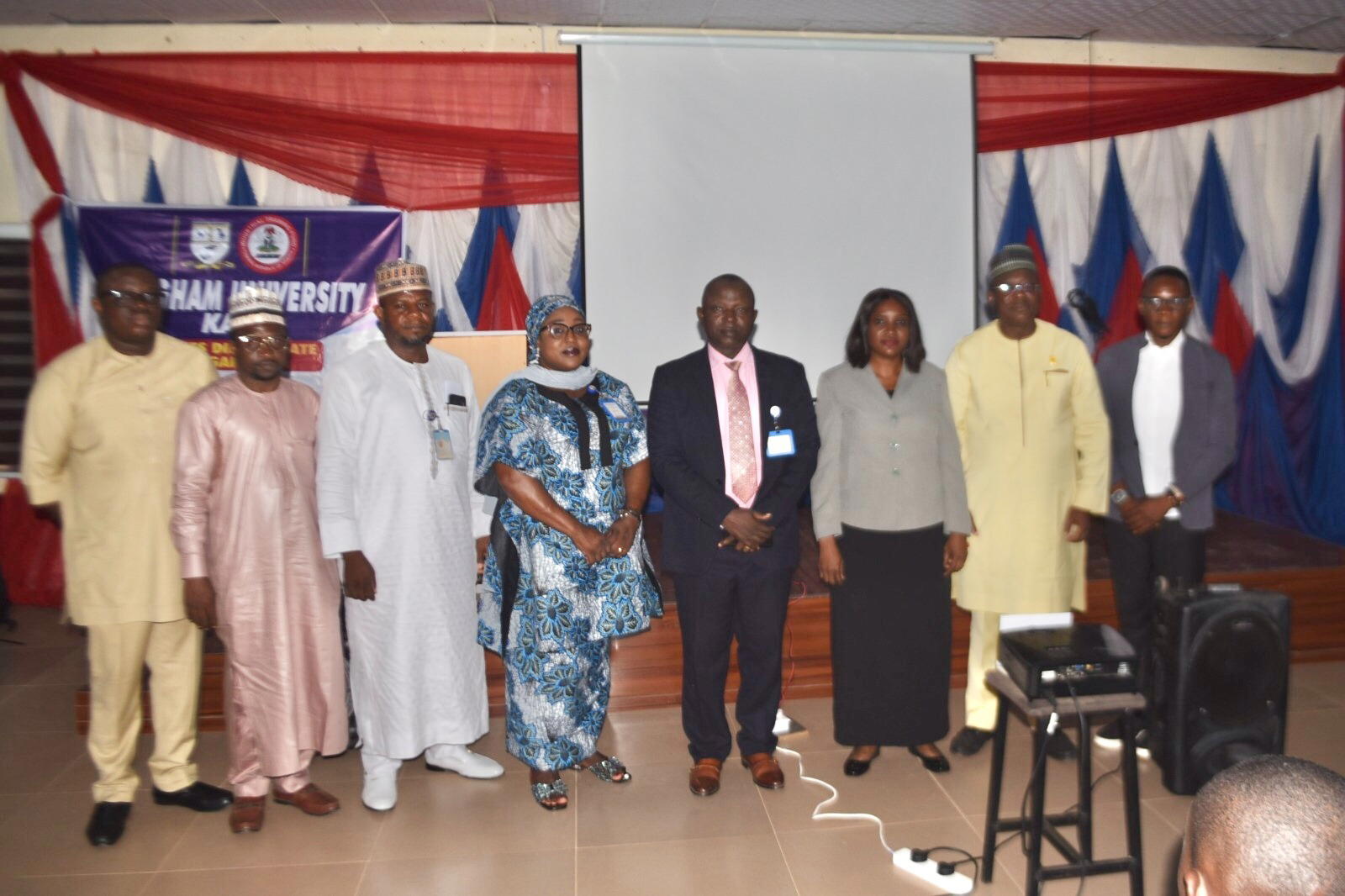
Speaking at the opening of a capacity-building training for Departmental SIWES Coordinators and stakeholders on Thursday, the Vice-Chancellor, Prof. Haruna Kuje Ayuba, declared that strengthening the scheme was critical to bridging the gap between classroom learning and workplace realities.
The training, themed “Transforming SIWES: Building Capacity, Strengthening Foundations for Enhanced Performance,” brought together university officials, Industrial Training Fund ,ITF experts, SIWES administrators, departmental coordinators and industry stakeholders to chart a new course for industrial training administration.
Prof. Ayuba described SIWES as a vital pillar of academic development, stressing that the university was committed to building the capacity of staff to ensure students acquire practical skills needed to compete in today’s rapidly evolving labour market.
“When we strengthen the capacity of our staff, our students will in turn be empowered to become change agents in their respective fields,” he said.
The Vice-Chancellor revealed that the university had already invested in training SIWES officials and collaborated with the ITF to sensitise staff and students on best practices, adding that the latest programme would deepen professionalism and efficiency across all levels of implementation.
According to him, participants would receive intensive training on record-keeping, supervision and mentorship, conflict resolution, effective communication, and the deployment of digital tools for student registration, monitoring, reporting and data management.
He noted that digitalisation would play a central role in streamlining SIWES operations, improving transparency, accountability and accessibility while ensuring compliance with national regulatory requirements.
“Let us view this as a strategic step towards transforming our industrial training scheme into a model of excellence that aligns with global standards and prepares our students for the challenges of tomorrow,” Ayuba urged participants.
In her welcome address, Director of SIWES, Dr. Joyce Ishegbe Eko, said the initiative was designed to address persistent operational challenges, including missing student records, delayed submissions, unsigned logbooks, weak industry engagement and poor institutional handover processes.
She described SIWES as more than a graduation requirement, calling it a statutory bridge between academia and industry that directly influences graduate employability and institutional reputation.
“The quality of our graduates’ practical skills, the integrity of our records and the reputation of Bingham University depend heavily on the effectiveness of SIWES coordination,” she said.
Dr. Ishegbe announced the launch of a Standard Operating Procedure ,SOP aimed at standardising SIWES administration and ensuring greater accountability, compliance and continuity across departments.
Resource persons at the event highlighted critical weaknesses affecting industrial training nationwide and offered practical solutions.
Head of Training, ITF Lafia Area Office, Mrs. Na’anpoe Shwatshak, stressed that effective record-keeping, timely reporting and credible evaluation remain the backbone of successful SIWES implementation.
She warned against common pitfalls such as incomplete logbooks, delayed documentation, plagiarism, poor report organisation and lack of supervisor endorsements.
“Records are your evidence, reports are your voice, and evaluation is your integrity. If it is not documented, it is assumed not to have happened,” she cautioned.
Also speaking, Director of Advancement at Bingham University, Dr. Gabriel Anyanwu, underscored the importance of structured supervision and feedback mechanisms, describing successful SIWES implementation as a collaborative responsibility involving institutions, employers and students.
Meanwhile, SIWES expert Dr. I. Ewa advocated stronger conflict-resolution mechanisms to manage disputes among students, universities and industry partners, noting that unresolved conflicts often undermine the objectives of industrial training.
Presentations during the training also revealed that communication breakdowns account for a significant proportion of SIWES failures, with industry data showing high rates of incomplete logbooks, poor supervision experiences and delays in students’ allowances.
Participants were introduced to integrated communication strategies designed to improve coordination among students, departments, the university, ITF and industry partners.
The programme is expected to produce actionable reforms that will strengthen industry collaboration, improve compliance with ITF and National Universities Commission regulations, and reposition Bingham University’s SIWES framework as a benchmark for excellence in higher education.
As the university intensifies efforts to align its industrial training system with international best practices, stakeholders expressed optimism that the reforms would significantly enhance graduate employability, innovation and national development.
Disclaimer
Comments expressed here do not reflect the opinions of Vanguard newspapers or any employee thereof.