
By Ibrahim Hassan-Wuyo
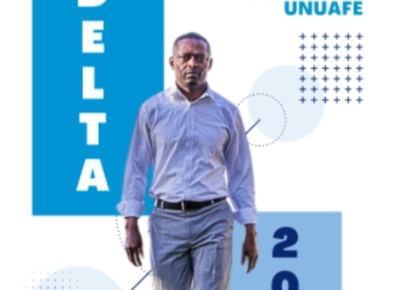
The Delta State governorship candidate of the African Democratic Congress (ADC), Dr. Emmanuel Unuafe, has urged Nigerians to demand accountability from leaders at all levels of government, saying the country’s development challenges cannot be blamed solely on the President.
In a statement addressed to Deltans, Unuafe said many citizens have developed what he described as a “selective accountability” culture, where the Federal Government is heavily criticised while state and local government officials are often overlooked despite controlling significant public resources.
He noted that while President Bola Ahmed Tinubu is frequently blamed for economic hardship, little attention is paid to governors, local government chairmen and councillors who are directly responsible for grassroots development.
“I support Atiku Abubakar, not Tinubu. This is not about defending any President. It is about confronting a dangerous culture of selective accountability,” he said.
Unuafe argued that citizens often excuse poor performance at subnational levels due to tribal sentiment, political loyalty or personal benefit.
“We overlook leaders closest to us because of tribe, party loyalty, or the crumbs they throw our way. Then we wonder why nothing changes,” he said.
He stressed that state governments manage substantial budgets, while local governments also receive statutory allocations, making it necessary for citizens to demand transparency and measurable results across all tiers of government.
“A governor controls billions in state resources. Local governments receive allocations. Yet many citizens act as though development, security and prosperity can only come from Aso Rock,” he said.
According to him, Nigeria’s biggest challenge is not just leadership at the federal level, but the tendency of citizens to excuse failure when it comes from familiar political or ethnic affiliations.
“The greatest obstacle to Nigeria’s progress is not any single President; it is our willingness to excuse failure when it wears a familiar face,” he added.
Unuafe maintained that meaningful national progress would only be achieved when Nigerians begin to insist on accountability from all levels of government.
“The day Nigerians begin demanding results from every level of government, not just the Presidency, that is the day real change will begin,” he said.
He also called for greater civic awareness, saying Nigerians exposed to more efficient systems abroad would better understand governance gaps at home.
Unuafe urged citizens to judge leaders based on performance rather than political, ethnic or personal considerations.
Disclaimer
Comments expressed here do not reflect the opinions of Vanguard newspapers or any employee thereof.