
By Matthew Johnson
Norway has reaffirmed its commitment to sustaining stockfish exports to Nigeria despite mounting challenges from climate change, declining fish stocks and rising global food prices.
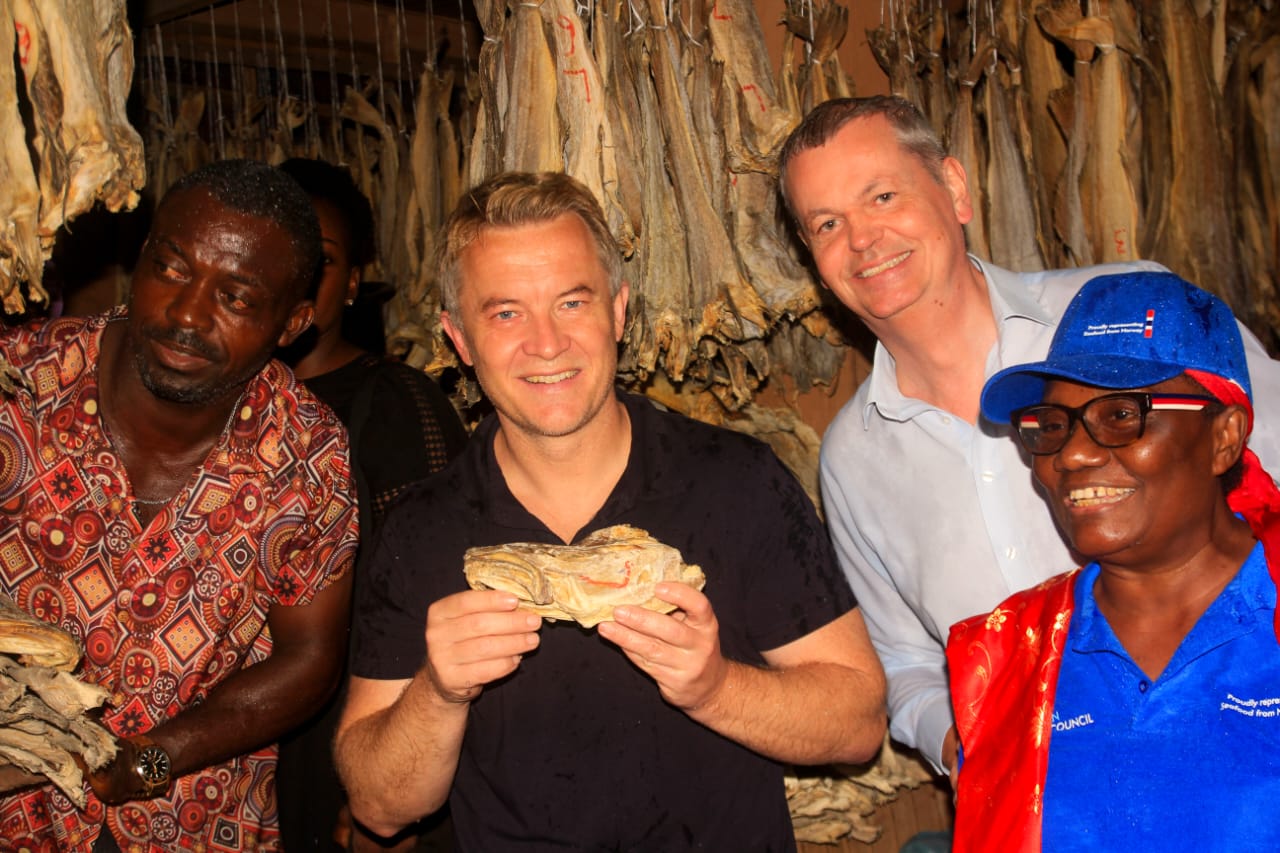
Speaking during a visit to the Otto Ido Whitesand Stockfish Market in Oyingbo, Lagos, Norway’s Minister of State for Foreign Affairs, Mr. Andreas Kravik, described Nigeria as one of the most important markets for Norwegian stockfish producers and pledged continued engagement to strengthen trade ties between both countries.
Kravik, who toured the market and interacted with traders, distributors and consumers, said the long-standing trade relationship between Norway and Nigeria remains mutually beneficial.
“This is the most important market for Norwegian stockfish producers. I’ve visited several shops selling Norwegian cod and other fish products, and this clearly demonstrates the importance of the Nigerian market to Norwegian exporters,” he said.
According to him, “the Norwegian government is committed to promoting exports to Nigeria while working with Nigerian authorities to address challenges affecting affordability.”
Responding to concerns over the rising cost of stockfish, a staple ingredient in many Nigerian soups and stews, Kravik attributed the trend partly to global conflicts, supply chain disruptions and climate-related factors affecting food production worldwide.
“We are doing everything we can to encourage exports to Nigeria. If enough products get into the market, prices will eventually come down. However, many of the factors driving prices are global and require collective action,” he said.
The minister also highlighted climate change as a major threat to fish production, noting that both Norway and Nigeria are experiencing the economic consequences of changing weather patterns.
“Climate change is one of the reasons prices are increasing. That is why Norway is strongly committed to addressing the climate crisis through various policies. This issue was also part of discussions with Nigerian counterparts in Abuja,” he added.
Norway’s Ambassador to Nigeria, Mr. Svein Baera, noted that stockfish has been exported from Norway to Nigeria for more than a century and remains an important part of Nigerian cuisine.
“We are extremely proud that Nigerians have embraced our product. However, the amount of fish available in the northern seas is declining. Our priority is to maintain sustainable fish stocks to ensure continued exports to Nigeria,” the ambassador said.
Also speaking, Regional Director for Africa and the Middle East at the Norwegian Seafood Council, Johnny Haaberg, explained that reduced fishing quotas introduced to protect fish populations have contributed to lower supply and higher prices globally.
“Stockfish is a wild fish. In recent years, quotas have been reduced because there are fewer fish in the sea. When supply drops and demand remains high, prices increase across all markets, not just Nigeria,” he said.
Haaberg disclosed that Norway is investing in cod aquaculture as part of long-term efforts to increase production volumes and improve supply.
He also encouraged Nigerian authorities to consider reducing import duties on cod fish heads, arguing that such a move could help make the product more affordable for low-income households.
“We have advocated for lower taxes on cod fish heads because they are an important source of nutrition for average Nigerians. Reduced duties could help ease prices for consumers,” he said.
Fisheries Consultant with the Norwegian Seafood Council, Ms. Abbey Cheke, said the Norwegian delegation’s visit would help draw greater attention to the concerns of Nigerian traders and consumers.
She revealed that discussions on granting zero percent duty on stockfish imports have progressed significantly, although final approval is still pending.
“The proposal has passed through the necessary committees and is awaiting final approval. We believe it will greatly benefit poor Nigerians, especially children who require affordable sources of protein,” she said.
Cheke also highlighted the economic impact of the stockfish trade, noting that the Otto Ido market alone supports more than 40,000 jobs across importation, distribution, retailing and transportation.
For traders, however, affordability remains the biggest challenge.
A veteran stockfish trader at the market, Mr. John Ndukwe, who has spent over three decades in the business, lamented that soaring prices have pushed the product beyond the reach of many consumers.
“Many customers have stopped buying stockfish because of the price. What used to be affordable for ordinary Nigerians has become a luxury item. The quality remains excellent, especially the fish from Norway, but affordability is the major issue,” he said.
Stakeholders at the event expressed hope that stronger cooperation between Nigeria and Norway, coupled with policy interventions on import duties and sustainable fisheries management, would help improve access to stockfish while preserving the centuries-old trade relationship between both countries.
Disclaimer
Comments expressed here do not reflect the opinions of Vanguard newspapers or any employee thereof.