
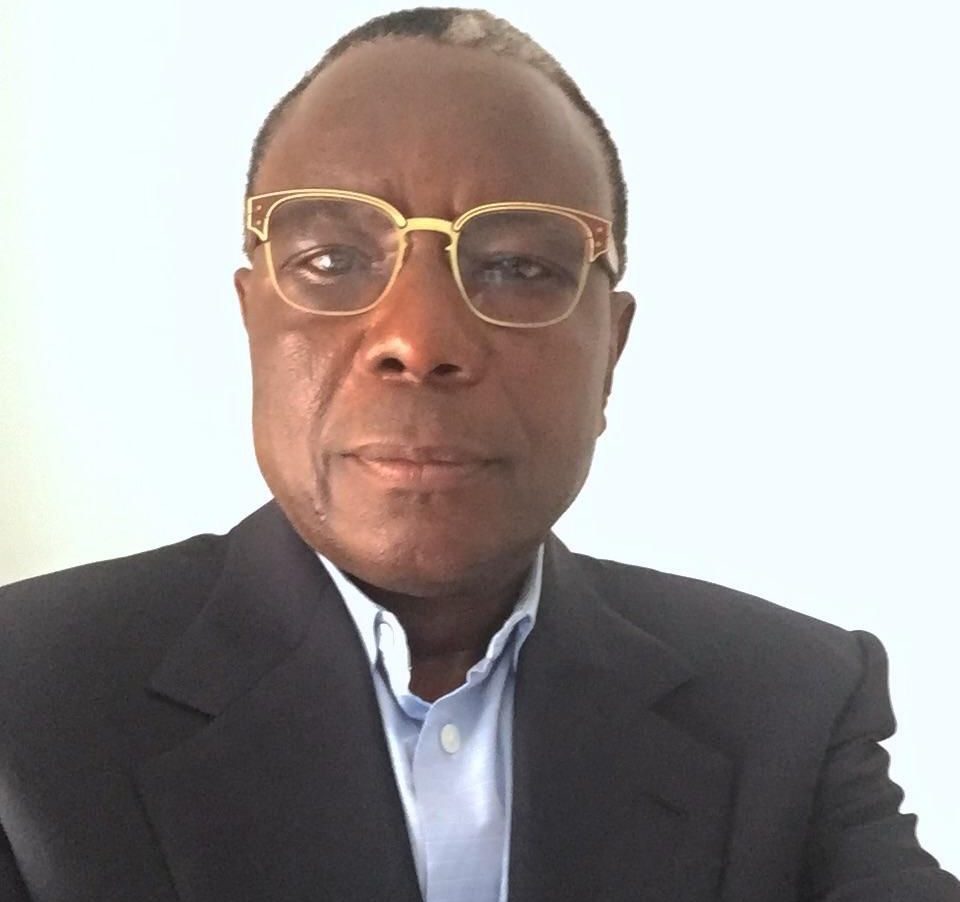
Philip Obazee
On Democracy Day the President promised more than fifty thousand new police officers. The pledge is welcome and overdue. But the measure behind it—how many police we keep for each citizen—is the wrong way to ask whether Nigerians will be safer.
By Philip Obazee
On the morning of the twelfth of June, in an address marking twenty-seven unbroken years of civilian rule, President Bola Ahmed Tinubu turned from the rituals of Democracy Day to the wound that has overshadowed them. The mood of the celebration, he conceded, was dampened by the abduction of schoolchildren in Oyo and Borno. Then came the answer. “Democracy without security is not solid enough,” the President said, and announced that his administration had declared a security emergency and approved the recruitment of more than fifty thousand new police officers, alongside thousands of military recruits—backed by a 2026 budget that commits ₦5.41 trillion, the largest such sum in the country’s history, to defence and security.
It is, on its face, precisely the announcement a nation under siege wants to hear. The logic is the oldest in statecraft and the easiest to follow: there is too much crime and too few police, so the state will hire more police. The President was right to name security as the precondition of everything else a democracy is supposed to deliver, and right to put real money behind the naming. Nigerians who have buried neighbours, ransomed relatives, or kept their children home from school will not begrudge the country fifty thousand more officers.
To be fair to the government, the address did not rest on recruitment alone, and it would be dishonest to pretend otherwise. The President pointed to real operational gains: a shift from training exercises with foreign allies to what he called precision targeting, the degrading of an insurgent command centre in Borno, terror-related deaths down by a substantial margin since 2015, and well over a hundred thousand fighters and dependents who have laid down their arms since 2023 through the surrender corridor. Whatever one makes of the precise figures, these are not nothing, and an honest critic grants them. But notice that none of them turns on the police-to-citizen ratio. They are achievements of the military and the intelligence services, of pressure and of amnesty—of doing particular things well, not of having hired a particular number of people. The recruitment pledge is the one strand of the package that rests on counting, and it is the strand that most deserves scrutiny.
And the promise rests on a number—the ratio of police to citizens—that is among the most misleading figures in the whole of public policy. It is misleading not because it is false but because it answers a question we are not really asking. We want to know whether Nigerians will be safer. The ratio tells us only how many uniforms there are. Those are not the same thing, and the distance between them is where the entire problem lives. This article is an argument that we are counting the wrong thing, that counting the wrong thing can lead us to do something worse than nothing, and that the President’s own address—read closely—contains the better idea buried beneath the headline.
The seduction of a clean number
Governments love the police-to-citizen ratio for the same reason students love a marking scheme: it converts a hard question into an arithmetic one. There is even a benchmark, attributed to the United Nations and repeated in nearly every Nigerian discussion of the subject, of roughly one officer for every four hundred and fifty citizens. Against that yardstick Nigeria, with something over three hundred and seventy thousand officers for a population now estimated near two hundred and thirty-seven million, comes in at about one to six hundred—short, but not catastrophically so. Recruit enough constables and the gap closes. The promise is countable, the progress is visible, and the parade of new graduates makes for a satisfying photograph. Few policy instruments are so legible.
Legibility, though, is not the same as truth. The ratio has three silent passengers, and each of them does more to determine whether you are safe than the headline figure ever could. The first is what the number is made of—whether the officers it counts are doing the same job from one country to the next. The second is who those officers actually work for once they are hired. The third is whether the ones who remain on the public’s business protect the public or prey on it. The ratio is blind to all three. Worse, the three are precisely the dimensions along which Nigeria differs most sharply from the safe countries whose numbers we are trying to match.
What the number is made of
Begin with composition. If you line up the wealthy democracies by police density you get a band that runs from about a hundred and thirty-six officers per hundred thousand people at the bottom to nearly four hundred at the top. That looks like enormous variation, and a Nigerian official could be forgiven for concluding that the safe countries simply have more police. But most of that spread is an accounting illusion. Italy, Spain and France sit near the top largely because they fold their national paramilitary forces—the Carabinieri, the Guardia Civil, the Gendarmerie—into the count. These are bodies that do rural and border and quasi-military work which, in Britain or Canada, no one would file under “police” at all. Strip the gendarmes out, settle on a common definition of who counts, and the genuine band shrinks toward something far narrower. The headline differences are differences in bookkeeping, not in safety.
The country that should trouble us most is the one at the bottom. Finland keeps about a hundred and thirty-six officers per hundred thousand citizens—fewer than almost anywhere else in the rich world, and, as we shall see, still above the number a Nigerian can actually call upon once elite appropriation is removed. No sane person describes Finland as under-policed. It is among the safest societies on earth. Its thin blue line works because it operates in a sea of public trust, low crime, and institutions that make each officer count. Here is the first lesson, and it is fatal to the arithmetic instinct: the same number means opposite things in different places. A density of one hundred and thirty-six in Helsinki is a sign of a society that barely needs policing. The same density elsewhere can be a sign of a society that has been abandoned. The figure does not carry its own meaning; the meaning comes from outside it.
Who the police actually work for
It is worth dwelling on how modest the rich-world numbers really are once they are read honestly, because the Nigerian debate tends to imagine that wealthy countries are blanketed in police. They are not. The United States, for all its reputation, keeps only around two hundred and forty officers per hundred thousand people; Japan, one of the safest large societies in the world, makes do with closer to two hundred once its clerks and technicians are stripped from the count; Germany sits near three hundred. None of these is a vast multiple of Nigeria’s nominal figure of about a hundred and fifty-seven. The gap between Nigeria and the safe democracies, in other words, is not mainly a gap in raw numbers. It is a gap in what those numbers do. A country can have Japan’s ratio and Nigeria’s insecurity, or Finland’s thin force and Finland’s peace, and the difference between the two outcomes is not written anywhere in the headcount.
The second silent passenger is allocation—the question of whom the force serves once it has been raised. Here the Nigerian reality is one that every motorist already knows in his bones. A large share of the Nigeria Police Force does not police the public at all. By credible accounts more than a hundred thousand officers—somewhere between a quarter and a third of the entire force—are detailed to the protection of politicians, governors, ministers, business magnates and assorted notables. They are the men in the chase cars, the outriders clearing the convoy, the guards at the gates of houses the public will never enter. They appear in the national headcount. They are counted in the ratio that flatters us toward one-to-six-hundred. But they are not available to the woman whose shop is being robbed or the village watching the forest line at dusk.
Do the honest subtraction and the picture changes character entirely. Remove the hundred thousand or so officers assigned to the powerful, and the force that remains for the ordinary citizen falls to roughly one officer per eight hundred and seventy people—an effective density of about a hundred and fifteen per hundred thousand. That is below Finland. Nigeria and Finland thus arrive at almost the same effective number from opposite ends of the human condition: Finland because it needs little policing, Nigeria because so much of its policing has been quietly privatised by those who govern it. The convoy with its sirens is not a minor irritation of Nigerian life. It is one of the most important facts about Nigerian policing, and the official ratio has the effect of hiding it.
This is why the headline figure should be read with suspicion whenever it is invoked to justify recruitment. To add fifty thousand officers to a force in which a third of the existing strength has already been captured for private protection is to pour water into a bucket without first asking how much of it runs straight out of the hole in the bottom. Some of the new constables will reach the public. How many depends on a decision that has nothing to do with how many are hired.
Protect, or prey
The third passenger is the hardest to say aloud, and the most important. It is not enough for an officer to be assigned to the public rather than to a big man. The officer must then actually protect the citizen rather than extract from him. And here the candid assessment of Nigerian policing—documented by independent observers and lived daily by Nigerians—is unsparing: slow or absent responses to reported crime, communities left effectively uncovered, and the grim familiarity of the checkpoint as a site not of safety but of shakedown. For a great many Nigerians, the uniform at the roadblock is not the thing that stands between them and danger. It is, too often, the danger’s near relation.
When that is true, an unsettling possibility opens up. A police officer is not a neutral unit of safety that can only ever add to the public good. He is a holder of coercive power, and coercive power in a setting of weak accountability can be turned against the very people who pay for it. Whether an officer protects or preys is not decided by his existence. It is decided by the institution around him—by whether complaints are investigated, whether superiors are answerable, whether predation carries a cost. Call this accountability. It is invisible to the ratio, and it is the variable that decides the sign of everything else.
When more police can mean less safety
Put the three passengers together and you arrive at a conclusion that is genuinely uncomfortable, and that the arithmetic instinct cannot see. Suppose you add an officer to a system in which most of the force is captured for private protection and the institution does little to discipline those who remain. What happens to that marginal officer? With high probability he is either diverted to a convoy, adding nothing to public safety, or deployed to the public under conditions that make extortion as likely as protection. The expected contribution of the additional officer to the welfare of ordinary citizens is not clearly positive. Under bad enough conditions it is negative. You have spent public money to enlarge a coercive apparatus that, on the margin, is more likely to be turned on the citizen than turned to his defence.
This is the dilemma at the centre of the matter, and it deserves to be stated without hedging. Police capacity is necessary—a society with no officers has no protection at all. But capacity built on top of an unreformed institution is not neutral and not merely wasteful. It can be actively harmful, because the thing you are scaling is the thing that is broken. The order of operations matters. Recruit before you reform, and you may simply manufacture more of the problem you were trying to solve. Reform first, and each new officer becomes worth having. The same fifty thousand constables are a blessing or a liability depending entirely on a decision the recruitment drive itself does not touch.
None of this is an argument against ever hiring police, and it is emphatically not an argument that Nigeria has enough of them. It is an argument that the number is not the first thing to treat as decisive—without allocation and accountability, recruitment is at best incomplete and at worst counterproductive—and that a government which leads with the number, because the number is countable and the photograph is satisfying, may be optimising the one variable that matters least. The point is not that recruitment is bad; it is that recruitment has a sign only inside an institution.
The better idea, hidden beneath the headline
Here the President’s own programme is wiser than its headline. When the security emergency was declared, the instruction was not simply to recruit. It was also to withdraw officers from VIP guard duty, retrain them, and return them to the public’s business. That second clause is worth more than the first, and the reason is precisely the analysis above. Reclaiming a captured officer does two things: it removes a man from the convoy, where he was contributing nothing to public safety, and it adds him to the streets, where he can. It improves the allocation directly. It does not depend on a single new hire. And unlike recruitment, whose benefit is hostage to the state of the institution, the return of officers from private protection to public duty is close to unambiguously good.
It is also the part of the package most likely to be quietly abandoned. Recruitment costs the powerful nothing; it is a gift the political class can dispense and photograph. Withdrawing the convoys costs the political class its convoys. Every governor, every minister, every man who has grown used to a tail of police vehicles has a direct, personal stake in seeing the reform fade once the emergency rhetoric cools. If Nigerians wish to judge whether the government is serious about security rather than its appearance, the test is not how many constables graduate. It is whether, a year from now, there are meaningfully fewer police guarding the gates of the powerful. Watch the convoys, not the parade.
You cannot borrow Finland’s number and inherit Finland’s peace
There is a deeper error lurking in the benchmark itself, and it is worth dragging into the light because it underwrites so much lazy policy. When we observe that safe, wealthy countries have certain police ratios and conclude that reaching those ratios will make us safe, we have the causation backwards. The rich democracies do not enjoy public safety because they hired their way to a particular number. They arrived at their numbers because their institutions already made policing work—because an officer there is trusted, supervised, and effective, so that scaling the force was worth doing. The ratio is a consequence of good institutions, not a substitute for them. It is a symptom of health, not the medicine.
This means the comparison that animates the whole debate—Nigeria at one-to-six-hundred, the benchmark at one-to-four-hundred-and-fifty, therefore recruit—is not the menu it appears to be. You cannot select a higher rung and climb to another country’s safety, because the thing that makes the rung worth standing on is the institution you have not built. Raise the number while leaving accountability where it is, and you do not move onto Finland’s path. You move further along your own, possibly into the region where, as we have seen, more police means less safety. The benchmark is a description of where healthy states end up. It is not a road that an unwell one can travel by recruitment alone.
State police: spreading the problem, not dissolving it
All of this bears directly on the second great security reform now moving through the country’s institutions. In the days just before the President spoke, the House of Representatives advanced a constitutional alteration bill to establish state police forces alongside the federal one—passing it by an overwhelming margin—while Senate action remained part of the ongoing constitutional-review process. The proposal would create, in time, a police force answerable to each of the thirty-six state governments rather than to Abuja alone. It is among the most consequential changes to Nigeria’s security architecture since the return to democracy, and the President has long argued for it. Tellingly, in the same address, he tied the country’s insecurity to what he called the collapse of grassroots governance.
The case for decentralisation is real. A state force can know its own terrain, respond faster, and answer to a government close enough for citizens to hold accountable. Where a governor is decent and his institutions are sound, a state police could be more protective than a distant federal command. But the analysis of this article should make us cautious in a specific way. Decentralisation does not abolish the problem of captured, unaccountable police. It multiplies the number of places that problem can occur. Where there was one principal who might capture the force—the federal centre—there will now be thirty-seven. The convoy and the shakedown do not vanish because the chain of command grew shorter. In the wrong state they acquire a new and more local master.
The President was honest enough to name the underlying disease. In the same address he sought financial autonomy for the country’s seven hundred and seventy-four local councils, and traced a share of the insecurity to the hollowing-out of governance at the grassroots—the layer of the state closest to where kidnappings happen and forests are watched. He is right that grassroots governance has collapsed, and right that security cannot be rebuilt over a void where local administration should be. But this diagnosis cuts both ways for the state-police question. Devolving coercive power to governments that are themselves the symptom of the collapse is not obviously a cure; it may simply deliver a uniformed force into the hands of the same local actors whose failure created the vacuum. Money and guns sent down to a broken tier of government do not automatically mend it. They can as easily entrench whoever already controls it.
The crucial point is that the fate of this reform will not be decided in the well-governed states. It will be decided in the worst-governed ones. A state police in a state with a reforming governor and a watchful press may indeed raise the quality of protection. A state police handed to a governor inclined to turn it on his rivals, his critics, or a minority community is a machine for exactly the abuse the reform’s critics fear—and those critics are right to fear it. Whether the country is better off in aggregate depends not on the average quality of state governance but on how many Nigerians live under the worst of it. Reforms of this kind are judged by their lower tail. The safeguards that matter are therefore the ones that constrain the worst case: minimum standards of oversight, a federal backstop against the use of state forces against political opponents, and honest attention to which states can sustain a professional force at all. Spread the power without truncating its abuse, and decentralisation will federate the very capture it was meant to cure.
Count what matters
If the police-to-citizen ratio is the wrong number, what is the right one? The honest answer is that the figures worth tracking are harder to gather and far less flattering, which is exactly why they are neglected. We should be measuring the share of the force assigned to guarding the powerful, and watching it fall. We should be measuring how often an encounter with the police at a checkpoint ends in extortion rather than safety. We should be measuring how many reported crimes are actually cleared, and what happens to officers against whom citizens complain. These quantities tell us what the headcount never can: not how many officers exist, but whom they serve and whether they protect. A government that published the convoy figure and the checkpoint-extortion rate each year would be telling Nigerians something true about their safety. A government that publishes only the number of new recruits is telling them something that sounds true and may not be.
Behind all of these measurable things stands one that is harder to count and more important than any of them: trust. Finland is safe with a thin force because Finns, by and large, believe their police are on their side, and that belief is itself a form of security—it makes citizens report crimes, cooperate with investigations, and decline to take the law into their own hands. Nigeria’s deficit is, at bottom, a deficit of that belief, earned over decades of the convoy and the checkpoint. No recruitment drive purchases trust; only conduct does, slowly, and it can be squandered in an afternoon. The reason the order of operations matters so much—reform before numbers, accountability before recruitment—is that capacity poured into an untrusted institution does not build trust. It confirms the public’s suspicion that the state’s coercive power is something to be survived rather than relied upon. The number can be doubled in a year. The belief cannot, and it is the belief that ultimately keeps a society safe.
The President was right to say that democracy without security is not solid enough, and right that a democracy must be felt in the pocket. But security, like prosperity, is felt in particular places: on the road at night, at the roadblock, at the gate of the ordinary home that has no guard. Fifty thousand new officers can help to make it felt there—if they reach the public rather than the powerful, and if the institution around them is repaired so that they protect rather than prey. Hired into the system as it stands, they may never reach the road at all, or may reach it as one more cost to be borne. The promise of fifty thousand is not wrong. It is incomplete. The labour of this next phase—the one the President says is about turning stability into prosperity—is to fix the thing the number cannot see, and to fix it before the force is built, not after. Otherwise, we will wake to find that we have more police, and not more peace; a larger number, and not a safer country.
_____
Philip Obazee retired as a managing director and head of derivatives from Macquarie Asset Management – a global asset management company with an office in Philadelphia, PA, USA, and currently, he is the founder and chief executive officer of Polymetrics Americas Research.
Disclaimer
Comments expressed here do not reflect the opinions of Vanguard newspapers or any employee thereof.