
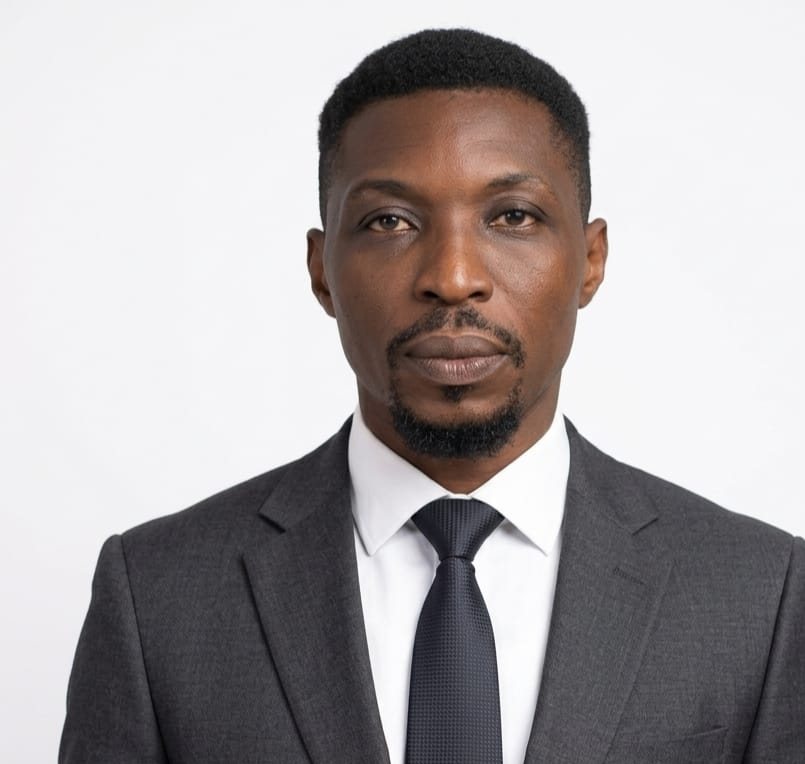
By Stephen Adewale
There are invitations one accepts because protocol demands it. There are others one accepts because friendship recommends it. But there are a few rare invitations that feel less like an event and more like a summons.
That was how I received the invitation to speak at the Sankofa Conference, convened by postgraduate students of the African Studies Students’ Association, Institute of African Studies, University of Ibadan.
The conference, scheduled for May 25-26, 2026, gathers around the stirring theme: “Collective Memory: Bodies and African Futures”.
I am billed to deliver a keynote address on 26 May 2026, and my chosen topic is “The Body as Archive: History, Collective Memory and the Making of African Futures.”
I did not accept the invitation simply because it came from one of Africa’s most important intellectual spaces.
I accepted it because the theme touched something urgent, almost dangerous, in the life of our continent. Africa is not suffering from lack of history.
Africa is suffering, in many places, from poorly remembered history. We remember selectively. We forget conveniently. We bury wounds before naming them. We inherit institutions without interrogating the memories inside them. We rush into the language of development while leaving behind the bodies that have carried the cost of previous promises.
I am going to Sankofa because I believe this is one conversation Africa cannot postpone.
Sankofa, that profound Akan idea of returning to fetch what has been left behind, is often misunderstood. It is not nostalgia. It was not a romantic call to worship yesterday. It is not an invitation to drag the future backwards.
Sankofa is something far more serious. It is the disciplined act of looking back in order to move forward with intelligence.
It is the wisdom that says a people who forgets too quickly may one day arrive at the future without knowing what injured it, what formed it, what weakened it, or what once gave it strength.
Africa today stands at a dangerous crossroads of memory and forgetfulness. We are a continent of extraordinary endurance, but also a continent where too many wounds are poorly remembered.
We speak of development without remembering displacement. We speak of governance without remembering coercion.
We speak of democracy without remembering the long history of state violence, military rule, broken promises and betrayed citizenship.
We speak of education without remembering the bodies of students whose futures have been interrupted by institutional instability.
We speak of culture while allowing languages, rituals, proverbs, songs and oral traditions to disappear quietly before our eyes.
This is why the Sankofa Conference matters.
It matters because memory is not a luxury. Memory is infrastructure. A society that does not remember well cannot govern well. It cannot educate well. It cannot reconcile well. It cannot imagine well. It may build roads, airports, bridges and towers, but if it has lost the moral memory of its people, it will build magnificence on emptiness.
My argument is simple, but its implications are wide: Africa’s past is not only preserved in documents. It is also preserved in bodies.
The body remembers what paper sometimes hides.
It remembers in the bent back of the farmer whose labour sustains a community but rarely enters official history. It remembers in the songs of women who carry migration, marriage, childbirth, mourning and survival in their voices.
It remembers in scarification marks that once spoke of lineage, beauty, status and belonging.
It remembers the dancing body, the protesting body, the displaced body, the wounded body, the labouring body, the student’s body waiting endlessly at home during a strike, and the lecturer’s body carrying the burden of a university system that often survives on sacrifice.
As a historian, I have become increasingly convinced that the archive is larger than the building. Some archives have shelves, files and catalogues.
Others breathe, walk, sing, dance, protest, mourn and remember. The old woman’s song may preserve a history no colonial file ever recorded.
A community festival may carry memories of settlement, war, migration or survival. A family silence may contain an unspoken trauma. A protest chant may reveal the moral language of a generation. A scar on the body may tell a story that no government report considered important.
This is why history must not be reduced to dates and documents alone. History is also interpretation. It asks who produced the record, who was excluded from it, whose body carried the burden, whose suffering became invisible, and whose memory was denied the dignity of evidence.
I am going to Sankofa because postgraduate students need to hear this clearly: their research is not a small thing.
A thesis is not merely a requirement for graduation. It can be an act of recovery. It can rescue a disappearing language, dignify a forgotten community, preserve an oral tradition, challenge a dangerous myth, expose the historical roots of conflict, or give meaning to a wound that has been carried for too long without interpretation.
In an age that worships speed, scholarship teaches patience. In an age that rewards noise, history teaches listening. In an age of artificial intelligence, digital distraction and shallow certainty, African Studies must remind us that some truths are hidden in memory, and some memories can only be reached through humility, fieldwork, language, culture, archives and human encounter.
That is why a student-led conference like this deserves attention. It is not merely another academic gathering. It is a sign that young scholars are refusing to surrender Africa’s memory to silence. It is a declaration that the future of African knowledge will not be built only by those who control institutions but also by those who ask courageous questions from lecture rooms, archives, field sites, libraries, communities and uncertain beginnings.
The University of Ibadan’s Institute of African Studies is not an accidental location for this conversation.
It is one of those intellectual spaces where Africa has long been studied not as a helpless object but as a world of ideas, cultures, struggles and possibilities.
To be invited there by postgraduate students is, for me, both an honour and a responsibility.
It means entering a conversation with those who are still forming their methods, sharpening their arguments, and discovering that scholarship is not only about what one knows but also about what one is willing to ask.
And the questions before us are urgent.
What does Africa remember?
Who is allowed to speak for the past?
What memories are buried beneath national slogans?
What histories are carried by women, workers, migrants, students, displaced persons, farmers, performers and ordinary citizens?
What happens when a society remembers only its heroes and forgets its victims?
What happens when memory becomes propaganda?
What happens when the future is imagined without listening to the bodies that have carried the past?
These questions sit with us in our universities, in our politics, in our homes, in our ethnic tensions, in our development failures, in our cultural anxieties and in the everyday fatigue of citizens who have endured too much and explained too little.
Africa does not need memory in order to remain trapped in the past. Africa needs memory in order to escape the repetition of old wounds.
We do not return through Sankofa because yesterday was perfect. We return because yesterday still holds evidence. We return because some things were lost carelessly.
We return because some wounds were never named. We return because some wisdom was dismissed as primitive.
We return because the future becomes dangerous when it is cut off from memory.
This is the spirit in which I am going to Sankofa.
I am going not simply to deliver a keynote but to join a necessary conversation. I am going because history still matters. I am going because the body still remembers. I am going because African futures must not be built on silence, denial or borrowed dreams. I am going because postgraduate students must be reminded that the work of scholarship is not only to analyse the world but to rescue meaning from forgetfulness.
In the end, Sankofa is not about looking back with fear. It is about moving forward with depth.
The bird turns backward not because it has lost its way, but because it knows that something necessary has been left behind.
And, perhaps, that is Africa’s task in this anxious century. Ours is to return with courage, to remember with discipline, to question with honesty, and to build futures worthy of the memories we carry.
Stephen Adewale writes from the Department of History, Obafemi Awolowo University, Ile-Ife.
Disclaimer
Comments expressed here do not reflect the opinions of Vanguard newspapers or any employee thereof.