
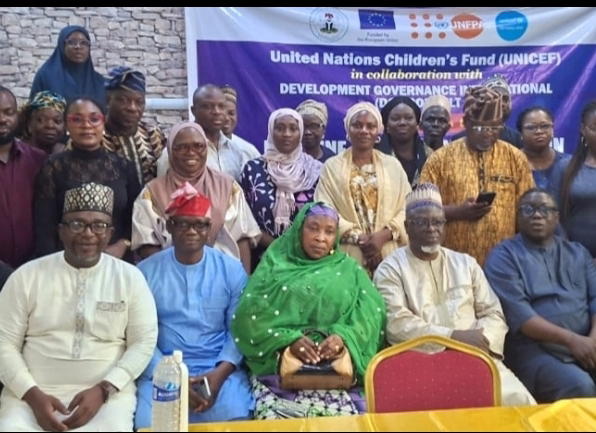
The United Nations Children’s Fund (UNICEF), in collaboration with health stakeholders, has uncovered significant leadership, governance, and management gaps affecting the delivery of maternal, newborn, child, adolescent health, and nutrition (RMNCAH+N) services in Kwara, Sokoto, and Adamawa States.
The gaps were revealed through a comprehensive baseline assessment conducted by Development Governance International (DGI) Consult on behalf of UNICEF as part of a major capacity-strengthening initiative for RMNCAH+N and Gender-Based Violence (GBV) services in the three pilot states.
The findings of the assessment were recently presented and validated by health stakeholders during separate workshops held in Ilorin, Sokoto, and Yola.
Key challenges identified across the states include limited technical knowledge of planning and implementation processes, poorly defined roles for Technical Working Groups, non-domestication of the RMNCAH strategic plan, fragmented supportive supervision, low use of data for decision-making at facility levels, and critical workforce shortages with inequitable distribution of health personnel.
Reacting to the report in Ilorin, Kwara State Commissioner for Health, Dr. Amina Ahmed El-Imam, represented by Permanent Secretary Dr. Taoheed Abdullahi, described the findings as a “wake-up call” for the state.
“While we have been paying adequate attention to the improvement in RMNCAH+N services, the identified gaps from the baseline assessment are a wake-up call for the state to pay greater attention to leadership, governance, and management,” he said.
In Sokoto, Dr. Danjuma Nehemiah of the UNICEF Sokoto Field Office expressed optimism that the intervention would significantly improve health outcomes.
“After this validation, we are going to be working with DGI to come up with plans and key activities that will enhance and change the landscape in terms of leadership and governance in the health sector,” Dr. Nehemiah said. “If the head is not showing direction, no matter what we do in terms of service delivery, we are not going to make progress.”
In Adamawa State, Permanent Secretary and Acting Commissioner for Health, Pharm. Zirra Mathias Bubabi, welcomed the intervention, while WHO representative Kirfi Mansur Habibu described the project as timely.
“The baseline assessment findings present a timely opportunity to align current efforts, identify key service delivery gaps, and prioritize evidence-based interventions,” Habibu noted.
Chief Executive Officer of DGI Consult, Dr. Gafar Alawode, explained that the project will introduce several strategic interventions, including the establishment of a Community of Practice across the three states and an RMNCAH+N Fellowship programme.
“We want to organize a Community of Practice as part of the implementation. There will be a platform that will bring the three states together,” Dr. Alawode said.
He added that the project will focus on strengthening coordination, annual operational planning, digitizing resource tracking, institutionalizing data-driven decision-making, and establishing functional Family Health Departments within the state ministries of health.
The initiative is expected to enhance leadership and governance capacities and ultimately improve health outcomes for mothers and children in the three states.
Disclaimer
Comments expressed here do not reflect the opinions of Vanguard newspapers or any employee thereof.