
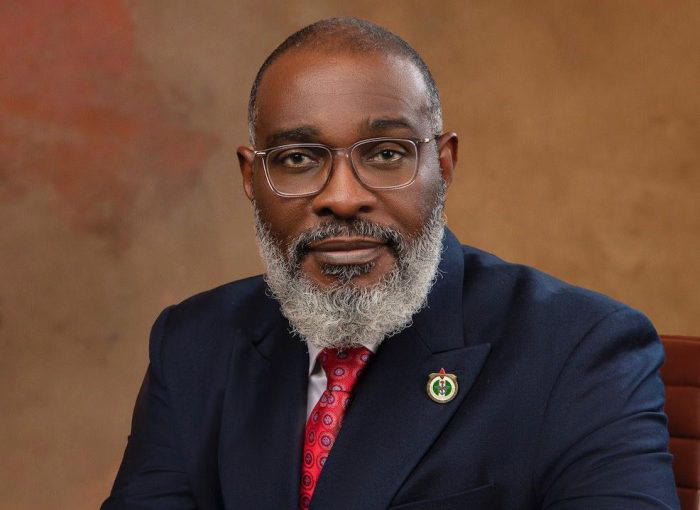
Major-General Adeyinka Famadewa (retd)
By Owolola Adebola
President Bola Ahmed Tinubu’s appointment of Major General Adeyinka A. Famadewa as Special Adviser on Homeland Security represents a major shift in Nigeria’s security architecture. Announced in May 2026, the appointment comes at a time when Nigeria continues to battle insurgency, banditry, kidnapping, cybercrime, communal violence, and porous borders.
With over three decades of military and intelligence experience, including his role as Principal General Staff Officer to the National Security Adviser between 2015 and 2021, Famadewa enters office with deep operational and strategic knowledge. Yet expectations are enormous, and the office itself remains largely undefined.
Nigeria’s security system has traditionally revolved around the Office of the National Security Adviser, currently headed by Nuhu Ribadu, which coordinates both internal and external threats. The new homeland security office appears designed to complement ONSA by concentrating specifically on domestic security, infrastructure protection, and internal stability.
Famadewa’s first challenge is therefore conceptual: he must clearly define what homeland security means within the Nigerian context. Without a distinct operational framework, the office risks becoming another bureaucratic layer competing with existing agencies such as the DSS, the Nigeria Police Force, the NSCDC, the Ministry of Interior, and military commands.
A practical starting point would be the development of a concise national homeland security doctrine outlining responsibilities in areas such as border security, protection of critical infrastructure, emergency-response coordination, cybersecurity, and community resilience against non-state actors. Establishing clear institutional boundaries will be essential to avoid duplication and rivalry.
One of Famadewa’s immediate priorities must be intelligence coordination. Nigeria’s security failures are often linked not to the absence of intelligence but to poor information sharing and delayed action. Security agencies frequently operate in silos, weakening national response capabilities.
Famadewa’s previous involvement in establishing the Intelligence Fusion Centre at ONSA places him in a strong position to improve intelligence integration. He should champion a unified domestic-intelligence platform capable of delivering real-time, actionable information to federal and state security actors.
Early-warning systems for insurgency in the North-East, banditry in the North-West, and separatist tensions in the South-East require urgent strengthening. Technology-driven surveillance, drones, data analytics, and community-based intelligence gathering should form part of a modern domestic-security strategy while maintaining respect for civil liberties.
Another major task before the retired general is improving inter-agency cooperation and reducing excessive dependence on military operations in domestic-security management. Nigeria’s internal-security responses have remained heavily militarized for years, often producing only temporary gains while raising concerns over human-rights abuses.
Given Famadewa’s past criticisms of over reliance on kinetic operations, many observers expect him to encourage a more intelligence-driven and law-enforcement-centered approach. Strengthening collaboration among the police, DSS, NSCDC, military formations, and local security networks will be crucial. Community-policing initiatives must also receive stronger institutional support.
Border security remains another pressing concern. Nigeria’s porous frontiers continue to facilitate arms smuggling, trafficking, illegal migration, and cross-border criminal activities. Famadewa will need to work closely with immigration authorities, customs services, and regional partners to modernize border management through biometric systems, surveillance technology, and intelligence sharing with neighboring countries such as Niger, Cameroon, and Benin.
The protection of critical infrastructure is equally important. Persistent attacks on oil facilities, transport corridors, telecommunications infrastructure, and farming communities continue to damage Nigeria’s economy and deepen insecurity. Famadewa should push for a comprehensive national infrastructure-protection framework involving risk-assessment mechanisms, emergency-response systems, and stronger collaboration with the private sector. Cybersecurity for government institutions and strategic industries must also become a central component of national-security planning.
Beyond operational security, Famadewa must recognize that Nigeria’s security crises are deeply local and socio-economic in nature. Lasting progress will depend on stronger engagement with state governments, traditional rulers, religious leaders, and civil-society organizations.
Regional homeland-security coordination hubs could improve local response capabilities and information sharing. De-radicalization programmes, youth-empowerment initiatives, and economic interventions targeting unemployment and poverty may also help reduce the social conditions that fuel insecurity and violent extremism.
Perhaps the greatest obstacle before the new adviser is institutional coordination. Critics have already questioned whether the office adds real value or merely duplicates existing structures. To succeed, Famadewa must maintain close cooperation with the Office of the National Security Adviser while establishing a clearly defined domestic-security mandate.
Funding shortages, weak institutional capacity, corruption, and inadequate manpower remain serious challenges. Political will is equally important, particularly in confronting elite complicity in insecurity, abuse of security contracts, and uneven deployment of security resources across regions.
Public trust in government security initiatives has also declined after years of unmet expectations. Ultimately, Nigerians will judge the effectiveness of the office not by policy statements but by visible results — safer highways, fewer kidnappings, reduced attacks on communities, and improved prosecution of violent offenders.
Beyond immediate operational concerns, Famadewa must focus on long-term institutional reforms. These include developing a comprehensive National Homeland Security Strategy, improving training standards for security personnel, strengthening human-rights compliance, clarifying legal mandates, and expanding international partnerships for intelligence sharing and counterterrorism training.
Emerging threats such as cybercrime, climate-related conflicts, and the security implications of new technologies must also form part of future planning.
Major General Famadewa assumes office at a defining moment in Nigeria’s history. The country’s security challenges are complex, deeply rooted, and multidimensional. No single appointment can solve them overnight, but effective leadership, better coordination, and strategic reforms could significantly improve national stability.
His success will depend on his ability to translate experience into measurable outcomes: safer communities, stronger intelligence coordination, protected infrastructure, and renewed public confidence in the state’s ability to safeguard lives and property.
Whether the office becomes another bureaucratic experiment or a genuine turning point in Nigeria’s homeland-security framework will depend entirely on effective execution in the months and years ahead.
•Adebola writes in from Ogbagi Akoko, Ondo State.
Disclaimer
Comments expressed here do not reflect the opinions of Vanguard newspapers or any employee thereof.