
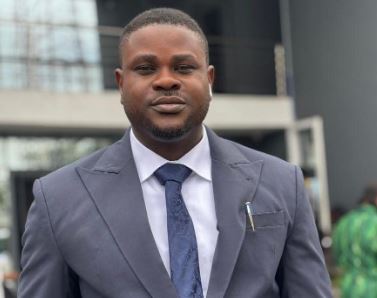
Dr. Ganiu Abisoye Bamgbose (Dr. GAB)
By Ganiu Bamgbose
Nigeria is perhaps one of the most religious countries in the world. Mosques fill up on Fridays, churches overflow on Sundays, and prayer meetings dominate the weekly schedules of millions of citizens. From roadside banners proclaiming divine intervention to marathon vigils seeking heavenly solutions, faith occupies a central place in the Nigerian consciousness. Yet, amid this deep spirituality lies a troubling irony: many of the problems for which Nigerians seek divine intervention are problems created, sustained and worsened by human actions. Thus emerges the tale of a country that constantly looks up to God for man-made problems.
In Nigeria, prayer has become both a spiritual exercise and a national coping mechanism. Whenever fuel prices rise, citizens organise prayer sessions. When insecurity escalates, religious leaders declare fasting programmes. During elections, people pray for peaceful transitions rather than demand institutional accountability. When roads collapse, hospitals fail, or unemployment rises, sermons multiply. While faith is valuable and prayer remains important to many people, the danger lies in replacing responsibility with religiosity.
Many of Nigeria’s challenges are not natural disasters beyond human control. They are consequences of poor leadership, corruption, policy inconsistency, weak institutions and collective negligence. Bad roads are not caused by demons. Insecurity is not solely the handiwork of unseen forces. Unemployment is not a spiritual attack. Electricity failure is not an ancestral curse. These are largely outcomes of governance failures and societal complicity.
The culture of over-spiritualising problems often weakens civic responsibility. Citizens sometimes endure avoidable suffering because they are conditioned to believe that every hardship is part of a divine test rather than evidence of systemic dysfunction. A society that should question leaders often retreats into prayer camps. Instead of demanding transparency, many people simply “leave everything to God.” Consequently, leaders who should be held accountable escape scrutiny because citizens are more prepared to pray about problems than confront them institutionally.
Ironically, religion itself sometimes becomes entangled in the structures that sustain these problems. Some religious leaders openly associate with corrupt politicians, offering spiritual endorsements without moral interrogation. Public officials accused of mismanagement still receive front-row seats in places of worship and are celebrated as benefactors because of generous donations. In such situations, religion unintentionally legitimises irresponsibility rather than challenge it.
This reality does not suggest that faith is useless or that spirituality should be discarded. Far from it. Religion has provided hope, charity, moral guidance and emotional strength for millions of Nigerians. During periods of hardship, faith communities often provide relief where government institutions fail. The problem, however, arises when faith replaces action instead of inspiring it.
True spirituality should encourage responsibility, integrity and social justice. A genuinely religious society should not only pray against corruption but also refuse to participate in it. It should not only pray for peace but also reject ethnic hatred, political violence and dishonesty. It should not merely ask God for economic prosperity while normalising fraud, bribery and exploitation. Prayer without responsibility easily becomes escapism.
Nigeria’s situation also reveals a deeper contradiction between public religiosity and public morality. Despite the high level of religious devotion, corruption remains widespread. Examination malpractice persists. Public funds disappear. Electoral misconduct thrives. Religious slogans decorate public spaces, yet ethical conduct often appears scarce in both private and public life. This contradiction raises an uncomfortable question: how can a deeply religious society continue to struggle with basic civic virtues?
Part of the answer lies in the misunderstanding of the relationship between divine intervention and human responsibility. Many people expect miraculous outcomes without corresponding human effort. Citizens pray for good governance but sell votes during elections. People pray for national transformation but refuse to obey simple civic rules. Leaders publicly invoke God while undermining justice and fairness through their actions. In essence, Nigeria sometimes seeks supernatural solutions to problems rooted in human behaviour.
The developed nations that Nigerians often admire did not rise solely because they prayed more. They invested in institutions, education, discipline, innovation and accountability. Their progress came from systems that punish misconduct and reward competence. While faith may exist in those societies, it does not usually replace governance structures or civic engagement. Nigeria must therefore learn that prayer and productivity are not opposites; they should complement each other.
The future of Nigeria depends not merely on louder prayers but on stronger institutions and responsible citizenship. Religious centres should become places where ethical values are reinforced alongside spiritual teachings. Clerics should encourage accountability, patriotism and civic participation. Citizens must learn to combine faith with action, devotion with discipline, and hope with responsibility.
Ultimately, God did not design nations to function without human effort. Roads are built by engineers, not angels. Economies grow through sound policies, not prophecies alone. Security improves through strategic planning and justice, not merely through declarations from pulpits and prayer grounds. Nigeria must therefore move from passive dependence on divine intervention to active participation in national development.
The tale of Nigeria is not simply the story of a religious nation. It is the story of a country at the crossroads between faith and responsibility. The challenge is not whether Nigerians should pray, but whether they will also act. Until the country confronts its man-made problems with man-made solutions guided by ethical values, the cycle of frustration may continue, even in the midst of countless prayers.
dr. Ganiu Bamgbose writes from Lagos.
Disclaimer
Comments expressed here do not reflect the opinions of Vanguard newspapers or any employee thereof.