
By Osa Mbonu-Amadi
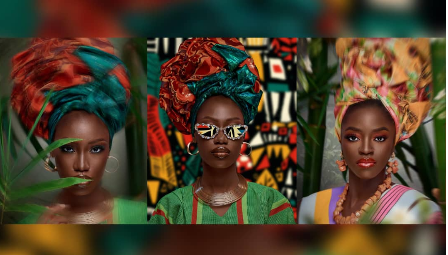
The gele sits at the core of this powerful triptych. That is obvious. What is also obvious is that Oluwatobi Ogundunsin is not neutral about it. He understands the capacity of the photograph and its ability to portray more than an image. These photographs are not documentation as much as they are a statement about a culture seen through its dress.
You would think that in three portrait photographs your views would converge at the face, the focal point of a portrait. But not here. In these, the focus is the gele. They are colorful, loud, and most importantly, they are big. Big to the point that they all run off the page. They are an identity that cannot be contained, overflowing with both colour and majesty. This symbol of cultural identity is central to the message.
Two of the photographs have a botanical element, a lush tropical foliage that does not feel stylised as much as it feels compulsory. Ogundunsin’s figures are solid, captivating and feel as though they are rising out of the ground below them.
There is tension between these images. The two flanking figures are looking at the viewer, allowing the western gaze in. But the middle figure, clad in bejeweled cat-eye glasses, instead of giving us access, reflect the African textile print that hangs in the background. The gaze is simply turned away. This is a powerful statement and incredibly effective. It does not go unnoticed that while the viewer is shut out, so to speak, they also cannot look away, captivated by the image.
The middle figure is also the only one where the gele is solidly defined. In contrast to the other two images, where the gele is blurred, the middle figure, eyes covered, stands defiantly and hardened. This distinguishes it from the flanking images. In much of African spirituality, what is put on the head is significant. That symbolism is strong here, and allowing the gele to extend beyond the edge of the picture, plainly represents a higher spirituality.
Compositionally, the middle figure also stands out. Unlike the other two that show depth through the background foliage, this one is much flatter. The blur of the African motif is the only thing separating it from the figure. But this flattening makes the cat-eye glasses pop. They become the focal point, and after the gele, arguably the most important aspect of this photograph.
Similar to Zanele Muholi’s portraiture, Ogundunsin plays with archetypes. The Goddess, Earth Mother, Oracle, Warrior. The use of regal iconography, foliage as frame, and a hardened, unflinching expression builds a story. But he adds a tension to balance (or unbalance) that message. These archetypes are culturally specific and full of history, but he shoots the models in contemporary fashions essentially telling us that these are not historic symbols but alive and well today.
Tyler Mitchell plays with the idea of the Black utopia. And whether it is achievable or not, it is, at the very least, something to strive for. Similarly, Ogundunsin creates realities in these photographs that are symbolic of the strength of black women and their history.
These are three stunning photographs of three stunning faces drip with an historic symbolism, exuding power across ages. They pull the viewer in, demand attention, and control the experience.
Disclaimer
Comments expressed here do not reflect the opinions of Vanguard newspapers or any employee thereof.