
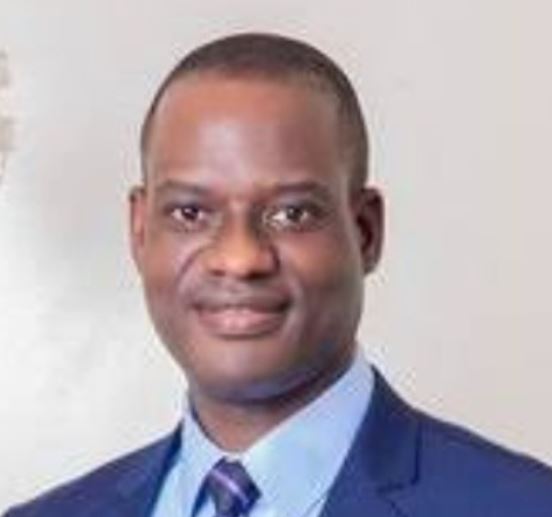
Oyedele
By Moshood Oshunfurewa
There is a certain tragedy in watching a nation articulate its own contradictions in public. When Minister of Finance Taiwo Oyedele stood before the 28th Annual Tax Conference of the Chartered Institute of Taxation of Nigeria and declared that “Nigeria cannot continue to finance development primarily through borrowing,” the statement landed with the weight of the obvious, except that the Federal Government had, barely twenty-four hours earlier, intensified negotiations with the World Bank for yet another fresh $1.25 billion loan. The diagnosis was correct. The prescription, however, was already being contradicted before the ink dried.
Nigeria is caught in a fiscal trap of its own making, and the trap has two equally unforgiving jaws: a debt profile that is consuming the nation alive, and a tax reform agenda being applied to an economy where the majority of citizens already cannot afford to breathe comfortably. To escape this trap, Nigeria must be honest about something its policymakers have consistently avoided, that neither borrowing nor taxation, in the absence of a productive, industrialised, employment-generating economy, will deliver the development that 220 million Nigerians urgently need.
The numbers are damning. As of the end of 2025, Nigeria’s total public debt stood at N159.28 trillion, approximately $94.2 billion, according to the Debt Management Office. The Tinubu administration alone has accumulated N71.82 trillion of that figure since May 2023, accounting for 45 percent of the current total public debt stock in barely two years of governance. To contextualise that scale of borrowing: when President Buhari left office, Nigeria’s debt was N87.38 trillion. It has nearly doubled since.
What is even more alarming than the quantum of debt is its cost. President Tinubu himself disclosed that Nigeria will spend approximately $11.6 billion servicing debt in 2026, a figure representing nearly half of the country’s projected revenue for the entire year. That is a 130 percent surge from the $5.2 billion spent on debt servicing in 2024. The arithmetic of this trajectory is brutal: Nigeria is essentially borrowing to pay back what it has already borrowed, while the gap between revenue and expenditure widens into a chasm. The 2026 budget stands at N68.32 trillion, with a deficit exceeding N20 trillion earmarked to be funded, predictably, by new borrowing.
Nigeria has already paid $848.7 million in debt servicing to World Bank institutions in 2025 alone, even as its outstanding debt to those same institutions rose to $19.8 billion by year’s end. The World Bank has approved approximately $9.35 billion in loans and credits for Nigeria between June 2023 and May 2026 across power, education, healthcare, agriculture, and economic reforms. If the pending $1.25 billion facility is approved, total World Bank approvals under the Tinubu administration would rise to $10.6 billion. Meanwhile, Nigerians flooded the World Bank’s official Instagram page with pleas to stop lending, desperate citizens warning a global institution that their leaders cannot be trusted with borrowed billions. The World Bank responded by restricting its comments section. That tells its own damning story.
The Policy and Legal Advocacy Centre has raised pointed concerns about the largest single borrowing proposal in Nigeria’s history, a $21.5 billion external loan request, noting that such proposals lack detailed cost-benefit analyses and fail to meet the transparency requirements enshrined in the Fiscal Responsibility Act. Borrowing is not inherently destructive. But borrowing without accountability, without visible impact, and without a credible plan for productive deployment is not development financing, it is deferred poverty.
The government’s parallel answer to borrowing is tax reform, and to be fair, the reforms contain some welcome provisions. Minimum wage earners have been exempted from personal income tax. Corporate income tax rates face proposed reductions. Fifteen states have enacted tax harmonisation laws. These are not trivial achievements. But they must be weighed against what they are attempting to do: raise significantly more revenue from an economy where the purchasing power of the average Nigerian has been savaged by the very reforms introduced since 2023, fuel subsidy removal, naira devaluation, electricity tariff hikes, all of which preceded the tax conversation.
Development that does not increase Nigerians’ purchasing power is, by economic definition, jobless growth – an expansion of national GDP or infrastructure that fails to translate into real income, employment, or financial capacity for the ordinary citizen. Nigeria’s structural weaknesses make this risk acutely real. The country’s revenue-to-debt servicing ratio, which stood at a catastrophic 120 percent in December 2022, declined to 68 percent by the end of 2025 – an improvement, but still a figure that would cause alarm in any finance ministry on the continent. When 68 cents of every revenue naira is committed to debt service before a single road is paved, school funded, or hospital stocked, the idea that expanding the tax base will catalyse development becomes, at best, aspirational.
The deeper problem is structural. Nigeria’s tax system has long suffered from multiple taxation, fragmented administration, weak compliance, and overdependence on a narrow revenue base. The informal sector, which employs the overwhelming majority of Nigerians, remains largely untaxed, not by policy design but by institutional failure. Broadening the tax net without first building institutional trust, simplifying compliance, and demonstrating that taxes produce visible public goods is a formula for expanding resentment, not revenue. Citizens who watch billions borrowed in their name disappear into “ARMOR,” “RESET,” “HOPE,” and “SPIN”, an alphabet soup of loan acronyms that produce little traceable impact, are citizens who will rationally resist taxation.
There is a productive economy hiding beneath Nigeria’s fiscal paralysis, and the government’s own rhetoric gestures toward it without committing to it. President Tinubu declared at the Africa Forward Summit that Africa accounts for less than 2 percent of global manufacturing value addition, a statement that doubles as an indictment of Nigerian industrial policy. Nigeria processes almost none of its own minerals, refines a fraction of its own crude, and produces almost nothing for global consumption. Its energy sector remains trapped in a purgatory of decentralised off-grid strategies and Demand-Side Management frameworks that prioritise managing scarcity over building actual capacity, leaving manufacturers competing with darkness while China produces for the world at a fraction of the cost.
True fiscal sustainability cannot be borrowed or taxed into existence. It must be produced. Nigeria needs an industrial policy that does not merely announce ambitions but ties every single billion borrowed to a measurable outcome in manufacturing output, employment, or export earnings, with consequences for failure. It needs an energy infrastructure that is aggressive rather than cautious, because no tax reform can compensate for the cost-inflation that unreliable power inflicts on every business in the country. It needs governance of borrowed funds that is transparent enough to rebuild the citizen trust without which no tax system can function legitimately.
Minister Oyedele was right to say that a good tax system “should raise revenue efficiently, support economic growth, protect the vulnerable, and strengthen trust between governments and citizens.” But trust is not a declaration, it is a track record. Nigeria has not yet earned the trust that makes citizens willing participants in a revenue compact. Until the government demonstrates that borrowed funds produce real development, and that tax revenues are visibly converted into public goods, neither borrowing nor taxation will deliver prosperity. They will only deepen a crisis that is already, by every available number, running out of time.
•Oshunfurewa, a public affairs analyst writes from Lagos
Disclaimer
Comments expressed here do not reflect the opinions of Vanguard newspapers or any employee thereof.