
By Luminous Jannamike
ABUJA — Nigeria has launched a new tourism development plan focused on infrastructure, as stakeholders warn that poor roads, unreliable power, limited financing and weak access to key destinations continue to hold the sector back.
The initiative rests on a simple but far-reaching idea: tourism cannot grow without the infrastructure that makes places accessible, safe and worth visiting.
Stakeholders say the goal is to move Nigeria beyond scattered tourism sites and begin building destinations that can attract both local and international visitors.
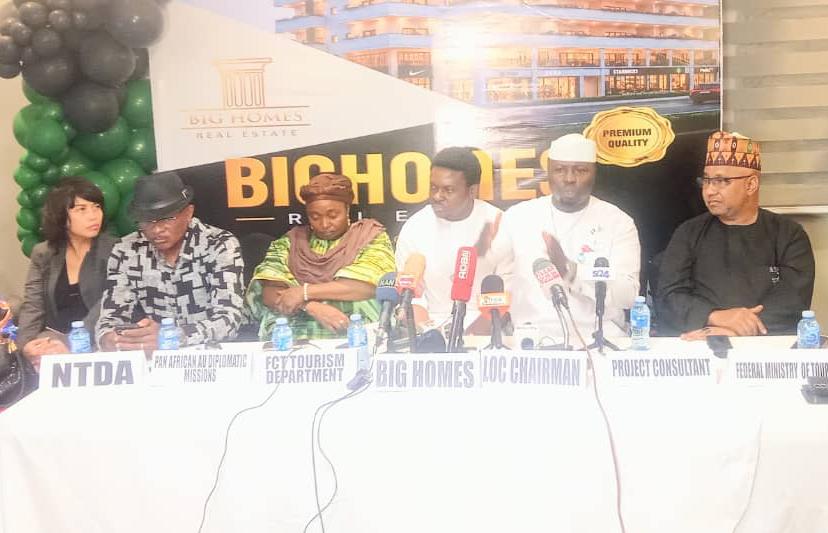
The position was outlined by Phil Roberts, Executive Director of the Tourism Volunteers Network, and Topsy Essien, Managing Director of Big Homes Nigeria Ltd, during the signing of a Memorandum of Understanding (MoU) in Abuja under the National Infrastructural Tourism Development Initiative (NITDI).
“A tourism site remains stagnant, but it becomes a destination when supported with infrastructure; good roads, electricity, housing, internet, food systems and security,” Roberts said.
The agreement brings together tourism and real estate stakeholders in a coordinated effort to reshape the sector through infrastructure planning, with Abuja selected as the pilot city under a ‘Living Infrastructure Tourism City’ model.
Drawing from his travels, Roberts said journeys across Nigeria, including road trips from Abuja to Delta State and an attempted drive to Ethiopia, showed how countries with thriving tourism sectors deliberately build systems that support destinations.
“We don’t need to take our money abroad for tourism experiences. With the right infrastructure, Nigeria can become the destination the world comes to see,” he said.
Under the framework, Abuja is divided into strategic tourism development zones: Aso Rock as an iconic destination; Jabi Lake as a waterfront and blue economy hub; Maitama and Asokoro as luxury tourism and experiential real estate centres; and Mpape, Katampe, Bwari and AMAC for nature, adventure and agro-tourism.
Stakeholders say the zoning plan is designed to guide investment and make better use of the capital’s natural and built assets.
“Tourism remains the biggest marketing tool for any country. Nations promote themselves globally through tourism, yet in Nigeria, those responsible for this promotion are often neglected,” Roberts said.
Financing remains a major constraint, with limited access to funding restricting investors and operators from scaling viable projects.
A central feature of the initiative is the integration of tourism into real estate development, with stakeholders urging developers to rethink how buildings and communities are designed.
“Every building should be designed as a potential destination. People should be able to visit, experience and even pay to access unique spaces,” Roberts said.
The framework seeks to link tourism, infrastructure and real estate development, promote sustainable housing, create jobs and attract foreign direct investment, with plans to expand beyond Abuja through collaboration with federal ministries and agencies.
Roberts said the Infrastructural Tourism Development Summit 2026 will hold on September 24 in Abuja to mark World Tourism Day, under the theme: “Building Today, Building Tomorrow: Infrastructure for a Stronger Tourism Future.”
On the role of developers, Essien said sustainable communities must serve both residents and visitors.
“Sustainable communities are self-sufficient. They provide everything residents need while also creating attractive environments for visitors,” Essien said.
He added that Nigeria must prioritise architectural designs that reflect local culture and climate, noting that authenticity would strengthen the country’s appeal to international tourists.
The MoU was signed by Roberts on behalf of tourism stakeholders and by Big Homes Nigeria Ltd, representing real estate practitioners, with both parties pledging continued collaboration to drive the initiative.
Disclaimer
Comments expressed here do not reflect the opinions of Vanguard newspapers or any employee thereof.