
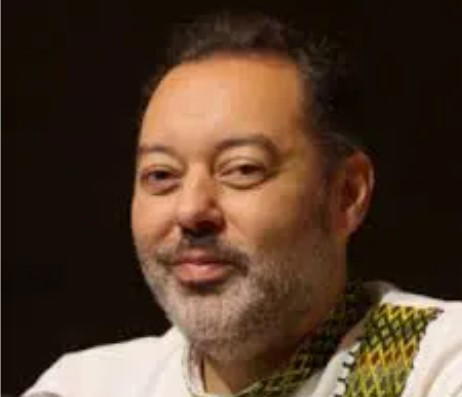
Fadhel Kaboub
By Agbonkhese Oboh
In May 2016, the Nigeria Atomic Energy Commission, NAEC, signed an MOU with Russia’s State Atomic Energy Corporation, ROSATOM, for the construction of four nuclear power plants in Nigeria.
The plants would cost about $80 billion and will have a total capacity of just 4,800 megawatts by 2035, with each facility costing $20 billion. It is to be built by Russian firm – ROSATOM – which will hold a majority stake in Nigeria’s nuclear facilities, while the rest will be owned by the state, with roles to be defined in contractual agreements.
Civil society raised the alarm about the secretive nature of the discussions, and the government and ROSATOM went quiet. Not even the communities that would host the facilities knew about it.
These facts emerged at an “Expert Workshop on Global Movement Agaist New Nuclear Power Plants (Nigeria Training)” orgarnised for journalists by the Renevlyn Development Initiative, RDI, and Tipping Point North South UK.
According RDI Executive Director in his address, “These are the issues we would be discussing” with “advocates from Kenya, Zambia, South Africa, Germany and the US” exposing “issues surrounding nuclear power plants that we are not privy to”.
Resource persons
Participating journalists cut across broadcast, print and digital media.
In her welcome address, Deborah Burton of Tipping Point North South UK said said Africa must resist the pressure to adopt nuclear power because it is a distraction for a continent that has an abundance of renewables that can power it and reduce the energy poverty of its people.
She listed countries on the continent that have already announced plans to roll out nuclear power
plants to include Angola, Burkina Faso, Egypt, Ethiopia, Ghana, Kenya, Morocco, Namibia and Tunisia.
Others are Senegal, Rwanda, Tanzania, Uganda, Nigeria and South Africa that has the only operational
nuclear plant built in 1984 during the apartheid era.
She referenced a 2025 report titled THE ALARMING RISE OF FALSE CLIMATE SOLUTIONS IN AFRICA:
THE NUCLEAR ENERGY MISADVENTURE by 12 civil society in a host of countries on the continent,
Europe and Russia which detailed the extent of plans and announcements to roll out nuclear power
plants in Africa as the definitive position of Africans.
“The organisations whose researches culminated in the report called for an end to plans to spend billions
on building new nuclear power plants and advocated instead, for funding of clean, safe renewable
energy sources, of which the continent has an abundance,” Burton said.
For the country analysis and NGO cam[aign session, Lance Mbani (Centre for Justice Governance and Environmental Action, Kenya), Jakpor (RDI, Nigeria), and Chansa Kaluba, Southern Africa Faith Communities’ Environment Institute) took the participants on what obtains in their countries.
Vladmir Slivyk, Ecodefense, Russia, gave the A to Z of the Russian firm, ROSATOM, while Makoma Lekalakala of Earthlife Africa (Soutyh Africa), spoke on “Nuclear Power Plants: Repacking a false solutions to climate talks”; and Stephen Singer, and ant-nuclear activist in Germany. Also, Chima Williams, Executive Director of Environmental Defenders Network, EDEN, spoke on what the journalists need to do.
The high point of the training was when the guest speaker, Fadhel Kaboub, Associate Professor of Economics, Denison University, USA, spoke on “Why African Clean Energy Sovereignty Cannot Wait”.
Kaboub explained That Africa does not need nuclear energy when the continent has enough sources of renwable energy.
He stressed that the nuclear power plans for Africa had nothing to do with the growth of the continent, but everything to do with geo-political, economic and “colonial” advantage.
Disclaimer
Comments expressed here do not reflect the opinions of Vanguard newspapers or any employee thereof.