
By Gabriel Ewepu
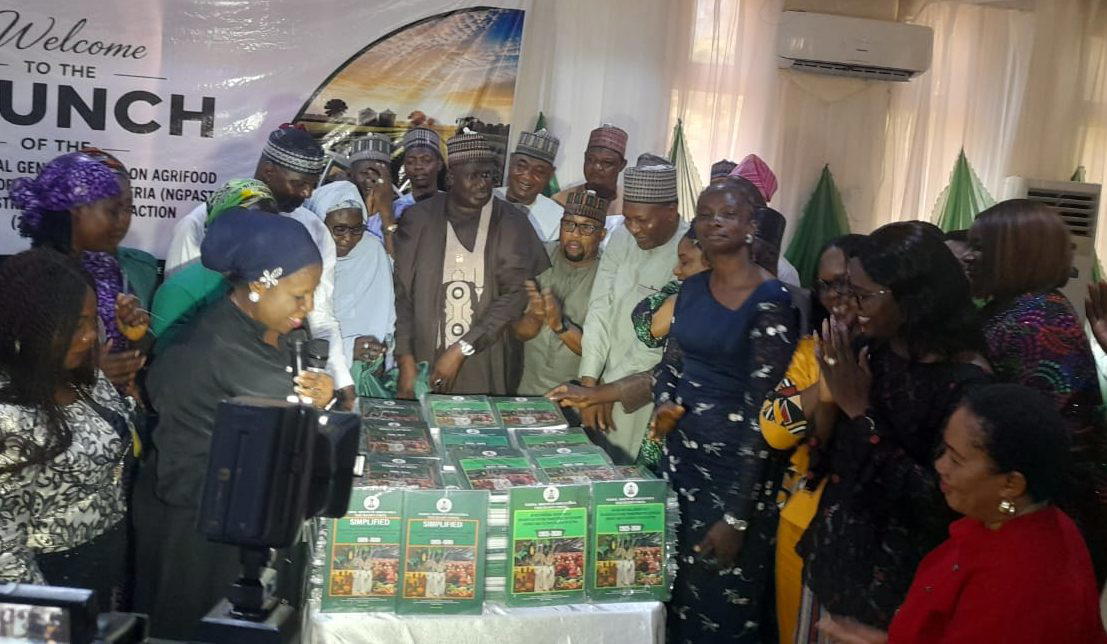
ABUJA – THE Minister of Agriculture and Food Security, Sen Abubakar Kyari, Tuesday, expressed optimism that with the official launch of the ‘Revised National Gender Policy on Agrifood Systems Transformation for Nigeria, NGPAST, and its Strategic Plan of Action for 2025-2030, will deepen agrifood systems in the country.
Kyari, who was represented by the Minister of State for Agriculture and Food Security, Dr Aliyu Abdullahi, underscored the strategic role the document will play in food production, while he noted that women farmers remain the country’s powerhouse of food production.
The document is to provide holistic solutions to the challenges women face in the agricultural sector that limit their productivity.
He said: “This occasion marks an important step in our ongoing efforts to transform Nigeria’s agricultural sector into one that is more inclusive, productive, and sustainable.
“Agriculture remains central to our National priorities-driving food security, employment, and economic growth.
“However, we must acknowledge that gender disparities continue to limit the full participation of many Nigerians, particularly women, who play critical roles across the agrifood value chain.
“Addressing this challenge is not optional; it is necessary for achieving our national goals.”
He further explained that, “The policy we are launching today provides a clear and practical framework to ensure equitable access to resources, opportunities, and decision-making for both women and men. It also strengthens the integration of gender-responsive approaches across all agricultural programmes and interventions. This is how we unlock the full potential of our sector.”
However, the Minister emphasised that “the success of this policy will depend on implementation. We must move from commitment to action. I therefore call on all relevant institutions and stakeholders to integrate this policy into their plans, programmes, and budgets. We will also ensure strong monitoring and accountability to deliver measurable results.
“Building a resilient and food-secure Nigeria requires that we carry everyone along. An inclusive agrifood system is not just fair, it is smart economics and good policy.
“On this note, it is my honour to officially launch the Revised National Gender Policy on Agrifood Systems Transformation for Nigeria (2025-2030), and its Strategic Plan of Action.”
Meanwhile, the Minister of State for Agriculture and Food Security, Dr Aliyu Abdullahi, in his remarks, described the revised National Gender Policy on Agrifood Systems Transformation for Nigeria, NGPAST, as “a significant milestone” towards building a “more inclusive and equitable agricultural sector.”
Abdullahi further stated that the revised National Gender Policy on Agrifood Systems Formation also reflects shared commitment to “ensuring that nо segment of our population is left behind in the drive towards food security and national development.”
He also disclosed that, “In line with the Renewed Hope Agenda of our dear President, His Excellency, Bola Ahmed Tinubu GCFR, the Ministry has as one of its flagship projects ‘Development of Standard Framework for Ease of Doing Agriculture and Food Security, including Inclusiveness for Youth and Women in Agriculture and food systems’.
“We are also planning to establish agricultural marketing incubation centres for youth and women. In conjunction with the office of the First Lady, Her Excellency, Senator Remi Tinubu CON, we have been promoting and implementing the Every Home a Garden, home economics and nutrition knowledge transfer and practice at the state and local government levels for the Renewed Hope Initiative for food and nutrition security
“We have set in place standard operating procedures and processes towards the strengthening of women in agriculture because the contributions of women in agricultural development cannot be overlooked to enhance food security and livelihoods in Nigeria.”
In a speech, the Minister of Women Affairs, Imaan Sulaiman-Ibrahim, expressed optimism that the revised policy builds on progress in expanding women’s access to land, finance, technology, and extension services.
Sulaiman-Ibrahim also described it as a “forward-looking and strategic framework” that emphasises gender equity, climate relevance, innovation, and sustainable livelihoods as central to Nigeria’s food security agenda.
The Minister highlighted the 2025–2030 Strategic Plan of Action as a clear roadmap with “measurable targets and stronger accountability mechanisms” to ensure gender considerations are not treated as peripheral but as central to agricultural transformation. We remain fully committed to supporting this initiative.”
However, she stressed that, “All agriculture and food security programmes must place the dignity, safety and the agency of women and girls at its core, moving away from treating women solely as vulnerable, towards recognising them as defining their power.”
Earlier, the Country Director, ActionAid Nigeria, Dr Andrew Mamedu, in his address of welcome, stressed that the true success of gender policy lies in implementation and not launch.
Dr. Mamedu, who was represented by, said, “Today marks a defining moment in our national journey toward building an agri-food system that is inclusive, equitable, resilient and fit for the future.
“The true success of this policy will not be measured by this launch but by its implementation.”
Meanwhile, the AAN boss assured support to work with other partners to “intensify budget analysis, budget monitoring and advocacy on budgetary allocations”, as he emphasised implementation, saying, “demands political will, adequate financing, strong institutions, accountability and collective ownership at federal, state, local and community levels.”
He added, “Let this launch be a call to action. Together, let us translate this policy into concrete programmes, inclusive budgets and measurable outcomes that improve lives and leave no one behind. When equity guides our agri-food systems, we strengthen not only agriculture but the foundations of Nigeria’s prosperity.”
The Country Director, AGRA, Dr Rufus Idris, in his goodwill message, said, “Today we would like to make a commitment to say that the journey is just starting.
“We have a revised policy, and one of our mandates will be how to support the implementation of this policy. So at AGRA, we are committing that we will continue to work with you towards the implementation of this policy.”
Other goodwill messages from Small-Scale Women Farmers Organisation in Nigeria, SWOFON, young farmers, among others, hailed the unveiling of the revised National Gender Policy on Agrifood Systems Transformation, and pledged to drive and also take it to the grassroots, but demanded full implementation of the policy to change the narrative.
Disclaimer
Comments expressed here do not reflect the opinions of Vanguard newspapers or any employee thereof.