
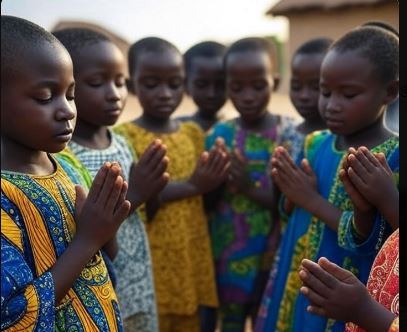
AI-generated image for illustration.
Nigeria marked another Children’s Day yesterday, Wednesday, 27th May 2026. The celebration rang hollow for many families whose children have become victims of kidnapping, terrorism, trafficking, and violence. In a nation where children should symbolise hope, innocence, and the future, they are increasingly becoming targets in a brutal cycle of insecurity. The frightening reality today is that Nigerian children are gradually becoming endangered species.
Recent events in Borno and Oyo States have once again exposed the vulnerability of our children. In May 2026, more than 80 children were reported missing after coordinated attacks on schools in both states. In Borno, armed militants stormed schools near the Sambisa Forest axis and abducted dozens of pupils during class hours. In Oyo, a region not usually associated with mass school abductions, gunmen brazenly attacked secondary schools, kidnapping scores of students and demonstrating that no part of the country is immune from the reach of criminal networks. These incidents are part of a disturbing national pattern that has persisted for years. Since the infamous 2014 abduction of the Chibok schoolgirls, Nigeria has witnessed repeated attacks on schools and children. Kidnappings in states such as Kaduna, Niger, Zamfara, Kwara, Kebbi, Sokoto, Katsina, and Borno—and most recently Oyo—have left thousands of children traumatised and many families permanently scarred. Parents who once saw school as a ladder out of poverty now weigh whether the risk of sending a child to class is worth exposing them to kidnappers and killers.
Beyond terrorism and banditry, child trafficking has also become a growing menace. In Ondo State recently, police rescued 14 kidnapped children, including babies and toddlers allegedly sold through illegal orphanage networks. Across several communities, children are stolen for ransom, forced labour, ritual practices, or trafficked. The consequences are devastating. In many rural communities, education is being abandoned because classrooms have become hunting grounds for criminals. Amnesty International and other human-rights groups warn that insecurity is forcing children—especially girls—out of school and into early marriages as families seek to protect them from worse fates. Mental scars persist long after physical wounds heal; a generation growing up with violence normalised will cripple the nation’s prospects for decades.
A country that cannot protect its children is mortgaging its future. Children are the heartbeat of national development. Yet Nigeria continues to respond to these crises with temporary outrage rather than lasting solutions. This Children’s Day anniversary therefore ought to be a moment of national reflection and urgent action. Government at all levels must strengthen school security, improve intelligence gathering, prosecute kidnappers decisively, and restore public confidence in education. If Nigerian children continue to live in fear, then the nation itself stands in danger. Protecting our children must henceforth be treated as a matter of national survival.
Disclaimer
Comments expressed here do not reflect the opinions of Vanguard newspapers or any employee thereof.