
By Ochereome Nnanna, in Katsina
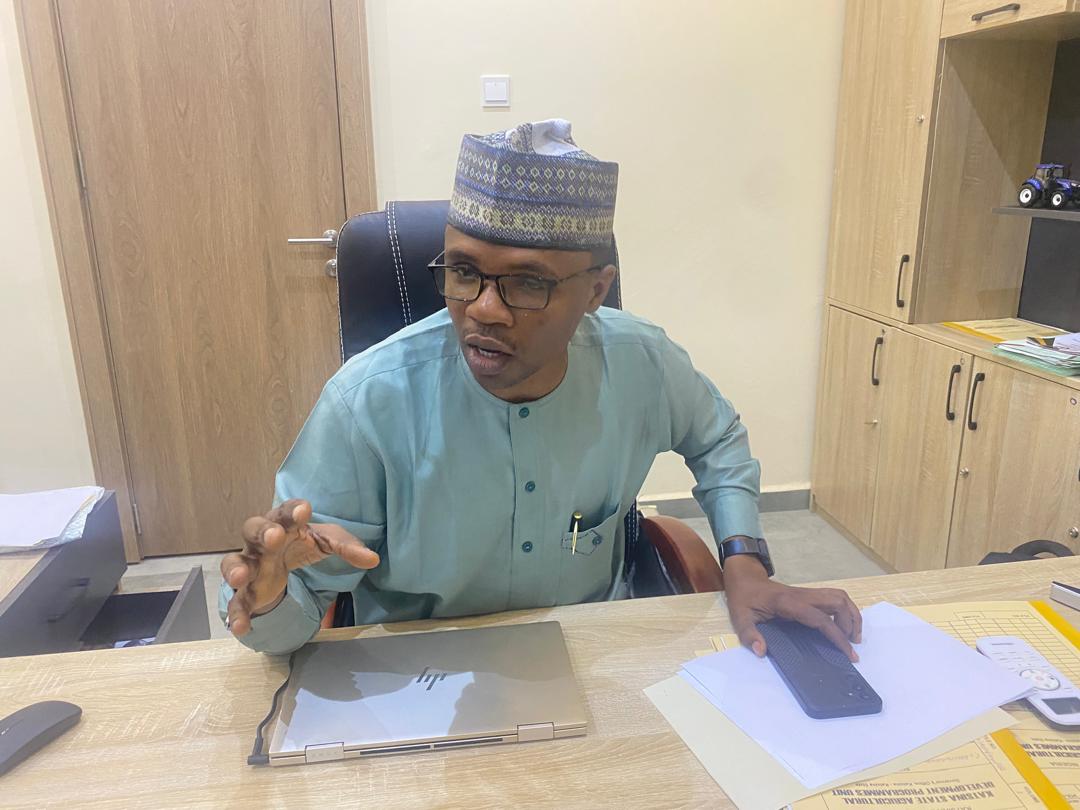
Across growing seasons and dry spells, a quiet agricultural revolution is unfolding in Katsina State — led by Dr. Umar Suleiman, Head of the Katsina State Sustainable Platform for Agriculture (KASPA). It combines locally led technology, youth empowerment, and practical climate-smart solutions to tackle food insecurity, unemployment, and environmental stress.
Central to the transformation is a local tractor assembly plant and a network of mechanization centers. Rather than importing finished machines, parts are shipped in and assembled in Katsina by youths from each local government. This approach has created thousands of jobs — tractor operators, assistants, and booking agents — while building local skills in assembly, maintenance and operations.
A digital dashboard tracks each machine’s location and hectares covered, improving transparency and efficiency.
Quality seed is another priority. As Dr. Suleiman explains, yield is limited by seed genetics. Katsina’s community-driven seed production program empowers youth groups to produce locally adapted, certified seed across seven priority crops — including maize, rice, millet, sorghum, soybean and sesame. So far the initiative has cultivated significant hectares and saved billions of naira in procurement costs, strengthening resilience to the State’s rainfall patterns and ecological realities.
Smallholder farmers are at the core. Revived training centers, including an expanded Songhai hub, deliver hands-on agribusiness education, stipends and startup grants so graduates can launch viable enterprises. The aim is to scale the center into a regional center of excellence for agricultural innovation.
KASPA’s Casper sustainability platform links input suppliers, farmers, microfinance providers and off-takers on a single interface, simplifying market connections. Climate-smart programs have trained hundreds of households—prioritizing women and youth—and supplied water-harvesting tools, organic inputs and solar-powered boreholes. The State is also drilling thousands of boreholes and rehabilitating dams to secure year-round water for production.
Livestock interventions include mass distributions of goats to rural women, crossbreeding to improve local stock, and dedicated pasture-production models that reduce grazing conflicts and ensure feed during dry seasons.
Partnerships with the African Development Bank and private sector actors are paving the way for agro-processing zones, turning smallholder output into commercial opportunities.
This is an ecosystem approach, Dr. Umar Suleiman emphasizes: build local capacity, secure climate-smart inputs, connect markets, and make agriculture a sustainable, profitable pathway out of poverty across Katsina State.
Disclaimer
Comments expressed here do not reflect the opinions of Vanguard newspapers or any employee thereof.