
*FG targets duty cuts to boost local paper production
By Nkiruka Nnorom
The Federal Government has commenced moves to address fiscal barriers crippling Nigeria’s paper mill industry with plans to review duties on imported inputs as part of efforts to boost local production and save an estimated N250 billion annually.
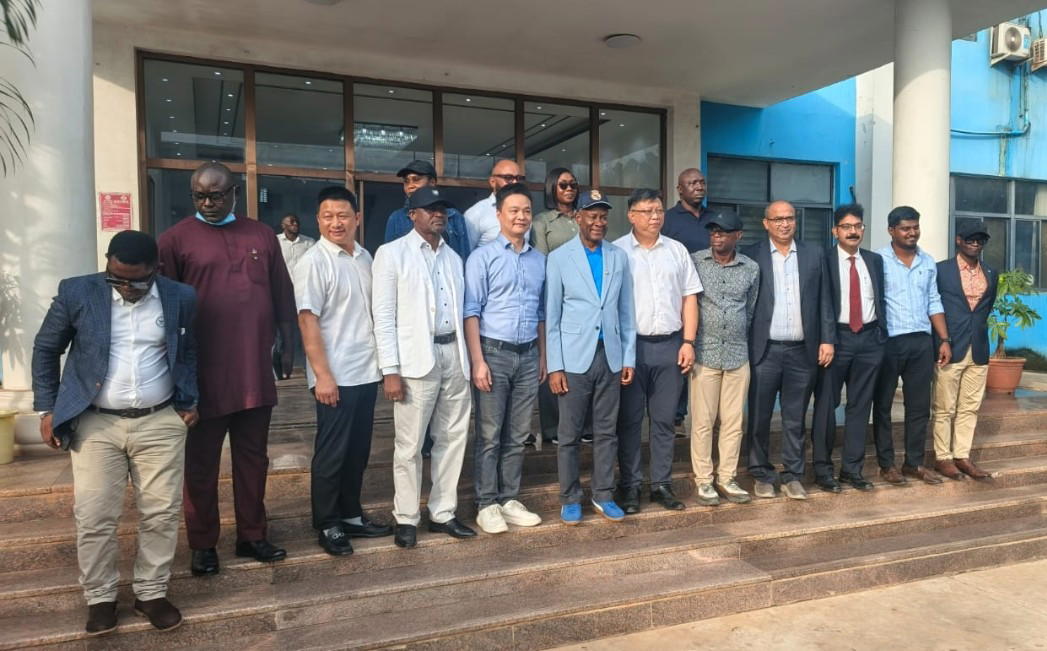
Minister of State for Industry, Senator John Enoh, made this known during a factory tour and stakeholders’ roundtable with two major paper mills (Nixin Paper Mill Nigeria and Speciality Group), where the companies raised concerns about the continued dominance of imported papers and educational materials in the domestic market.
Enoh highlighted policy inconsistencies confronting the sector, noting that nearly all textbooks used in Nigeria are imported duty-free, while local mills are made to pay duty on chemicals and other materials required for production.
This, he said, discourages local production and processing and assured that the federal government was working on reforms to strengthen domestic manufacturing and conserve foreign exchange through the Nigerian industrial policy framework.
“It is a bit inexcusable and unconscionable that industrial manufacturing concerns like these can stay in the country, produce a product, and that product can’t be sold because of competition with foreign products that either have low quality or find their way to the market through unauthorized routes.
“Continuing the way we are, with nearly all textbooks printed abroad, the country loses in the neighbourhood of about N250 billion per annum. That is huge, and it is money that can take care of quite a lot,” he said.
Enoh described the imbalance as a fiscal policy challenge and said the Ministry of Industry, Trade and Investment would work with the Ministry of Finance and the Coordinating Minister of the Economy to review the existing duty structure affecting the industry.
“We need to step by step, sector by sector, see how much we can enable operators within the country who are producing in-country to stay competitive and the kind of fiscal policy that targets the paper and printing sector is very important.
“It makes no sense for Nigeria to import 90% of its textbooks when we have mills here that can do the same job. Their pricing isn’t competitive because imported textbooks enter duty-free, while local presses pay duty on every production input. These are the issues we must tackle under the new industrial policy focused on value addition, production, and processing,” Enoh added.
Speaking earlier, Eric Wang, Managing Director of Nixin Paper Mill Nigeria, said that the company, which started operation in 2023, has the capacity to meet 100 percent of national demand for printing, exercise, and publishing paper.
He pointed to the company’s local value chain, saying that it sources cassava from Oyo State farmers to produce cassava starch for papermaking, supporting over 10,000 Nigerians including farmers, truck drivers, and contractors.
He, however, noted that challenges of unfair competition from imports, high cost of inputs as well credit and demand issues, pose significant challenges to local production and processing.
According to him, over 90% of textbooks are still printed abroad, often with export financing from countries like India, which hurts local printers.
He said: “For 40 to 50 years, Nigeria had no local production of cultural or white paper. We spent huge amounts importing it, even though we used to manufacture it here before. That changed from 2023, when our group invested $80 million to set up local production.
By 2024 we had shifted the situation so that Nigerian students and schools can now use exercise books and printing paper that are made in Nigeria.
“Our goal is that within a few years, any paper Nigeria needs—for the local or international market—can be produced here at home.”
Lamenting the challenges, he said: “Policy issues recently forced us to shut down production for a month because we had over 10,000 tons of unsold stock. We also carry heavy outstanding credits because we are trying to support publishers and printers who need time to complete textbook jobs and get paid.”
He, therefore, urged the government to reduce import duties on inputs, adjust tariffs to level the field, and mandate that educational materials be printed locally.
He stressed that with the right policy, Nixin and other mills could fully supply Nigeria and keep value, jobs, and foreign exchange in the country.
Dattei Ateinu, Group Chief Operations Officer at Speciality Group, said the company has been producing paper locally since 2004 but lamented that the company produces below its 6,000 tons per month installed capacity due to the constraints facing the sector.
He noted that the combined 140,000 tons annual capacity of Nixin and Speciality Group could potentially satisfy national demand if operated in full capacity.
Ateinu argued that backing local production would save Nigeria significant foreign exchange and make the country more self-reliant.
He urged the government to intervene through higher import duties on textbooks and paper products that can be produced locally, to discourage imports and create a fair market for domestic mills.
Disclaimer
Comments expressed here do not reflect the opinions of Vanguard newspapers or any employee thereof.