
..targets end to new infections
By Peter Duru, Makurdi
The Benue State Government has launched Lenacapavir (LEN), a long-acting injectable drug for HIV prevention, in a major step aimed at reducing new infections and strengthening the state’s response to HIV/AIDS.
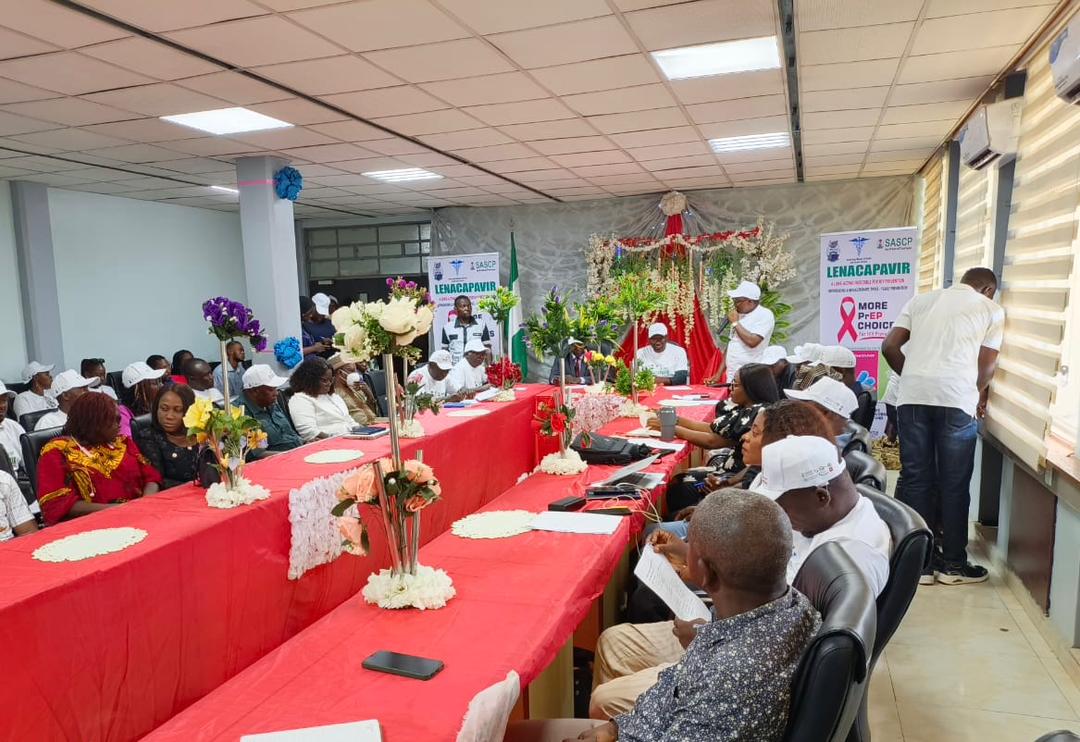
The official rollout ceremony, held at the Ministry of Health and Human Services in Makurdi, brought together development partners, healthcare professionals, Civil Society Organisations, community leaders and members of the media.
The initiative was organised in partnership with the World Health Organization (WHO), AIDS Prevention Initiative in Nigeria (APIN), AIDS Healthcare Foundation (AHF), Clinton Health Access Initiative (CHAI), Tearfund and RedAid Nigeria.
Speaking at the event, the Permanent Secretary of the Ministry, Dr. Cephas Hough, described the introduction of Lenacapavir as a significant milestone in Benue’s commitment to HIV prevention and healthcare delivery.
According to him, the new injectable medication reflects the determination of both government and development partners to deploy innovative strategies capable of improving public health outcomes across the state.
“This launch is not only about introducing a new medication. It is also about strengthening awareness, prevention and our collective responsibility in the fight against HIV/AIDS,” he said.
He stressed that despite the scientific breakthrough represented by Lenacapavir, public education, responsible behaviour and sustained community engagement remain critical in curbing HIV transmission.
In his keynote address, the Commissioner for Health and Human Services, Dr. Paul Ogwuche, described the launch as a historic turning point in Benue State’s HIV response strategy.
Ogwuche explained that HIV prevention efforts had largely depended on daily oral Pre-Exposure Prophylaxis (PrEP), which many users struggled to maintain because of adherence challenges, stigma and lifestyle limitations.
“Lenacapavir changes the narrative. With just two injections a year, individuals now have access to a discreet, convenient and highly effective HIV prevention option,” Ogwuche said.
He noted that the Nigeria AIDS Indicator and Impact Survey (NAIIS) places Benue State’s HIV prevalence at 4.7 percent, one of the highest in the country, making the introduction of innovative prevention measures necessary.
The Commissioner said the intervention would particularly benefit vulnerable groups including adolescent girls, young women, key populations and serodiscordant couples.
“This is the introduction of hope, simplicity and renewed commitment toward ending AIDS by 2030,” Ogwuche added.
He commended healthcare workers and PrEP focal persons across Makurdi, Otukpo, Gboko, Aliade and other parts of the state for their dedication to the successful rollout of the programme.
The Commissioner also outlined the government’s priority areas for implementation, including equitable access to both rural and urban communities, community-led awareness campaigns and data-driven monitoring to ensure accountability and measurable impact.
“We want every eligible person, whether in urban centres or remote communities, to benefit from this innovation,” he said.
Ogwuche further called on healthcare providers to embrace the initiative with compassion and professionalism, while urging the media to promote accurate information capable of boosting public confidence in the programme.
He noted that the intervention aligns with Governor Hyacinth Alia’s healthcare vision, which focuses on preventive healthcare, expanded access to life-saving medical innovations, stronger partnerships with global health organisations and improved protection for vulnerable populations.
According to the Commissioner, the governor’s agenda is anchored on ensuring that no resident of the state is denied access to quality healthcare services.
Highlighting the potential impact of the intervention, Ogwuche said a young woman in a rural community or an internally displaced persons camp could now remain protected from HIV with only two injections annually.
“That means she can focus on her education, livelihood and future without the daily burden of medication,” he said.
Stakeholders at the event also emphasised the need for sustained public awareness, youth engagement and active community participation to guarantee the success of the initiative.
Disclaimer
Comments expressed here do not reflect the opinions of Vanguard newspapers or any employee thereof.