
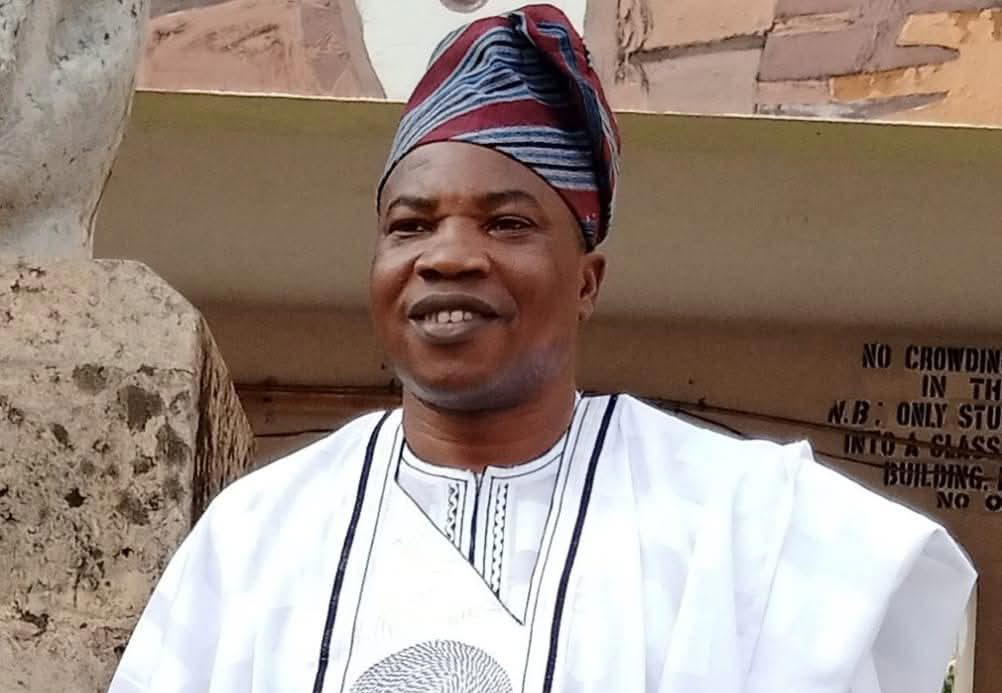
By Stephen Adewale
The Faculty of Arts, Obafemi Awolowo University, Ile-Ife, will on Monday, 25 May 2026, host a landmark Postgraduate Workshop designed to strengthen the research, writing, publishing, grant-seeking, and digital capacities of postgraduate students in the humanities.
Convened under the theme “Advancing Humanities Research,” the workshop brings together distinguished scholars and facilitators to engage postgraduate students on methodology, thesis development, academic publishing, grant writing, and the responsible integration of artificial intelligence into humanities research.
The workshop comes at a time when postgraduate training in the humanities requires renewed attention, deeper mentorship, and more practical academic support.
This is not conceived as another routine university event. It is an intentional intellectual intervention. At its heart is a simple recognition that postgraduate students do not become scholars by registration alone.
They become scholars through method, discipline, reading, argument, revision, ethical judgement, and the patient apprenticeship of research.
Many postgraduate students enter the university with promise. They have energy, curiosity, ambition, and often deeply meaningful research interests. However, promise alone does not produce scholarship.
A student may have a fascinating topic and still struggle to frame a research problem. A student may collect materials and still fail to build an argument.
A student may write many pages and still not produce a thesis with coherence.
A student may complete a thesis and still have no clear path to publication. A student may need funding and yet not know how to prepare a convincing grant proposal. A student may use artificial intelligence and yet not understand where digital assistance ends and academic compromise begins.
It is to these realities that the Faculty of Arts Postgraduate Workshop responds.
The Faculty of Arts is an especially important place to stage this conversation.
In a world increasingly intoxicated by speed, metrics, automation and market value, the humanities remain the patient disciplines of meaning.
They ask what societies remember and why. They examine how languages carry worlds, how stories shape identity, how performances preserve memory, how religions organise moral imagination, how philosophy interrogates truth, how history explains change, and how culture gives form to human existence.
To strengthen postgraduate research in the humanities, therefore, is to renew the intellectual foundations through which society understands itself.
The workshop is being held under the leadership and support of Professor Gbenga Fasiku, Dean of the Faculty of Arts, whose role gives the programme institutional weight and philosophical direction.
The presence of the Provost and Deputy Provost of the Postgraduate College further underlines the fact that this is not an isolated student activity.
It is part of a larger concern about postgraduate quality, research culture and the future of academic formation at Obafemi Awolowo University.
The choice of facilitators also shows careful thought. Dr. Babalola Joseph Balogun who is an Associate Professor at the Department of Philosophy will lead the conversation on Research and Methods in Humanities.
This is where every serious postgraduate journey must begin. Method is often treated as a chapter heading, but it is, in truth, the intellectual pathway through which research becomes scholarship.
It is the logic that connects the question to the evidence, the evidence to the interpretation, and the interpretation to the argument. Without method, a thesis becomes a pile of materials looking for direction.
Professor Monsuru Olalekan Muritala, Head of the Department of History at the University of Ibadan, will speak on Thesis Writing and Publishing.
This is a crucial bridge. Too many theses are written only for examiners and buried afterwards in departmental libraries. Yet, a good thesis should not be a tomb of ideas.
It should be a beginning. It should generate articles, provoke debates, enter journals, shape conferences and place the young scholar inside wider conversations.
To teach postgraduate students how to move from thesis to publication is to teach them that scholarship is not complete until it has found an audience.
The session on Grant Writing, to be led by Professor Stephen Olusegun Titus, Head of the Department of Music, OAU, addresses another urgent gap.
Research today requires more than passion. It often requires money, mobility, networks and access. Archives must be visited. Interviews must be conducted. Conferences must be attended. Manuscripts must be prepared. Fieldwork must be supported.
The student who cannot write a grant proposal is already left behind in a world where opportunities increasingly go to those who can present their ideas with clarity, feasibility and persuasive force.
Then there is the most contemporary of the sessions, which is titled “Borrowed Brains: What AI Can and Cannot Do in Humanities Research.”
This session is to be handled by Professor Ishaya Gambo, Professor of Software Engineering and pioneer Head of the Department of Software Engineering, OAU.
The title alone captures the unease of the moment. Artificial intelligence has entered the study room. It can summarise, outline, polish, suggest and generate.
It can also mislead, fabricate and hallucinate. For postgraduate students, the question is no longer whether AI exists. It is how to use it without losing the doubt, judgement, reading, interpretation, originality and responsibility which are the very habits that make scholarship human.
This is where the workshop becomes especially significant. It refuses the easy extremes. It does not treat AI as a miracle.
It does not treat it as a monster. It positions it as a tool that must be governed by intellectual discipline. In the humanities, no machine can replace the trembling complexity of memory, the silence of an archive, the layered meanings of a proverb, the moral force of testimony, the rhythm of performance, the ambiguity of a text, or the responsibility of a scholar standing behind an argument.
Perhaps, the most impressive feature of the workshop is the organisers’ decision to produce a manual. In many academic events, participants leave with programmes, photographs and memories.
This one aim to leave them with a working document. The manual is designed as a guide that students can return to while refining their topics, drafting chapters, selecting journals, preparing grant proposals and deciding how to use digital tools responsibly.
This is very important because while a workshop may inspire, only a manual can continue to instruct.
The manual contains session notes and facilitator citations, as well as worksheets, checklists and practical guides.
It asks students to identify their research problem, align questions with objectives, map their sources, plan thesis chapters, select journals carefully, develop grant budgets and reflect on responsible AI use.
In doing so, it treats postgraduate students as emerging scholars who must practise the craft of research.
There is something quietly radical about this.
It recognises that scholarship is not formed by lectures alone. It is formed by the habit of asking sharper questions, the habit of reading carefully, the habit of revising, the habit of verifying sources, the habit of writing before one feels ready, the habit of submitting work to scrutiny, and the habit of beginning again after rejection.
If sustained, this workshop could become more than an event. It could become a culture.
And culture is what the Faculty of Arts understands, perhaps, better than any other academic space. Culture is not built by declaration. It is built by repetition, seriousness and shared expectation.
A faculty develops a research culture when students know that methods matter, when supervisors insist on clarity, when seminars become spaces of honest critique, when publication is demystified, when grant writing is taught, when digital tools are used with integrity, and when postgraduate students begin to see themselves as apprentices in the long discipline of knowledge.
There is a larger lesson here for Nigerian higher education. Universities cannot assume that postgraduate students will automatically become scholars simply because they have been admitted into postgraduate programmes. Scholarship must be taught.
It must be modelled. It must be mentored. It must be supported by structures that turn confusion into clarity and ambition into disciplined work.
The Faculty of Arts, OAU, by convening this workshop, is making a modest but meaningful statement that the humanities still matter; that postgraduate training must be intentional; that emerging scholars deserve guidance; and that the future of research depends on the quality of formation given today.
At its best, postgraduate education is an act of becoming. The student becomes more than a reader, more than a collector of sources, more than a writer of chapters.
The student becomes a mind that is trained to see patterns, detect silences, question assumptions, respect evidence, write with care and contribute something, however small, to the unfinished conversation of knowledge.
That is the promise this workshop gestures toward. In an age of haste, it calls for method. In an age of noise, it calls for argument. In an age of automation, it calls for judgement.
In an age of academic pressure, it calls for mentorship. In an age that sometimes undervalues the humanities, it insists that no society can understand its future if it has lost the disciplines that teach it how to interpret human experience.
The Faculty of Arts Postgraduate Workshop may last only a few hours on the calendar. Nonetheless, if its spirit is sustained, its significance may travel much farther than the day itself.
It may help remind a generation of postgraduate students that scholarship is not simply what one submits for examination.
It is what one becomes through the difficult, beautiful and necessary labour of thinking well.
Stephen Adewale writes from the Department of History, Obafemi Awolowo University, Ile-Ife
Disclaimer
Comments expressed here do not reflect the opinions of Vanguard newspapers or any employee thereof.