
By Peter Duru, Makurdi
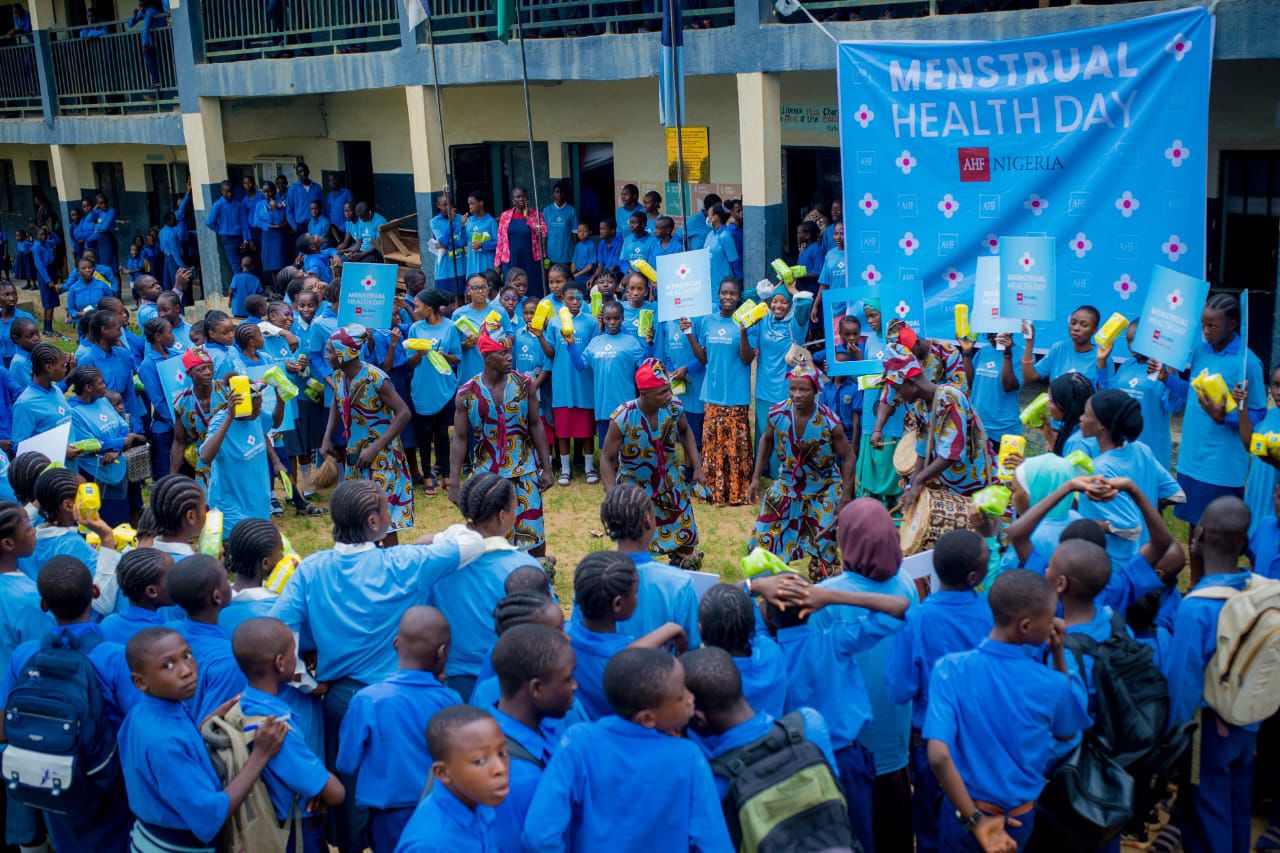
AIDS Healthcare Foundation (AHF) Nigeria, in collaboration with government officials and other stakeholders, has called for stronger partnerships to combat menstrual stigma and improve access to menstrual hygiene support for young girls, as part of activities marking the 2026 World Menstrual Health Day.
This was contained in a statement issued by the Senior Advocacy and Marketing Manager of AHF Nigeria, Steve Aborisade, following an awareness campaign organised by AHF Nigeria in partnership with the Nasarawa State Ministry of Women Affairs and Humanitarian Services.
According to the statement, the event held in Keffi brought together government officials, educators, health workers and students for sensitisation sessions, advocacy talks and the distribution of sanitary pads.
Stakeholders at the programme stressed the need for coordinated efforts to ensure girls are able to manage menstruation safely, affordably and with dignity, amid growing concerns over period poverty affecting nearly 500 million people globally.
Speaking during the campaign, the Gender Focal Person of the Nasarawa State Ministry of Women Affairs and Humanitarian Services, Halima Aliyu Omaku, described the initiative as timely and impactful, noting that menstruation remains a major global issue affecting millions of women and girls who continue to face stigma, discrimination and inadequate information.
“It is a privilege to be part of the 2026 menstrual health, stigma and hygiene campaign. This programme provides enlightenment and education on issues many people still struggle to discuss openly. We have a lot of work to do in changing harmful norms and perceptions around menstruation,” Omaku said.
The statement noted that Omaku, who reflected on her personal experience growing up without access to menstrual health education, urged participants to become advocates for menstrual health in their communities. She also stressed the need to educate boys so they could better support girls.
“You are lucky to have this opportunity. In our time, we didn’t. Use it to achieve what’s best for you. Listen attentively so you can contribute your quota. Let’s open our hearts. Tell your neighbour that we can make a change. I believe I can change it,” she told the students.
Also quoted in the statement, the Gender and Human Rights Focal Person at the Nasarawa State AIDS Control Agency, Safiya Yahuzu, said many students benefited from education on menstruation, menstrual cramps and hygiene practices, with some learning about menstrual hygiene for the first time.
“Hygiene is necessary for young girls at all times. You must also learn to keep yourselves clean during your period,” Yahuzu said, while calling for more awareness campaigns in schools to reduce stigma and improve knowledge.
An official of the Education Area Office, Keffi, Angelina Kigbu, lauded the initiative but stressed that government support must go beyond advocacy. She disclosed plans to establish a club that would train girls to produce reusable sanitary pads, describing them as more affordable and sustainable for students who cannot afford disposable products.
“If they can make it themselves, they can teach others and expand awareness. Most girls are not aware this is possible,” Kigbu stated.
The statement further quoted some of the students who participated in the programme as commending AHF Nigeria and its partners for the initiative while calling for more practical support from government and relevant stakeholders.
15-year-old Victoria Samson said the session taught participants proper hygiene practices and the dangers of reusing sanitary pads, but appealed for provision of toilets and sanitary pads in schools.
Another student, Catherine Ogogi, 16, said she gained new knowledge on reusable pads and proper disposal methods, while urging authorities to provide free emergency sanitary pads and intensify efforts to tackle menstrual myths.
Providing practical guidance during the session, Deborah Mamman of AHF Nigeria advised girls to change sanitary pads every six to eight hours, maintain proper hand hygiene and adopt safe cleaning practices during menstruation.
Also speaking, Dr. Sunday Emmanuel, an ART clinician at AHF Nigeria, said the campaign formed part of efforts to equip young people with accurate information on menstrual health and reproductive wellbeing.
He urged government agencies and partners to collaborate with AHF in sustaining awareness campaigns through media engagement, community meetings and grassroots outreach programmes.
The statement added that the event ended with renewed calls for stronger collaboration among governments, schools and civil society organisations to break menstrual stigma and ensure that girls can manage menstruation with dignity, safety and confidence.
Disclaimer
Comments expressed here do not reflect the opinions of Vanguard newspapers or any employee thereof.