
By Arabinrin Aderonke
At a time when Africa is searching for practical answers to its fiscal challenges, the steady and deliberate leadership of Zacch Adedeji is beginning to stand out. His approach has been less about noise and more about coordination, bringing together countries, institutions and experts to focus on what really matters. It is a style that favours substance over spectacle, and one that is gradually positioning Nigeria as a key driver in the continent’s evolving revenue conversation.
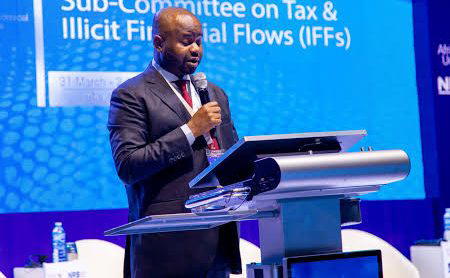
Hosting the African Union Subcommittee on Tax and Illicit Financial Flows in Abuja is a clear example of that intent. It signals that Nigeria is not just looking inward, but is willing to help shape a broader African response to a shared problem. More importantly, it reflects a recognition that Africa’s fiscal future cannot be secured in isolation. The challenges are interconnected, and so too must be the solutions.
The issue itself is not new. For years, African countries have struggled with a widening gap between what they need to spend and what they are able to raise. Rapid population growth, infrastructure deficits and rising social demands have placed enormous pressure on government finances. At the same time, huge sums continue to slip out of the continent through tax evasion, aggressive avoidance and other illicit financial flows. Conservative estimates suggest that billions of dollars are lost annually, resources that could otherwise be channelled into roads, schools, healthcare and critical public services.
The impact is easy to see. Projects stall, public services weaken, and governments are forced to rely more on borrowing than they should. Debt burdens continue to rise, limiting fiscal flexibility and, in some cases, constraining national sovereignty. For many countries, the cycle becomes difficult to break, as revenue shortfalls feed into borrowing, and borrowing further narrows future fiscal space.
What is changing, however, is the level of seriousness with which these problems are being approached. There is a growing understanding that tax administration is not just a technical function tucked away in government offices. It sits at the centre of governance and economic stability.
When it works well, it strengthens trust, improves accountability and gives governments the room to plan properly. It also creates a clearer social contract between citizens and the state, where taxation is seen not merely as an obligation, but as a contribution to collective development. When it does not work, everything else feels the strain.
Across Africa, reforms are gradually taking shape. More countries are digitising their systems, widening their tax nets and tightening compliance frameworks. Technology is playing an increasingly central role, helping revenue authorities track transactions, reduce leakages and improve efficiency. At the same time, there is a growing emphasis on capacity building, data sharing and institutional strengthening.
Nigeria has joined that shift in a visible and deliberate way. Under Adedeji, the Nigeria Revenue Service is undergoing reforms aimed at making it more efficient, more transparent and more responsive. Processes are being streamlined, enforcement mechanisms strengthened and taxpayer engagement improved. The goal is simple enough: to build a system that can actually support development rather than struggle to keep up with it. There is also a conscious effort to rebuild public confidence in the system, recognising that voluntary compliance increases when citizens trust that their contributions are being properly managed.
Of course, illicit financial flows are not something any one country can fix alone. They move across borders, exploit differences in regulatory systems and thrive where cooperation is weak. Multinational structures, complex financial instruments and secrecy jurisdictions often make it difficult for individual countries to track and recover lost revenues. That is why meetings like this one in Abuja matter. They create space for countries to compare notes, align strategies and agree on practical steps.
These steps go beyond rhetoric. They include strengthening information exchange frameworks, harmonising tax policies where possible, and adopting common standards that make it harder for illicit flows to go undetected. There is also increasing engagement with global institutions, as African countries push for reforms in international tax rules that better reflect their realities. In this regard, Africa is no longer content to be a passive participant. It is becoming more assertive in shaping discussions that directly affect its economic future.
There is also a shift in tone. Africa is no longer speaking about these issues from the margins. It is becoming more confident in setting its own agenda, pushing for fairness in global tax systems and taking deliberate steps to protect its resources. This growing confidence is evident in the way regional bodies, including the African Union, are engaging with member states and international partners. Nigeria’s role in this moment reflects that broader change, as it positions itself not just as a participant, but as a convening force.
Another important dimension is political will. Technical reforms, no matter how well designed, cannot succeed without sustained commitment from leadership. What is becoming clearer is that more governments are beginning to recognise the urgency of the situation. The cost of inaction is simply too high. By prioritising revenue mobilisation and tackling illicit flows, countries are not just addressing immediate fiscal pressures, they are laying the groundwork for long-term economic resilience.
In the end, the conversation comes back to something basic. If African countries can raise and manage their own resources more effectively, they reduce their dependence and expand their choices. They are better positioned to invest in their people, respond to economic shocks and pursue development strategies that align with their own priorities. That is what makes this moment important. It is not just about plugging leakages. It is about building systems that can carry the weight of the continent’s ambitions.
The Abuja meeting may not solve everything overnight, but it points firmly in the right direction. It reflects a growing consensus that cooperation, coordination and consistency are essential if Africa is to turn the tide on illicit financial flows. With steady leadership, practical reforms and genuine collaboration, there is a real opportunity to keep more of the continent’s wealth within its borders.
For Nigeria, and for Africa as a whole, that opportunity is one worth pursuing with urgency and resolve. The stakes are high, but so too is the potential. If the current momentum is sustained, the narrative could gradually shift from one of loss and limitation to one of control, capacity and shared prosperity.
Arabinrin Aderonke Atoyebi is the Technical Assistant on Broadcast Media to the Executive Chairman of the Nigeria Revenue Service. She writes from Abuja.
Disclaimer
Comments expressed here do not reflect the opinions of Vanguard newspapers or any employee thereof.