
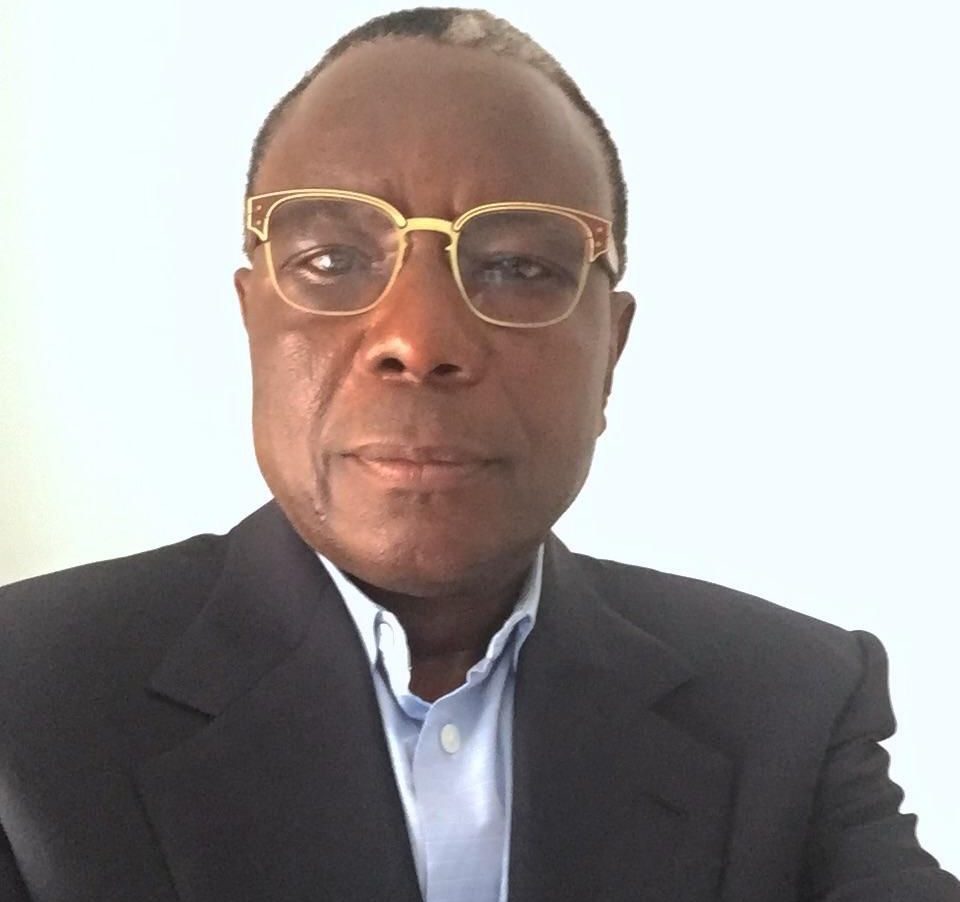
Philip Obazee
By Philip Obazee
There is a ritual to Nigerian political disappointment. A new administration arrives on a wave of expectation; a year in, the expectations begin to sour; by the middle of the term, the citizenry has concluded that the government is incompetent, captured, or indifferent; and by the end, another president is dismissed as yet another failure, whereupon the cycle begins again with a fresh face. This ritual is so well-rehearsed that most Nigerians now perform it with a kind of weary anticipation, scarcely pausing to ask whether the diagnosis embedded in the ritual is actually correct.
It is not.
The diagnosis embedded in the ritual is that Nigeria’s problem is the Nigerian government — that if only a better agent could be found, a more honest minister, a more competent governor, a more visionary president, the country’s trajectory would bend upward. This is a natural thing to believe. It also happens to be wrong in a specific and consequential way. The problem is not the agent. The problem is who has quietly taken the principal’s seat while the principal was not looking.
The contract Nigerians forgot they had signed
In any constitutional republic, sovereignty resides with the citizens. This is not imported Western political theory; it is the foundational premise of Nigeria’s own constitution, which opens with the declaration that the Federal Republic is a state based on the principles of democracy and social justice, and that sovereignty belongs to the people of Nigeria, from whom government through the constitution derives all its powers and authority.
Translated into plainer language: Nigerians are the principal. Government — from the president through the National Assembly, the state executives, the local governments, and the bureaucracy — is the agent. In the structure of a principal-agent relationship, the principal holds the authority and bears the ultimate claim on the fruits of the agent’s labour. The agent is hired to execute a defined mandate, subject to monitoring, and is in principle dismissable if the execution is poor. That is what elections are for. That is what audits are for. That is what courts, legislative oversight, and investigative journalism are for. Each of these institutions exists to preserve the asymmetry the constitution guarantees: that the agent answers to the principal.
On paper, Nigeria has every institution required to make the principal-agent contract work. In practice, the contract has been silently rewritten, and most Nigerians do not know that it has been.
The third party in the room
The rewriting has been done by a class of actors who are neither principal nor agent, but who have inserted themselves into the space between the two. They are the political jobbers, the godfathers, the habitual contractors, the ethno-regional brokers, the party-financiers, the former generals turned landlords, the serving officials who operate through proxies, and the concentric rings of family and clientage that surround each of these figures. They do not appear on any constitutional organogram. They do not stand for election. They do not sign performance contracts. Yet it is they, and not the principal, who increasingly determine what the agent does.
The mechanisms by which they do this are not mysterious. They are, in fact, tediously familiar to anyone who has spent time near Nigerian political life. Elections require money, and the money is supplied by people who expect returns that are not in the constitution. Appointments to sensitive positions — in the revenue agencies, the regulatory commissions, the security services, the state-owned enterprises, the procurement ministries — are rewarded to those who will protect the flows rather than those who will audit them. Procurement is routed through layers of intermediaries whose only economic function is to absorb a margin. Judicial processes are extended, delayed, and re-routed until plaintiffs exhaust their resources or their nerve. Federal character provisions, originally designed to protect the principal against narrow capture, are themselves re-engineered into instruments of distributional bargaining among the captors. State budgets are moved through accounts that no public-facing institution can meaningfully examine.
None of this requires the agent to be unusually corrupt. It requires only that the agent operate within a structure in which the third-party captors have already positioned themselves at every choke point between political authorisation and economic execution. The minister who wishes to act honestly finds that his permanent secretary has other loyalties. The governor who wishes to build finds that his contractors are the same men who financed his primary. The president who wishes to reform the revenue agency finds that the legislators whose votes he needs depend upon that agency’s informal flows. The arrow of accountability still nominally points from agent to principal. In practice, it points from agent to captor.
The arrow reversed
This is the crucial analytical point. The institutions of accountability in Nigeria have not been abolished. They have been inverted. Elections still occur, but they have become the moment at which the captor class extracts its strongest guarantees from the agent. Courts still function, but their function in the political domain is predominantly to slow principal-initiated action to a standstill while leaving captor-initiated action largely unimpeded. Auditor-general reports are still published, but they die in the legislative committees that the same captors staff. Legislative oversight still exists, but it operates as a negotiation over the distribution of opaque flows rather than an examination of them.
The citizen who looks at this landscape sees institutions that fail to perform their advertised function, and concludes either that the institutions are broken or that the agent is uninterested in using them. Neither conclusion is quite right. The institutions are not broken; they have been re-tasked. They are not serving the principal-agent contract because they have been absorbed into a captor-agent contract that runs parallel to, and dominates, the constitutional arrangement.
The engineered cost of knowing
What permits this inversion to persist is something more fundamental than any particular corrupt transaction. It is what may properly be termed an evidentiary burden asymmetry — an engineered disparity between what it costs the principal to know what the agent and the captors are doing, and what it costs the captors to conceal it.
Consider, in concrete terms, what it actually takes for an ordinary Nigerian — or a civic organisation acting on her behalf — to establish that a particular act of public malfeasance has occurred. A freedom-of-information request must be submitted to an agency that is under no effective compulsion to respond, and which can, and routinely does, ignore such requests for months or years. If the request is constructively denied, the requester must initiate litigation at her own expense, in a court system whose timeline for resolution is measured not in months but in electoral cycles. Documentary evidence, if it exists, sits behind beneficial-ownership structures designed to obscure the natural persons in control. Bank records require court orders. Contracts are classified as security-sensitive or commercially confidential. Witnesses who might testify face professional and sometimes physical consequences for doing so. The prosecuting agencies, even when willing, are themselves subject to the appointments and budget allocations of the class they would be prosecuting.
Now consider, in parallel, what it costs the captor class to maintain the concealment that the principal is trying to penetrate. A nominee company costs a few hundred thousand naira to register. A foreign shell entity in a discreet jurisdiction is marginally more expensive. Standard legal retainers will keep a contested matter in procedural motion almost indefinitely. The re-labelling of a budget line from one vote-head to another is a clerical act. The classification of a transaction as a matter of national security is a ministerial signature. The dismissal of an insubordinate junior officer is routine.
The gap between the two costs — the principal’s cost of verification and the captor’s cost of concealment — is not an accident of underdevelopment or a quirk of administrative culture. It is the product of choices, made over many years, about which laws to pass and which not to pass, which frameworks to make public and which to keep closed, which offices to resource and which to starve, which reforms to implement in substance and which to implement only in name. It is, in this sense, a piece of infrastructure, as deliberately constructed as any road or bridge. It is the infrastructure that guarantees the captor class its returns.
Why every government looks weak
Once this structure is in view, the recurring pattern of Nigerian political disappointment becomes clear. A newly elected president, whatever his intentions, arrives in office to find that he has inherited not simply a bureaucracy but a bureaucracy whose senior officers owe their positions to his predecessors’ captors; a legislature whose members are sustained by the same flows he might wish to interdict; a party apparatus whose primary function is the reproduction of the captor class; a court system that will slow any reformist measure to a crawl while expediting any measure against the reformist himself; a press that is simultaneously intrepid and financially fragile; and a civil society whose capacity to mount sustained verification exercises is a small fraction of what is required.
He does not, in this setting, get to choose whether to be a strong or a weak president in the way his inaugural rhetoric promised. He gets to choose where, in a landscape of pre-committed flows, to spend the small discretionary margin that the captors have left him. The margin is larger in areas that do not threaten the captor class’s core interests — ceremonial reform, stylistic modernisation, certain categories of infrastructure that the captors themselves expect to profit from building — and vanishingly small in areas that do.
The president appears weak not because the presidency is constitutionally weak, but because the effective principal-agent contract has been rewritten around him in advance of his arrival, and the principal under whose authority he nominally acts has been effectively displaced from its own contract. This is why the cycle of disappointment repeats regardless of which individual holds the office. It is not an accident of personality. It is a structural property of the arrangement.
The reform that actually matters
If this diagnosis is correct, then most of what passes for reform talk in Nigeria is pointed in the wrong direction. Exhortations to the agent to do better, programmes of administrative modernisation aimed at the ministries, anti-corruption campaigns that target individuals while leaving untouched the frameworks in which their holdings are hidden, ethics trainings for civil servants who are the least consequential links in the captor chain — these address the agent and leave the evidentiary infrastructure of capture fully intact. They are expensive, and they produce very little, because they are not aimed at the binding constraint.
The reforms that would actually bind are those that compress the evidentiary burden asymmetry. A genuine beneficial-ownership registry, publicly searchable, with meaningful penalties for nominee arrangements. A judiciary whose case-management timelines are binding and whose independence is protected by budgetary autonomy rather than executive discretion. An Office of the Auditor-General with its own resourcing formula, its own prosecutorial referral powers, and direct channels to the public. Freedom-of-information provisions with automatic compliance timelines and statutory damages for constructive denial. Whistleblower protection with credible employment restoration and independent review. A fully digitised federal and state procurement system with real-time publication of contract awards, beneficial ownership of awardees, and performance milestones. Electoral finance rules that require disclosure at the source of funds rather than at the campaign’s declared accounts.
None of this is glamorous. No ribbons are cut. No new dam appears on television. And that is precisely why such reforms are so rarely prioritised — because the captor class, which exercises decisive influence over which reforms reach implementation, has every reason to deflect political energy toward the visible and the architectural and away from the quiet, framework-level reforms that would actually dissolve its moat.
Knowing oneself as principal
There is an uncomfortable implication in this analysis. The captor class will not reform itself. The asymmetry it has engineered is the source of its durability, and it possesses every instrument required to resist that asymmetry’s compression. Reform will not come from above.
It follows that it must come from below — that is, from the principal reclaiming recognition of itself as principal. But this presupposes something that is at present only weakly true: that the Nigerian principal understands the structure of its own dispossession. A principal that believes its problem is the incompetence of its agent will keep changing agents and wondering why nothing changes. A principal that understands its problem is the engineered invisibility of the captors between itself and its agent will organise differently. It will demand different reforms. It will judge political programmes not by the charisma of their promising figures, but by the seriousness with which they propose to dismantle the evidentiary moat.
The first task of Nigerian civic thought, then, is not exhortation, and it is not policy advocacy in the conventional sense. It is recognition. The principal must come to know itself as principal — to know, with precision, who actually occupies the seat that the constitution has reserved for the citizenry, and by what specific mechanisms that seat has been usurped. Everything else follows from that act of recognition, and nothing of consequence precedes it.
Until Nigerians understand the structure of their own dispossession, they will go on blaming agents while the third party in the room grows richer, and more invisible, by the year.
_____
Philip Obazee retired as a managing director and head of derivatives from Macquarie Asset Management – a global asset management company with office in Philadelphia, PA, USA, and currently, he is the founder and chief executive officer of Polymetrics Americas Research.
Disclaimer
Comments expressed here do not reflect the opinions of Vanguard newspapers or any employee thereof.