
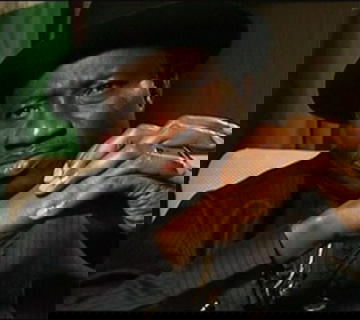
.We won’t govern by applause or build lasting prosperity on illusions — VP
.Nigeria needs policies that promote economic growth — Jonathan
By Omeiza Ajayi
ABUJA: Dignitaries including former President Goodluck Jonathan, Vice President Kashim Shettima and the Secretary to the Government of the Federation SGF, Senator George Akume on Thursday converged on Abuja to brainstorm on ways of strengthening the link between democracy and economic growth in Nigeria.
At the event, Shettima declared that the Federal Government would not succumb to the temptation of “governing by applause,” insisting that no nation can build sustainable prosperity on economic illusions or by preserving habits that birthed previous crises.
According to him, the President Bola Tinubu administration remains committed to taking necessary, albeit difficult, decisions to rescue the economy from structural distortions.
The Vice President spoke at the National Convening and Report Launch on “Strengthening the Nexus Between Democracy and Economic Growth in Nigeria,” an initiative of the Goodluck Jonathan Foundation GJF implemented in partnership with the UK Foreign, Commonwealth and Development Office FCDO.
Shettima, represented by his Special Adviser, Dr Aliyu Modibbo, noted that the test of democracy lies in whether government choices truly serve the survival and wellbeing of the people.
“The temptation in such moments is to govern by applause, to yield to narratives that offer emotional satisfaction while weakening the very foundations on which livelihoods depend. Yet no country can build lasting prosperity on illusions. No society can rescue its people by preserving the habits that brought the crisis in the first place,” the Vice President said.
Reflecting on the inherited economic landscape, he added, “President Bola Ahmed Tinubu, came into office at a time when the economy was weighed down by structural distortions that had become too costly to ignore. The fuel subsidy regime had become a heavy fiscal burden and a channel of waste and abuse.”
In his remarks, former President and Chairman of the Goodluck Jonathan Foundation, Dr. Goodluck Jonathan, warned that democratic systems risk losing their legitimacy if they fail to deliver tangible economic progress.
Jonathan argued that for democracy to be sustainable, it must move beyond mere elections to become a vehicle for transformation.
“The central question before us is clear: how can democratic governance become a more effective vehicle for economic transformation and shared prosperity? For too long, the relationship between democracy and economic growth has been assumed, but not sufficiently examined within our local realities,” the former president stated.
He emphasized that, “Our democracy has endured, but endurance alone is not enough. Effective policies that promote economic growth are crucial to making our democracy more sustainable. The path forward is not to choose between democracy and development, but to make them mutually reinforcing.”
Earlier, the Executive Director of the Goodluck Jonathan Foundation, Ann Iyonu, lamented that 27 years since the return to civil rule in 1999, poverty remains widespread.
She called for the digitization of procurement and the strengthening of audit institutions to ensure accountability.
“When Nigeria returned to civilian rule in 1999, it was a turning point, and even though it brought stability and growth, let us be honest with ourselves, 27 years on, the promise of democracy is still unfinished.
“Poverty is widespread. Fiscal rules are bent. Procurement fraud is rampant. And institutions too often fail to enforce their own mandates. So the report that we are going to launch today before us frames democracy’s true tests, and which is whether institutions can be compelled to uphold their own rules, spread opportunity more widely, and make governance felt in the daily lives of Nigerians.
“For democracy must not be measured by elections alone. Let me repeat that for emphasis. Democracy must not be measured by elections alone, but by results, by schools that function, by clinics and hospitals that work, infrastructure that lasts, and of course, institutions that deliver. And so while our democracy, like Wenna said, is durable, while our democracy with all its imperfections and flaws has proven durable, the task before us today is to make it effective.
“For if we can compel governance to deliver, then democracy will not only survive, it will thrive, and our economy will thrive with it. That is the true dividend we must secure”, she added.
Contributing to the discourse during a panel session, Dr. Suleiman Barnabas, representing Dr. Sam Amadi, identified “transnational politics” as a major driver of high election costs.
“The problem is co-created by Nigerians and politicians. It is only here that when you show interest in politics, the people will now bring all their village problems to you. Politicians continue to undermine the rules, appointing partisans into positions that should ordinarily be free of politics, hence such institutions lose their independence,” he noted.
On her part, the Director of Planning, Policy, Research and Statistics at the EFCC, Mrs. Adejoke Liman, recalled an earlier report which indicated that procurement fraud accounts for 60 percent of corruption cases in Nigeria.
She stated, “The cost of prevention of corruption is lower than the cost of fighting corruption. Procurement fraud deals with our system and cybercrime deals with our reputation. When people steal money, they have to hide it. They hide them in real estate and other businesses.”
The SGF who was represented by Dr Abubakar Kana said public policies have to be predictable enough to attract private investment.
“In our national context, impacts of ongoing socio-economic reforms under His Excellency President Bola Tinubu point to some encouraging signals that democratic governance is delivering while still recognizing the seriousness of the challenges citizens still face in their daily lives.
“We must continue to build confidence in democratic institutions through transparency, electoral credibility, trusted dispute resolution mechanisms and a legislative environment that enables oversight and effective representation, not just for women, but for men as well.
“We must make governance reforms concrete in the lives of citizens by improving the quality of public spending. We must also focus on strengthening procurement integrity, using data to monitor results, and building a culture where public institutions solve problems faster and more fairly. There is no doubt that strong governance and anti-corruption reforms will help us improve the quality of public spending”, he said.
The event, which marked the culmination of a three-month policy-focused initiative, was attended by several dignitaries including former presidential candidate, Mr. Peter Obi.
Disclaimer
Comments expressed here do not reflect the opinions of Vanguard newspapers or any employee thereof.