
By Henry Obetta
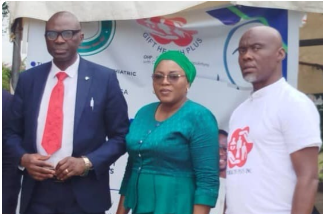
The Federal Neuropsychiatric Hospital Yaba, FNPH, in partnership with Gift Health Plus, has launched a two-day free eye care programme for staff, patients and residents of Yaba community, as part of efforts to improve access to basic healthcare services.
The outreach, which began on Monday and ends Tuesday, offers eye examinations, prescription glasses and referrals for advanced care, targeting hospital workers, their families and underserved members of the community.
Speaking at the event, the Medical Director of FNPH, Mr. Olugbenga Owoeye, said the initiative was driven by the need to remove barriers to eye care, particularly for vulnerable groups.
“A lot of people find it difficult to read nowadays and cannot afford glasses. Some cannot even travel to access care due to transportation challenges. So we decided, as an institution, to bring specialised free eye care directly to them,” he said.
Owoeye noted that the programme is especially critical for patients undergoing rehabilitation at the facility.
“Many of our patients are being trained in skills such as tailoring and computer use. Some struggle with basic tasks like threading needles or reading screens because of poor vision. This intervention is designed to support them and improve their quality of life,” he added.
He emphasised that the hospital plans to sustain the initiative on a quarterly basis to expand access and ensure early detection of eye conditions.
According to him, cases beyond the scope of the outreach will be referred to the Lagos University Teaching Hospital for further diagnosis and treatment.
Also speaking, Director of Gift Health Plus, Mr. Chika Achiburi, said the organisation focuses on delivering medical interventions to populations with limited access to healthcare, including inmates and underserved communities.
“We majorly reach people who have little or no access to proper healthcare, such as those in correctional facilities and public institutions. That is why we are here,” he said.
Achiburi stressed that the decision to prioritise eye care was informed by widespread neglect of vision health.
“I saw an elderly man here whose eye condition had deteriorated beyond remedy. If it had been detected earlier, something could have been done. That is why early intervention is critical,” he lamented.
He called on government authorities to support humanitarian health initiatives by easing the importation of donated drugs and medical equipment, as well as providing more health personnel.
A volunteer optometrist, Mr. Chukwuemeka Achimnole, urged Nigerians to adopt routine eye checks.
“The eye is the window to the body and is very delicate. People should go for examinations at least once a year,” he advised, adding that government hospitals offer quality care comparable to private facilities.
Head of Nursing Department at FNPH, Mrs. Alonge Kehinde, commended the organisers, noting that the programme would significantly benefit staff, patients and the wider community.
She emphasised the importance of early detection in preventing blindness and other complications, urging residents to take advantage of similar health interventions whenever available.
One of the beneficiaries, Mr. Aliu Abudu, expressed appreciation to the organisers and appealed for more outreach programmes targeting vulnerable populations.
“This kind of support means a lot to people like us. We hope to see more of it,” he said.
Disclaimer
Comments expressed here do not reflect the opinions of Vanguard newspapers or any employee thereof.