
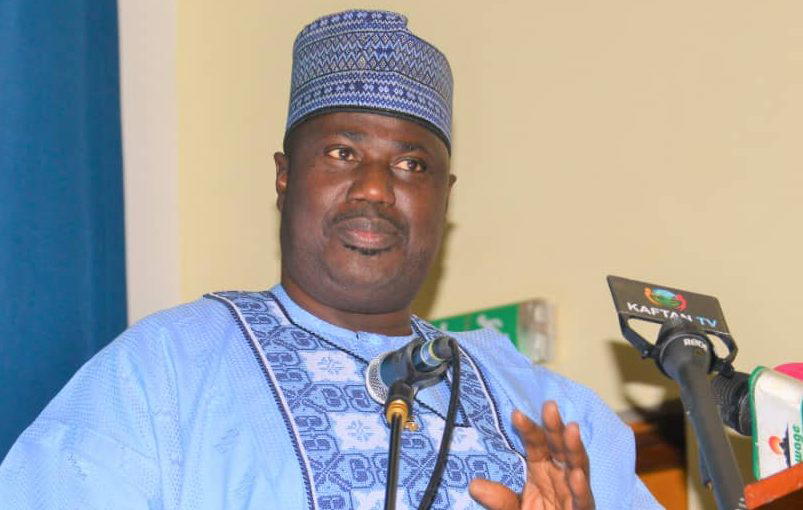
The Minister of State for Agriculture and Food Security, Sen Dr Aliyu Sabi Abdullahi during the Validation Meeting.
By Gabriel Ewepu
The Federal Government has announced plans to reposition Nigeria as the world’s largest oil palm producer within six years, aiming to create two million jobs and expand the sector’s contribution to the economy.
Speaking at the Validation Meeting of the Nigerian Oil Palm Development Strategy in Abuja, Minister of State for Agriculture and Food Security, Dr. Aliyu Abdullahi, said the initiative is part of efforts under the Renewed Hope Agenda to diversify the economy and strengthen food security. He noted that palm oil once played a central role in Nigeria’s economy before petroleum became dominant, and stressed that the sector still holds strong potential for inclusive growth.
“The history of Nigeria being one of the leading producers of palm oil in the world is well known. But while we have the legacy, we must also confront the reality. Our sector has faced low productivity, weak processing systems, limited financing, and insufficient coordination. Nigeria can still regain its rightful place because we have the land, climate, market, and demand,” Abdullahi said.
He explained that the new strategy will prioritize smallholder farmers, who account for most of the country’s production. Support will include improved seedlings, extension services, access to finance, processing facilities, and market linkages. The plan also emphasizes research, innovation, and stronger collaboration between institutions and private investors.
On financing, Abdullahi said government is working to create an enabling environment for responsible investment, while also pursuing international cooperation with other palm oil-producing countries.
On the sidelines of the meeting, Dr. Alphonsus Inyang, President of the National Palm Produce Association of Nigeria (NPPAN), said the association’s model could generate a ₦20 trillion annual economy through oil palm, engaging 2.5 million rural households. “We are number one in Africa in terms of production and consumption, yet we import more than we should. With this policy, we can change that and become a net exporter by 2050,” Inyang stated.
The strategy document includes plans to establish a National Oil Palm Council, an Oil Palm Development Fund, and a National Smallholders Development Fund.
Permanent Secretary of the Ministry, Dr. Marcus Ogunbiyi, described the meeting as a critical step in aligning the oil palm sector with national priorities. “The development of a clear and actionable Oil Palm Strategy is timely and necessary as we prepare Nigeria’s industry for productivity, value addition, job creation, and global competitiveness,” he said.
The government hopes the initiative will not only revive Nigeria’s oil palm industry but also position it as a driver of rural development and export diversification.
Disclaimer
Comments expressed here do not reflect the opinions of Vanguard newspapers or any employee thereof.