
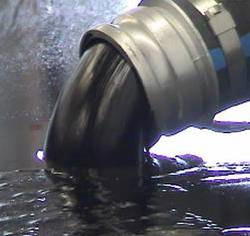
File photo
By Obas Esiedesa, Abuja
Nigeria’s oil and gas regulators and operators have outlined a coordinated pathway to achieving crude oil production of three million barrels per day (mbpd), stressing the need for sustained regulatory reforms, investment inflows, digitalisation, and critical infrastructure development across the value chain.
Speaking at the 26th Oloibiri Lecture Series and Energy Forum in Abuja, the Commission Chief Executive of the Nigerian Upstream Petroleum Regulatory Commission (NUPRC), Mrs. Oritsemeyiwa Eyesan, said the 3mbpd target by 2030 is achievable under the current policy direction.
Eyesan said the production goal, rising from a near-term target of two million barrels per day by 2027, would depend on frameworks that attract capital, promote innovation, and enable digital oilfield operations.
She noted that the Petroleum Industry Act (PIA) 2021 has reset the upstream sector through a regulatory system anchored on certainty, transparency, and performance, helping to restore investor confidence.
According to her, recent projects such as Bonga North, Ubeta, and HI developments, which have unlocked over $10 billion in investments, demonstrate the impact of clear policies and streamlined approvals.
She added that digital transformation, including real-time data systems, predictive maintenance, and advanced analytics, would be critical to reducing costs, minimising downtime, and boosting output.
Eyesan also emphasised improved oil recovery as a key lever for increasing production, noting that new performance-based frameworks now compel operators to maximise reservoir value.
“In an era of disciplined capital and heightened investor scrutiny, every barrel counts,” she said.
Also speaking, the Authority Chief Executive of the Nigerian Midstream and Downstream Petroleum Regulatory Authority (NMDPRA), Engr. Saidu Mohammed, said achieving the 3mbpd target must be matched with a broader strategy covering gas production and midstream infrastructure.
Mohammed noted that Nigeria’s ambition also includes reaching 22 billion cubic feet (BCF) of gas per day under the Decade of Gas initiative, stressing that oil and gas targets must be pursued simultaneously.
He said: “achieving these targets will require funding, efficient technological systems, and the right regulatory framework necessary to attract and retain investments.”
The NMDPRA boss disclosed that the Authority is set to unveil “Project NEXUS,” a flagship initiative aimed at transforming the regulatory landscape, ensuring energy sustainability, and positioning Nigeria as a leading energy hub in Africa.
He explained that the initiative is supported by the Midstream and Downstream Petroleum Industry Sustainability Initiative, designed to reduce carbon emissions, promote blue hydrogen development, and advance carbon capture, utilisation and storage technologies.
Mohammed stressed that while upstream reforms are critical, deliberate efforts must also focus on large-scale “big bank” projects capable of delivering significant volumes of oil and gas.
He added that achieving the production targets would require major investments in midstream infrastructure, including pipeline networks, gas processing facilities, and refining capacity.
“There is need to revamp critical liquid transportation trunklines and bridge infrastructure gaps across the midstream segment to support increased production,” he said.
He further noted that funding mechanisms such as the Midstream and Downstream Gas Infrastructure Fund, the Africa Energy Bank, and green financing initiatives are being leveraged to attract capital into the sector.
Both regulators emphasised that Nigeria is well-positioned to take advantage of current global energy dynamics, with opportunities to meet domestic demand and expand exports to regional and international markets.
They stressed that achieving the 3mbpd target would require strong collaboration among stakeholders, sustained policy consistency, and full implementation of reforms across the upstream, midstream, and downstream segments.
The officials reaffirmed their commitment to building a resilient, efficient, and globally competitive petroleum industry capable of driving economic growth and long-term energy security.
Also speaking, the Managing Director, Seplat Onshore Limited, Mrs. Ibi-Ada Itotoi said for the Nigeria to achieve the 3mbpd by 2030, the industry needs to increase production by 300,000 barrels per day annually.
While expressing optimism that the target could be met, she noted that recent final investment decisions taken on several projects would boost Nigeria’s production.
Speaking earlier while declaring the event open, the Minister of State Petroleum Resources (Gas), Hon. Ekperikpe Ekpo said Nigeria’s aspiration to sustainable increased production and optimized asset performance cannot be achieved through isolated interventions.
“It requires a deliberate convergence of three critical enablers, digitalization, capital investment, and robust policy frameworks. First, digitalization. The future of oil and gas operation is undeniably data-driven, from upstream exploration to mainstream processing and downstream distribution”, he added.
Earlier, Chairman, SPE Nigeria Council, Engr. Francis Nwaochei noted that the 2026 lecture series theme challenges industry stakeholders to rethink value creation in a fundamentally different way, “where data is as strategic as hydrocarbons, where capital is more discerning, and where policy must evolve with urgency and clarity”.
Nwaochei explained that players “are now operating in an environment where oil profits are achieved with increased effort, discipline, and innovation”, adding that “global energy landscape is shifting, capital is more selective, and competition for investment has never been fiercer.
“Yet, within these challenges lies a powerful opportunity—to unlock new value from existing assets through digital innovation, disciplined financing, and adaptive regulatory frameworks. What we do here today, and the ideas we shape, will influence not just production numbers, but the sustainability and competitiveness of Nigeria’s energy future”.
Disclaimer
Comments expressed here do not reflect the opinions of Vanguard newspapers or any employee thereof.