
By Gabriel Ewepu & Luminous Jannamike
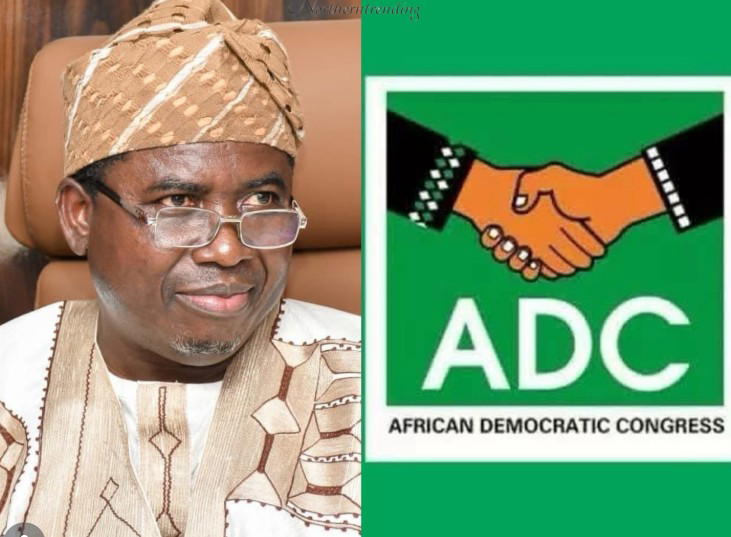
Nigeria’s political space is hurtling toward a high-stakes confrontation ahead of the 2027 elections, as a deepening clash between the African Democratic Congress (ADC) and the Independent National Electoral Commission (INEC) raises fresh fears about the integrity of the ballot and the future of opposition politics.
INEC’s decision to withdraw recognition of the ADC’s leadership, citing a Court of Appeal directive to maintain the status quo in an ongoing case has triggered outrage within the party and intensified political tension nationwide.
The ADC says it sometimes records over 50,000 new members in just 24 hours, a surge it believes is fuelling the current standoff.
What began as a routine legal matter is now a major political test, one that could shape trust in institutions, the strength of opposition parties, and the credibility of the 2027 polls.
Flashpoint: ADC VS INEC
For the ADC, INEC’s action goes beyond a procedural decision, it is seen as a serious misstep.
Party leaders argue that the electoral body has misunderstood the court’s position and gone too far by intervening in what they describe as an internal matter.
Dr Babatunde Oke, the party’s National Director of Communication and Programmes, expressed concern over how events have unfolded.
Speaking with Sunday Vanguard, he said: “We believe some senior officials of the commission were coerced to make such press release and subsequently the decision to de-recognise the party’s leadership.
“We also believe the court’s position was largely misinterpreted. The status quo in this contest referred to David Mark National Working Committee. INEC embarked on a journey capable of creating anarchy in the country all in the name of playing the ‘script’ of an administration that is allergic to strong opposition, whose agenda is to ensure that only dominant party is on the ballot,” he alleged.
He questioned the legal basis of INEC’s move.
INEC has, however, maintains that it acted in line with the appellate court directive and is not taking sides in the dispute. But the ADC is unmoved.
Defiance: ‘We Will Go Ahead’
If INEC expected restraint, it got the opposite. The ADC has proceeded with its congresses in some states and is planning for its national convention on Tuesday, April 14, regardless of the commission’s position.
According to Oke, the party has fulfilled all statutory requirements.
“ADC has written to the commission in compliance with the 21 days notice and they have accepted the letter. Whether they come or not is inconsequential, there’s no law making it mandatory for them to come. We are going ahead with our congresses and convention as stipulated,” he added.
He reaffirmed the party’s stance on its leadership.
“As far as the ADC is concerned, as far as the law is concerned, there’s no leadership vacuum in our great party,” he said.
The message is clear: the party is pushing forward, legal risks or not.
Hard Facts: Numbers That Frame the Stakes
The unfolding crisis is not happening in a vacuum. The numbers tell a deeper story about Nigeria’s electoral system and why the stakes are so high.
Nigeria has over 93 million registered voters, according to the last nationwide register released by INEC ahead of the 2023 general elections.
Yet, voter turnout has been declining, dropping to about 27 per cent in the 2023 presidential election, one of the lowest in the country’s democratic history.
In that election, the ruling All Progressives Congress (APC) candidate, Bola Ahmed Tinubu, secured the presidency with 8,794,726 votes.
His closest rival, Atiku Abubakar of the Peoples Democratic Party (PDP), polled 6,984,520 votes, while Peter Obi of the Labour Party garnered 6,101,533 votes. Rabiu Musa Kwankwaso of the New Nigeria Peoples Party (NNPP) recorded 1,496,687 votes.
Combined, these major opposition candidates secured 14,582,740 votes; far exceeding the APC’s total, but split across multiple platforms.
The figures underline a critical political reality: fragmentation within the opposition can decisively shape electoral outcomes, even when the total opposition vote is significantly higher.
Historically, opposition coalitions have played decisive roles. The merger that produced the APC in 2013 brought together major blocs and ultimately unseated an incumbent government in 2015, Nigeria’s first such democratic transfer of power.
Against that backdrop, current talks of alliances between the ADC and a faction of the PDP take on added significance.
On party expansion, the ADC’s claim of 50,000 new entrants within 24 hours, if sustained, signals a rapid mobilisation effort at a time when political realignments are intensifying nationwide.
At the same time, INEC relies on hundreds of thousands of ad-hoc staff, many of them members of the National Youth Service Corps (NYSC), to conduct elections across more than 176,000 polling units nationwide; highlighting how logistics, security and institutional trust all intersect.
These figures highlight a simple reality: small shifts in organisation, voter turnout or alliances can have practical effects on electoral outcomes.
Opposition Under Pressure
Beyond the ADC, the crisis exposes a deeper weakness. The Peoples Democratic Party (PDP) continues to grapple with internal divisions and defections, while the Labour Party faces its own factional disputes.
Together, these challenges have weakened the opposition’s ability to present a united front against the ruling All Progressives Congress (APC).
Within the ADC, however, there is a different reading of events. The party believes its rising profile is drawing pushback.
“Check out our registration status in the past 24 hours, we have recorded over 50,000 new entrants regardless of the antics of those in power. The momentum is what the desperate characters in the ruling party are afraid of,” Oke told Sunday Vanguard.
CISLAC Raises Alarm Over ‘One-Party Plot’
The concerns are no longer confined to political parties. Civil society groups are now sounding the alarm.
At the Civil Society Legislative Advocacy Centre (CISLAC), Executive Director Auwal Ibrahim Musa (Rafsanjani) warned that Nigeria could be edging toward a one-party system.
“Clearly, the attempts to push Nigeria to a one-party system has been well planned and is brutally being implemented by those who hold political power today,” Rafsanjani told Sunday Vanguard.
He described the trend as dangerous.
“It is very disturbing to see that the democracy which Nigerians fought so hard for is being bastardised by some political class today,” he added.
The implications are no longer theoretical, they are immediate, political, and potentially explosive.
SDP Writes INEC, Warns Against ‘Dangerous Precedent’
The Social Democratic Party (SDP) has formally written to INEC, warning that the commission’s handling of the ADC leadership dispute could set a troubling precedent for Nigeria’s democracy.
In a letter signed by its National Chairman, Shehu Musa Gabam, the party cautioned the electoral body against actions that could be interpreted as interference in the internal affairs of political parties.
“INEC must be very cautious not to create a dangerous precedent where it begins to determine or appear to determine the leadership of political parties,” the letter stated.
The SDP stressed that any step not clearly backed by law risks eroding public confidence in the commission ahead of the 2027 elections.
“There is a thin line between regulation and interference, and once that line is crossed, it becomes difficult to restore credibility,” the party added.
IPC: Insecurity Could Cripple Elections
While political tensions rise, practical concerns such as insecurity are also mounting.
The International Press Centre (IPC) has warned that insecurity could disrupt the recruitment of ad-hoc electoral staff, particularly members of the National Youth Service Corps (NYSC), who play a key role in election logistics.
IPC Executive Director, Lanre Arogundade, said this could become a major challenge during the 2027 elections.
“The issue that would really threaten the elections is the engagement of ad-hoc staff who are usually NYSC members and who, due to parental or peer pressure, could decline deployment to insecurity hotbeds like Plateau, Kwara and Benue,” he said.
If that happens, the impact on election day operations could be significant.
Global Rights: ‘2027 Polls in Danger’
At Global Rights Nigeria, the warning is even sharper. Executive Director, Abiodun Baiyewu, said the current political climate is already affecting the credibility of the 2027 elections.
“The 2027 polls are clearly in danger. For one, the strangulation of any form of opposition has already compromised the elections even before the flag off of election season,” she said.
Baiyewu stressed a basic democratic principle.
“Without authentic opposition, there can be no credible elections,” she added.
NBA Warns: Courts Risk Politicisation
The Nigerian Bar Association (NBA) has also raised concerns. Its President, Afam Osigwe, warned that increasing court involvement in internal party matters could blur the line between law and politics.
“We particularly deprecate the disturbing involvement by lawyers and courts in the internal affairs of political parties,” he said.
According to the NBA, this trend risks weakening public confidence in the justice system.
Adeyanju Calls for Restraint at the Top
Pressure is now building for intervention at the highest level. Human rights lawyer Deji Adeyanju urged President Bola Tinubu to act.
“The sustained efforts to weaken opposition parties, first the PDP and now the ADC, raise serious concerns about an emerging attempt to impose a one-party state. These actions are fundamentally undemocratic and must be halted,” Adeyanju told Sunday Vanguard.
Political Realignments Gather Pace
Even as tensions rise, political alliances are beginning to take shape. Some elements within the Peoples Redemption Party (PRP) have also expressed support for the ADC, describing recent developments as troubling.
Within the ADC, discussions around collaboration with the PRP are already gaining traction. Party officials point to these ongoing efforts, saying that expectations are high.
”Nigerians, home and abroad, are looking up to these political families (PDP, ADC, and PRP) to close ranks, bury their differences and work harmoniously to rescue Nigeria,” Oke said.
A System Under Strain
Taken together, the signals are troubling. Legal disputes are mounting, political divisions are deepening, and trust in institutions is under strain.
Even INEC, once widely seen as a stabilising force, is now facing intense scrutiny. With the elections drawing closer, the stakes are rising, and the opposition insists it will not back down.
As things stand, this is no longer just a dispute between a political party and an electoral body. It is a stress test for Nigeria’s democracy.
Will institutions hold under pressure, or bend to it? For now, tensions are rising, and the countdown to 2027 has already begun.
Disclaimer
Comments expressed here do not reflect the opinions of Vanguard newspapers or any employee thereof.