
By Miracle Odunayo
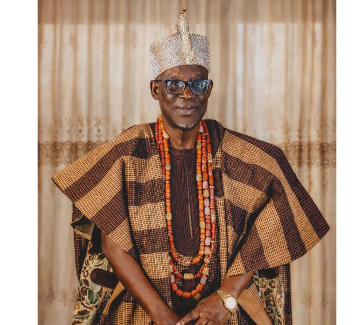
In an exclusive interview marking his 85th birthday, His Royal Majesty, Oba Bankole Adewale Ojutalayo, Faderera I, the Laroka of Wanikin, Obamurewa, Ile-Ife, Osun state, reflected on a life shaped by faith, service, and legacy.
With gratitude to God for what he describes as “85 years of life and legacy,” the monarch spoke warmly about his journey, his reign, the responsibilities of kingship, and his hopes for both his community and Nigeria.
Born on 5 April 1941, Oba Ojutalayo hails from the royal Opa family of Ile Opa, Ile-Ife. Raised with a strong sense of identity and grounded in a Christian background, he later studied Estate Management at Bristol Polytechnic in the United Kingdom before venturing into the real estate business. On 2 January 2012, he ascended the throne as the Laroka of Wanikin.
Speaking on the significance of attaining the age of 85, the royal father was emphatic in his thanksgiving to God. For him, the crown is both honour and burden, but one made lighter through divine support.
“I always have it at the back of my mind that uneasy is the head that wears the crown. It may be a cliché, but I affirm here and now that anybody who wears the beaded crown, especially in Yorubaland, carries a very weighty responsibility. But with the backing of the Lord, because I am a faithful believer in God and Christ, I knew I had no reason to fear. Whatever problems came along, they would be resolved. The Lord has been with me. His promises are yea and amen. He told me clearly, ‘I will never leave you, nor forsake you,’ and I have relied on those promises. So it is only natural that I should rejoice, thank Him, and praise Him for seeing me through life up to the age of 85.”
He continued in the same spirit of gratitude: “At this time, I am celebrating God for His presence. What I feel is an immense spirit of gratitude. God has been good to me; He has been faithful.
At 85, I wake up well, I eat very well, I still have a good appetite, and I thank God for spoiling me. I enjoy the good things of life without excesses, and He has kept me in good health. It is only fitting to say, ‘Thank you, Daddy,’ because anything after 85 is surplus.”
Turning to national issues, Oba Ojutalayo did not hide his concern over what he sees as the systematic marginalisation of traditional rulers in Nigeria’s political order. He argued that the erosion of monarchical authority began during the colonial period and has persisted into the postcolonial era.
According to him, traditional rulers remain the closest authorities to the grassroots, yet they are often ignored except during election seasons.
“The grassroots have been ignored over the years. I think the problem began when government took power away from the traditional rulers. It was a deliberate ploy of the British because they recognised that the civilisation of the Yoruba kingdom had matured, and if they allowed it to remain intact, it would have conflicted with British hegemony. So they stripped power from traditional rulers and encouraged politicians to think themselves bigger than their fathers. That spirit was planted long ago, and it has continued over time.”
He described the agitation for constitutional roles for monarchs as a necessary effort to restore authority to the institutions closest to the people: “The call for constitutional roles for monarchs is really a struggle to return power to traditional rulers. The person closest to the grassroots is the traditional ruler. Before elections, politicians run around, cajoling and pleading. That is when they remember that the Oba is their father. They bring gifts, they prostrate, but it is often all political theatre. They know that the Oba’s word carries weight among the people, and they seek to exploit that influence. Fortunately, more enlightened people are ascending Yoruba thrones today. It is now rare for any town to choose an outright illiterate as an Oba. Whether politicians like it or not, they are now contending with royal fathers who understand the game, and gradually power is returning to the traditional institution.”
The monarch also spoke passionately about education, describing it as indispensable to the future of both the community and the nation. For him, the moral and social crisis facing Nigeria can only be meaningfully confronted through a sound and functional educational system.
“There is so much virtue in education, and it is even better when you catch them young. The future of Nigeria depends on the development and proper training of the young. Nigeria has been polluted by corruption, banditry, and all kinds of suffering. We are dealing today with waste and recklessness by people who steal public resources and squander national wealth. But the youth are watching; they are growing. They are the clean ones, and in time they will take over. We must help them. We must put them through a proper system of education.”
He lamented the state of public schools and argued that traditional rulers must begin to take a more active interest in educational development within their domains: “Our schools are dilapidated. Therefore, as power gradually returns to traditional rulers, every Oba must pay attention to the schools in his domain, encourage the teachers, ensure facilities are available, and make sure that the school system is properly run. That is how we can guarantee the future of our children, and by extension, the future of Nigeria.”
When asked about his greatest achievements on the throne, Oba Ojutalayo pointed especially to youth development, educational advocacy, the transformation of local beliefs, and the strengthening of health infrastructure in his community. He explained that one of his deepest commitments has been to persuade parents in the rural setting to prioritise education for their children, despite economic pressures and widespread scepticism about schooling.
“I have a passion for youth development, and I have devoted a great deal of effort in my domain to ensuring that young people love their environment, value education, and are able to benefit from it. That has not been easy, because in a rural setting many parents believe the child must be available to help on the farm. Some even say, ‘Look at those who went through college and university; many are jobless. If my child stays with me on the farm, he may become richer than they are.’ So it has been difficult persuading them. But we are overcoming those challenges. Parents are beginning to see that education is good for their children, that they can become anything in life, and there are examples to prove it.”
Another area he identified as a major achievement was the reorientation of spiritual beliefs around the Olore River in his domain. He described how a long-standing local practice of venerating the river was gradually redirected toward the worship of God as Creator.
“There is a river in my town called Olore. People used to worship the river with ekuru and believed that it could give children, make women fertile, and watch over them. It took a long time to persuade them that no, Olore is not God; rather, God Almighty is the one who provided the river for their benefit. Slowly, they accepted this. Instead of thanking the river, they now thank God for the benefit of the river.”
He added that this process of spiritual and communal transformation contributed to the formal adoption of “Obamurewa” as an additional name for the domain, with neighbouring settlements also incorporating the name.
“By the special grace and feat of His Imperial Majesty, the Ooni of Ife, we were able to establish the name Obamurewa as an additional name to the domain. So we now answer Wanikin Obamurewa, and neighbouring villages under my domain also bear the name in that form.”
On healthcare, the monarch described the establishment of a fully equipped health centre in the community as one of the tangible achievements of his reign. He stressed that the health of the people remains a major priority.
“The health of the people is very important. We have established a health centre that is fully equipped. When Christian groups come on evangelism, they use the health centre for their medical outreach. People who have secretly nursed ailments come forward and receive treatment. This encourages us and makes us say, ‘Lord, You are performing wonders in Wanikin Obamurewa.’ The people’s mindset is changing, the youth are encouraged, and we are assuring them of better health. Yet, we still have much more to do.”
Looking to the future, Oba Ojutalayo expressed optimism about both Nigeria and Ile-Ife. He said he believes the country can yet become peaceful and prosperous, provided citizens listen to conscience rather than political noise. He also spoke glowingly of Ile-Ife’s prospects under the leadership of the Ooni, predicting a future in which the ancient city becomes an even greater centre of Black identity, tourism, and prosperity.
In his words: “Looking at the future, I want to prophesy that Nigeria will be peaceful and Nigeria will be great again. The people need to listen to their inner voices, not merely to the noise of politicians, and vote in the right direction. The future is bright for Nigeria, and the future is bright for Ile-Ife because Ife has a very vibrant Ooni who is doing a great deal to advance the kingdom. I foresee Ife becoming a kind of Mecca for the Black race, a place where people from across the world will stream to visit. Tourism will develop, new wealth will come to Ile-Ife, and I want to remain around long enough to partake in that blessing.”
At 85, Oba Bankole Adewale Ojutalayo speaks not merely as a monarch reflecting on old age, but as a custodian of memory, faith, and community aspiration. His remarks reveal a ruler deeply invested in the moral, educational, spiritual, and material future of his people. For him, longevity is not simply a personal blessing; it is an opportunity to continue serving, guiding, and hoping. And if, as he says, “anything after 85 is surplus,” then he clearly intends to spend that surplus in the service of God, community, and posterity.
Disclaimer
Comments expressed here do not reflect the opinions of Vanguard newspapers or any employee thereof.