
By Ako Igwari
In the ever-evolving theatre of Nigeria’s democratic experiment since 1999, the distribution of political offices has remained both a measure of inclusion and a mirror reflecting the deeper currents of equity, representation, and justice.
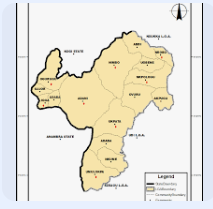
Nowhere is this reality more evident than in Uzo-Uwani, where the delicate balance of political inclusion has, over time, tilted unevenly – leaving certain constituencies, particularly the Igala subset and most poignantly the Igga/Asaba ward, on the fringes of meaningful participation.
Uzo-Uwani is a mosaic of identities, cultures, and linguistic expressions. Broadly composed of Igbo and Igala extractions, the local government area thrives on diversity as a source of strength. The Igala-speaking communities, though constituting only three out of the sixteen wards – approximately 20 percent of the population, are far from marginal in their contributions.
They form a vital component of the socio-economic architecture of the region, actively engaged in agriculture, trade, and grassroots development. Yet, despite their relevance, their political visibility has remained disproportionately faint.
Since the dawn of the Fourth Republic, the distribution of key political offices, including Council Chairman, State House of Assembly member, House of Representatives member, Senator, Commissioner, Special Adviser, and Senior Special Assistant, has largely bypassed the Igala subset.
In more than two decades of uninterrupted democratic governance, their cumulative occupancy of these strategic positions has been minimal, scarcely amounting to a handful. Whether by design or default, this persistent pattern reflects an asymmetry that raises important questions about fairness and inclusion in the local political framework.
Within this broader context, Igga/Asaba ward emerges as perhaps the most striking example of political marginalisation. Its history in the democratic era is marked by near absence from the corridors of power. Since 1999, the ward has produced only a single representative at the State House of Assembly level. At the local level, within the microcosm of the Ogboli clan, it has yet to produce a Council Chairman – an omission that underscores its continued exclusion from grassroots leadership structures.
Yet, paradoxically, Igga/Asaba is anything but peripheral when it comes to contribution. The ward stands as the agrarian backbone of Uzo-Uwani, accounting for a significant share, reportedly over 60 percent, of rice production in an area widely regarded as the food basket of Enugu State. Its expansive farmlands, nourished by fertile soil and sustained by the diligence of its people, have ensured food security not just within the local government area but across the state.
Beyond agriculture, the strategic importance of Igga/Asaba has been further amplified by recent discoveries of oil and gas deposits within its terrain. This development has not only repositioned the ward economically but has also contributed to Enugu State’s emergence as an oil-producing entity – an achievement with significant fiscal and geopolitical implications. It is therefore both ironic and troubling that a community so central to economic productivity remains peripheral in political representation.
As the 2027 electoral cycle gradually approaches, the question of equity in political rotation has assumed renewed urgency. With indications that Uzo-Uwani may be considered for the House of Representatives seat, the moment presents a rare opportunity to address long-standing imbalances. For many observers, stakeholders, and concerned citizens, the logic is compelling: if equity is to move beyond rhetoric and find expression in action, then Igga/Asaba ward stands as the most deserving candidate for consideration.
The administration of Peter Mbah has thus far demonstrated a commendable commitment to pragmatic governance and inclusive leadership. There is a growing expectation that this disposition will extend to addressing historical inequities in political representation. Supporting the emergence of an Igga/Asaba candidate for the House of Representatives would not merely be a political gesture; it would represent a deliberate step toward restorative justice—an affirmation that every segment of the polity, regardless of size or status, has a rightful place in governance.
To regard such consideration as a privilege would be to diminish its significance. It is, in essence, a matter of justice – of aligning representation with contribution, and inclusion with participation. The people of Igga/Asaba have consistently demonstrated resilience, commitment, and productivity. They have given much to the collective good, often without commensurate recognition or reward.
As political activities begin to gather momentum, the call for equity in Uzo-Uwani continues to resonate with clarity and purpose. It is a call grounded not in agitation, but in reason; not in confrontation, but in conviction. It challenges stakeholders to rethink representation as a shared enterprise – one that embraces diversity while fostering unity and collective progress.
In the final analysis, this moment offers a rare and consequential opportunity to recalibrate the scales of justice. To accord Igga/Asaba its rightful place in the emerging political arrangement would not only correct a historical imbalance but also strengthen the democratic fabric of Uzo-Uwani. It would signal that fairness is not merely an ideal, but a principle that guides action.
History often turns on such moments – when leadership aligns with justice, and when long-silenced voices are finally given their due resonance. For Uzo-Uwani, that moment may well be now.
Disclaimer
Comments expressed here do not reflect the opinions of Vanguard newspapers or any employee thereof.