
By Favour Ulebor, Abuja
In a move aimed at tackling rising youth unemployment and Nigeria’s persistent post harvest food losses, key stakeholders in education, and other sectors have begun the validation of new National Occupational Standards expected to equip thousands of young Nigerians with practical skills for jobs, agribusiness and food processing.
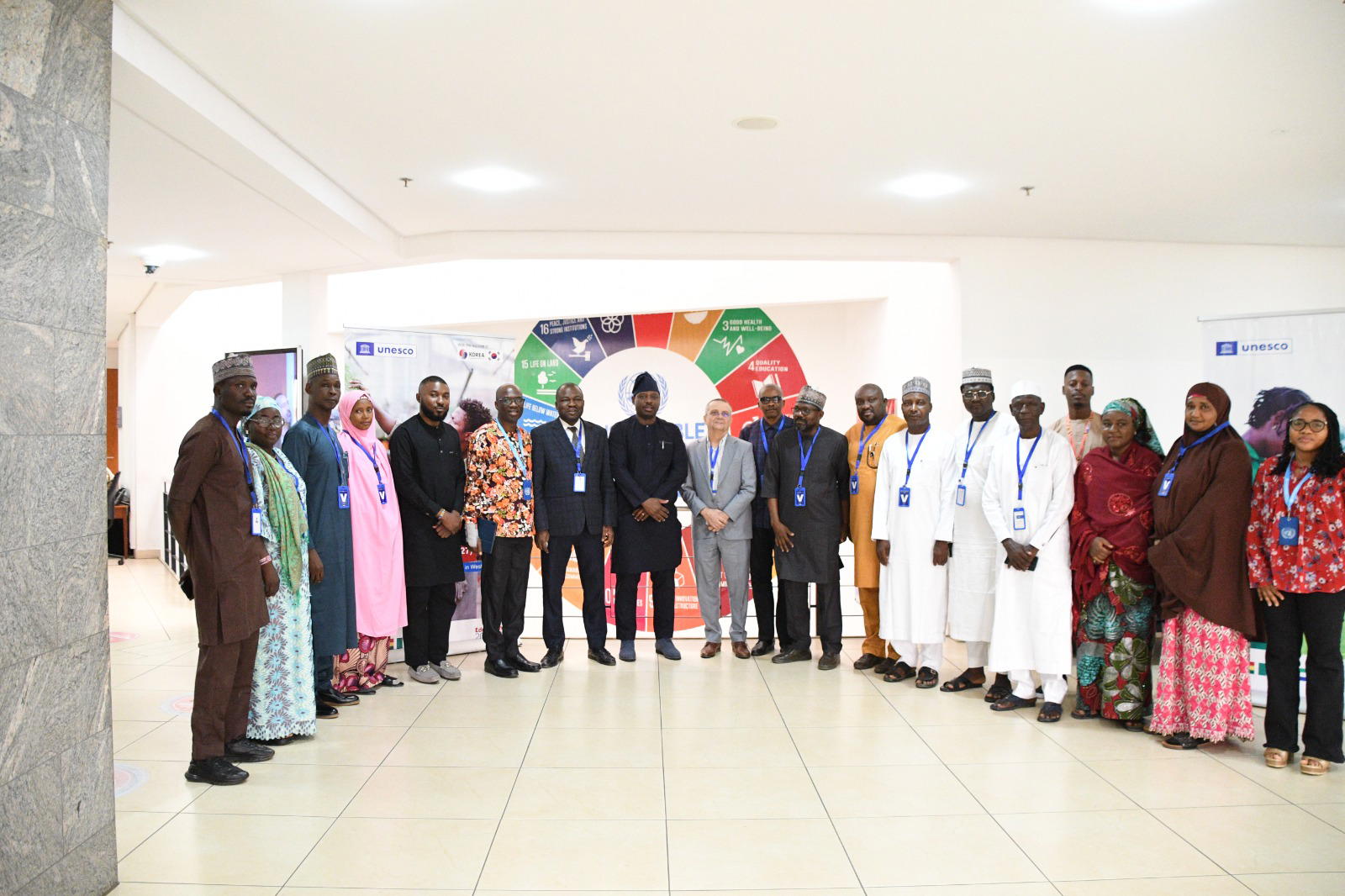
The engagement took place at the National Occupational Standards Critique and Validation Workshop under the Better Education for Africa’s Rise (BEAR III) project in Nigeria, held from February 25 to 27 in Abuja.
Speaking at the opening, the Head of Office and UNESCO Representative to Nigeria, Mr. Jean Paul Ngome, said the initiative aims to make education more practical and directly linked to employment opportunities and food security.
He noted that the programme goes beyond training, stressing its impact on livelihoods, food availability and economic inclusion.
He said, “This is not about training only. It is about food on the table. It is about reducing waste. It is about creating jobs. It is about giving young people a real chance to build a future with dignity.”
Abeada explained that with more than 60 percent of Nigeria’s population under the age of 25, practical skills development remains essential to national growth and stability.
He said, “Nigeria has one of the largest youth population in the world, with more than 60% of its citizens under the age of 25. Every year, millions of young men and women step into adulthood full of energy, ideas, and hope. But hope must meet opportunity.
“When young people do not have practical skills, frustration grows. When they do have skills, they create businesses, strengthen communities, and move the country forward. Let me say this clearly.
“Skills change lives. And when lives change, nations rise. When we train people to handle, store, and process food properly, we save harvests, increase incomes, strengthen food security, and create employment.”
He added that poor handling and storage practices contribute significantly to agricultural losses before produce reaches markets, making post harvest training critical.
According to him, the standards under review will guide training institutions and determine the competencies expected from graduates entering the workforce.
He disclosed that draft standards had already been developed in post harvest management, tomato processing and rice processing, noting that participants’ inputs would shape future training programmes nationwide.
Also speaking, the Chairman of the Sector Skills Council for Agriculture (SSC4A), Onallo Akpa, said efforts were ongoing to ensure the standards become practical tools rather than policy documents left unused.
He explained that the standards would serve as benchmarks for both public and private training providers and help harmonise skills certification across the sector.
Declaring the workshop open the Executive Secretary of the National Board for Technical Education, Professor Idris Bugaje, represented by the Director of Curriculum Development, NBTE, Dr. O.O Bello, described agriculture as a strategic sector for Nigeria’s economic future.
He said formalising agricultural skills training would improve professionalism and prepare young Nigerians for modern production systems.
Dr. Bello expressed confidence that the outcome of the exercise would produce standards capable of attracting adoption beyond Nigeria.
He said, “Agriculture is one of the very, very important sectors in Nigeria, contributing to national development, to the economy of this country. After oil and gas, agriculture should be the next.
“We are very, very optimistic that nations around this nation, in this continent, even outside the country, will also want to copy the good work we are doing.”
Disclaimer
Comments expressed here do not reflect the opinions of Vanguard newspapers or any employee thereof.