
By Ibrahim Hassan-Wuyo
A policy think tank, the Institute for Gender Policy Innovation, has identified seven key policies by Uba Sani as significantly expanding opportunities for women and setting a benchmark for gender inclusion in Nigerian governance.
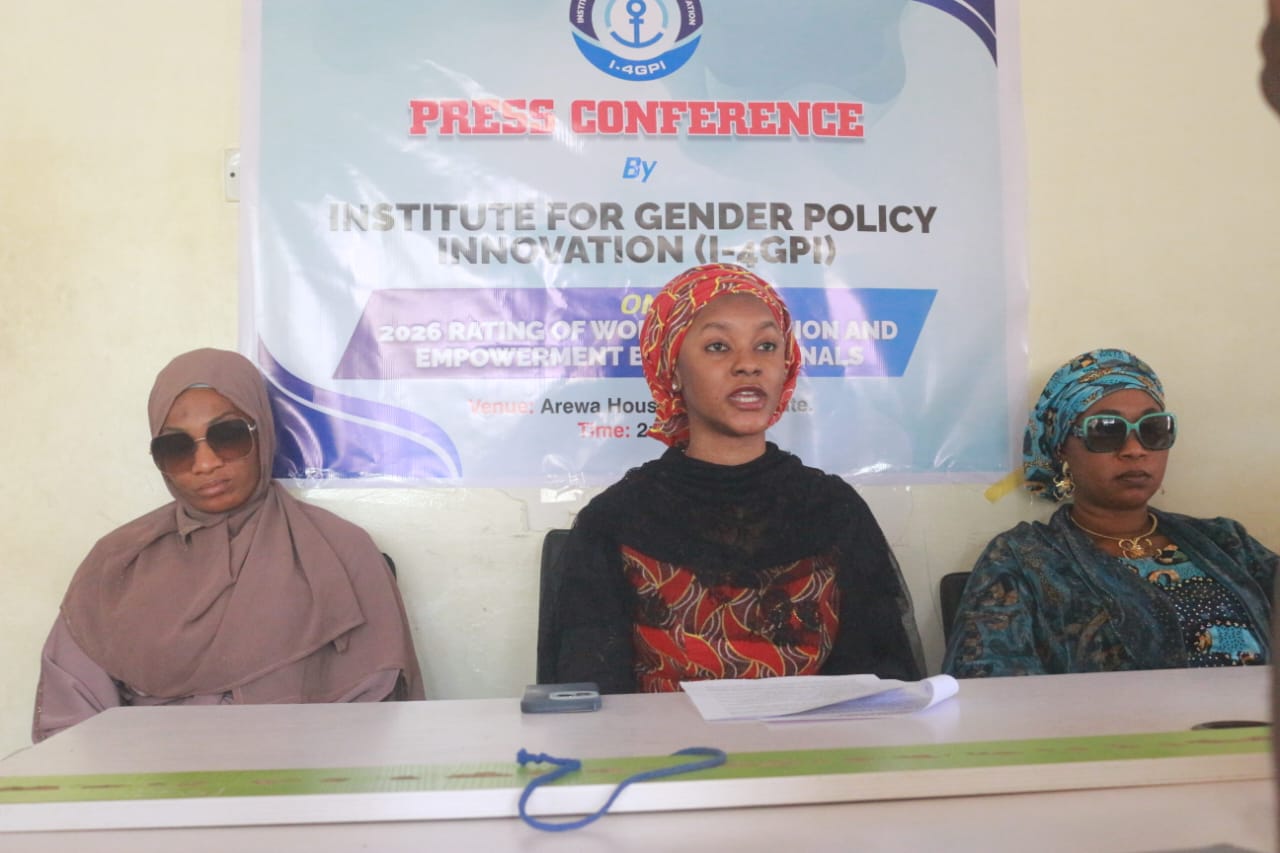
In a policy brief presented by the institute’s Director-General, Hajiya Sabrina Wakili, the reforms in Kaduna State were described as “a bold policy shift redefining women’s economic access and participation in governance.”
Among the most notable initiatives is the Gender-Responsive Public Procurement Policy, which reserves 20% of goods contracts, 10% of consulting services, and 5% of works contracts for women-owned businesses. The policy also offers a 100% waiver on registration fees and a 50% reduction in tender fees for women entrepreneurs. Kaduna is the first subnational government in Nigeria to formally adopt such a policy, developed with support from UN Women and other development partners. The framework also mandates women’s inclusion in procurement committees and deliberate measures to expand opportunities for female-led enterprises.
Other highlighted initiatives include the Kaduna State Women Economic Empowerment Fund, which has supported over 10,700 women entrepreneurs, and the “A Kori Talauchi” poverty-reduction program, which has assisted around 4,900 vulnerable women with livelihood support and empowerment packages.
The institute also cited the state’s HeForShe-style gender advocacy program promoting male leadership support for women, the Women Economic Empowerment Policy framework aimed at closing employment and finance gaps, and rural training programs in agro-processing benefiting over 5,000 women. Additionally, the Kaduna Women Peace and Security Action Plan integrates women into conflict-resolution and peacebuilding efforts in affected communities.
The report noted growing national recognition of Kaduna’s gender initiatives, including the “Best Government Supporting Women and Their Families” award at the Voice of Women Conference and Awards.
While other states—such as Akwa Ibom, Borno, Cross River, Edo, Enugu, Kano, Kwara, Lagos, Nasarawa, Plateau, and Taraba—have begun exploring gender-responsive policies, I-4GPI noted that many remain at early stages.
The think tank concluded that Kaduna’s seven initiatives collectively represent one of the most comprehensive women-focused governance agendas in the country. “The scale, structure, and institutional backing of these policies show that Kaduna State is moving beyond rhetoric to practical gender inclusion,” the report stated.
Disclaimer
Comments expressed here do not reflect the opinions of Vanguard newspapers or any employee thereof.