
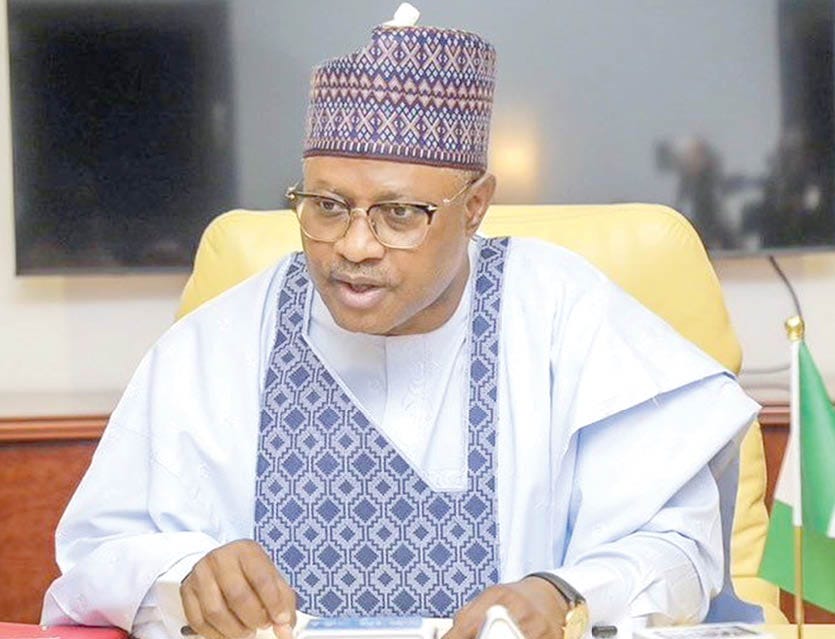
Governor Uba Sani of Kaduna State
By Ibrahim Hassan-Wuyo
Since assuming office as Governor of Kaduna State, Senator Uba Sani has distinguished his administration through an unwavering commitment to peacebuilding, reconciliation, and inclusive governance.
In a state long challenged by ethno-religious tensions and communal conflicts, particularly in Southern Kaduna, Governor Uba Sani has adopted a humane, dialogue-driven approach that has restored trust, reduced violence, and laid the groundwork for sustainable peace. These landmark achievements in conflict resolution and social cohesion form the basis upon which Vanguard recognised him with a prestigious award for leadership in peacebuilding.
Kaduna State’s history of violent conflicts, especially in Southern Kaduna, had for decades threatened lives, displaced communities, and undermined development. Upon taking office, Governor Uba Sani made it clear that peace would be the cornerstone of his administration, arguing that no meaningful development could take place in an atmosphere of fear and division. Rather than relying solely on security enforcement, he embraced a broader peace architecture rooted in dialogue, justice, and inclusion.
One of the governor’s earliest and most impactful steps was the prioritisation of stakeholder engagement in Southern Kaduna. He initiated sustained consultations with traditional rulers, religious leaders, youth groups, women associations, and community elders across the region. By listening directly to grievances and historical concerns, Governor Uba Sani demonstrated empathy and respect, helping to rebuild confidence between government and communities that had long felt marginalised. This inclusive engagement marked a sharp departure from the politics of exclusion and created new channels for dialogue.
Central to his peacebuilding strategy was the strengthening of interfaith harmony. Governor Uba Sani actively supported platforms that brought Christian and Muslim leaders together to jointly condemn violence and promote peaceful coexistence. His administration encouraged joint peace declarations, community prayers, and mediation efforts that sent a powerful message: Kaduna belongs to all, regardless of religion or ethnicity. These initiatives significantly reduced the atmosphere of suspicion that once fuelled recurring crises in Southern Kaduna.
The governor also adopted a proactive conflict-prevention approach. Instead of responding only after violence erupted, his administration invested in early warning and rapid response mechanisms. Local intelligence, community feedback, and collaboration with security agencies allowed the government to intervene early in brewing disputes. This approach helped prevent minor disagreements from escalating into large-scale violence, saving lives and property.
Another defining aspect of Governor Uba Sani’s peacebuilding success is his emphasis on justice and fairness. His administration took deliberate steps to ensure that victims of violence were acknowledged and supported. Through resettlement efforts, rehabilitation of displaced persons, and reconstruction of affected communities, the government sent a clear signal that peace must be accompanied by healing and restoration. These actions were particularly impactful in Southern Kaduna, where many communities had suffered repeated displacement.
Governor Uba Sani also recognised that poverty and unemployment often fuel conflict. As part of his peacebuilding framework, he expanded social and economic inclusion initiatives targeted at conflict-prone areas. Skills acquisition programmes, youth empowerment schemes, and community-based development projects were deployed to give young people alternatives to violence. By addressing the socioeconomic roots of conflict, the administration strengthened the durability of peace in Southern Kaduna.
Equally significant is the governor’s leadership style, which emphasises humility, accessibility, and bridge-building. Governor Uba Sani consistently uses conciliatory language, refrains from inflammatory rhetoric, and promotes unity in his public engagements. His personal involvement in peace dialogues, including visits to affected communities, has helped humanise governance and reduce the emotional distance between the state and its citizens.
The cumulative effect of these policies has been a noticeable decline in violent incidents across Kaduna State, especially in Southern Kaduna. Communities once divided along ethnic and religious lines have begun to coexist more peacefully, allowing farmers to return to their fields, traders to reopen businesses, and children to attend school without fear. The improved security environment has also renewed investor confidence and accelerated development across the state.
It is in recognition of these tangible outcomes that Vanguard honoured Governor Uba Sani with an award for excellence in peacebuilding and leadership. The award reflects not only the reduction in violence but also the governor’s methodical, people-centred approach to conflict resolution. This recognition highlighted his ability to replace confrontation with conversation, exclusion with inclusion, and fear with hope.
Beyond the award itself, Governor Uba Sani’s peacebuilding achievements represent a broader lesson for governance in diverse societies. His administration has shown that peace is not imposed by force alone but cultivated through trust, dialogue, justice, and opportunity. By addressing historical grievances and fostering mutual understanding, he has turned Southern Kaduna from a symbol of conflict into a beacon of reconciliation.
Disclaimer
Comments expressed here do not reflect the opinions of Vanguard newspapers or any employee thereof.