
By Esther Onyegbula
A new wave of automation driven by artificial intelligence is gaining traction in Nigeria’s business landscape, as Lagos-based startup grace ai lab rolls out what it describes as “AI workers” capable of executing complex operational tasks across industries.
The development signals a shift from basic chatbot services to more advanced autonomous systems that can integrate directly into business processes, raising fresh conversations around efficiency, cost reduction, and the future of work in Africa.
According to the company, its AI-powered systems are designed to go beyond routine customer interactions by handling end-to-end tasks such as order processing, loan application assessments, fraud detection, appointment scheduling, insurance claims management, and regulatory compliance documentation.
Unlike traditional chatbots that rely on pre-programmed responses, the firm said its AI workers are built to learn continuously from interactions, enabling them to improve performance and adapt to recurring business challenges without manual intervention.
Industry observers note that one of the distinguishing features of the technology is its localisation for African markets. Developed in Lagos, the system supports multiple Nigerian languages including English, Pidgin, Yoruba, Hausa, and Igbo, reflecting the country’s diverse communication patterns and informal code-switching common in everyday transactions.
The platform is also tailored to operate within a WhatsApp-driven digital environment, where a significant share of customer engagement in Nigeria occurs, rather than through traditional websites or call centres.
This approach, analysts say, positions the company to compete in a space largely dominated by global providers, whose solutions are often priced beyond the reach of many African enterprises.
Early deployments suggest growing acceptance among businesses seeking to streamline operations. A Lagos-based restaurant and lounge using the system for WhatsApp order management reportedly recorded a 30 per cent reduction in order errors, while response times dropped from between 15 and 20 minutes to under five minutes.
Similarly, a multi-location entertainment business is currently piloting the technology across two outlets, with additional interest emerging from sectors such as banking, telecommunications, insurance, and public services.
The momentum is further supported by recent regulatory developments. The Central Bank of Nigeria’s March 2026 directive mandating financial institutions to deploy AI-powered anti-money laundering systems has accelerated demand for intelligent automation tools within the financial sector.
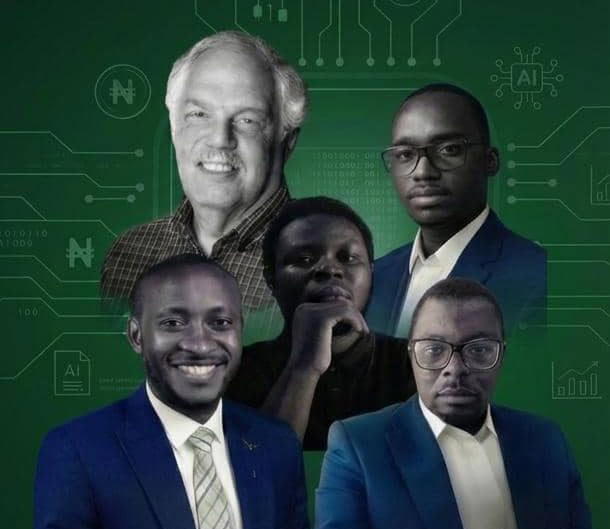
The company is led by its Founder and Chief Executive Officer, Divine Matthew, alongside a leadership team with experience spanning technology, telecoms, and business development across West and Central Africa. Its board is chaired by Dan Walkovitz, who brings decades of experience from Silicon Valley.
Other members of the executive team include Chief Growth Officer, Erigha Henry; business development lead, Tereigh Ozakpo; and AI Engineer, Onyedikachi Ozoani.
Outlook
With businesses under increasing pressure to improve efficiency and customer experience, stakeholders say the adoption of AI-driven systems is likely to accelerate in the coming years.
Experts note that early adopters of such technologies may gain a competitive advantage through faster service delivery and improved operational accuracy, while late adopters risk falling behind in an increasingly digital economy.
As deployment expands across sectors, the emergence of AI workers is expected to reshape how businesses operate in Nigeria and across the continent, marking a significant step in Africa’s evolving technology ecosystem.
Disclaimer
Comments expressed here do not reflect the opinions of Vanguard newspapers or any employee thereof.